
Every fleet manager has lived some version of this story. Manual spreadsheets, reactive maintenance schedules, and zero real-time location data turn small problems into expensive ones, especially as insurance premiums and fuel costs keep climbing.
Fleet asset management software fixes this by centralizing tracking, maintenance, and reporting into a single platform. This article covers what the software actually does, the features worth paying for, the returns you can expect, and how to pick a platform that fits your fleet.
Key Takeaways
- Track vehicles, trailers, and equipment costs and maintenance in one dashboard
- Real-time GPS and tracker data cut theft risk and speed dispatch decisions
- Azuga fleets report 38% fewer accidents and 57% fewer speeding citations
- Hardwired, battery-powered, and Bluetooth beacon asset trackers deliver live data fast
What Is Fleet Asset Management Software?
Fleet asset management software tracks the full lifecycle of everything your business owns and operates, from acquisition through daily use, maintenance, and eventual resale or disposal. It's the difference between knowing where a truck is right now and knowing what that truck actually costs you over its lifetime.
"Fleet assets" go well beyond vehicles. For construction, HVAC, and utility companies, that includes
- Trailers and generators
- Heavy equipment like excavators and skid steers
- Tools and machinery moved between job sites
- Non-powered assets that still need location tracking and service schedules
Modern platforms replace manual logs with GPS, telematics, and asset tracking devices that stream location and condition data in real time. Instead of a driver calling in a breakdown, the system flags utilization and maintenance issues before they become downtime.
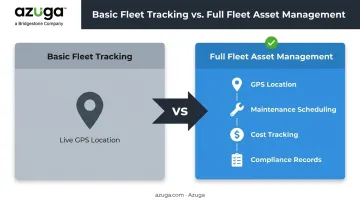
There's a distinction buyers often miss. Basic fleet tracking shows you where a vehicle is. Full fleet asset management combines that location data with maintenance scheduling, cost tracking, and compliance records in one system, so you're not juggling three tools to answer one question: what is this asset really costing you?
That distinction matters most when something breaks unexpectedly. Unplanned downtime doesn't just cost a repair bill. It's the missed job, the rescheduled crew, and the customer who calls a competitor instead. For fleets running on thin margins, a handful of surprise breakdowns a year can erase a quarter's worth of careful budgeting.
Key Features of Fleet Asset Management Software
Not all fleet asset management platforms are built the same. Before signing a contract, evaluate any software across four functional pillars: tracking, maintenance, safety, and reporting.
GPS & Real-Time Asset Tracking
Frequent-interval GPS tracking gives dispatchers live visibility into where every asset sits, how long it's been idle, and whether a driver strayed from the planned route. Azuga's platform tracks at 30-second intervals on its CompleteFleet plan, tight enough to support real-time dispatch decisions and accurate customer ETAs.
That tracking frequency only pays off if the hardware behind it is simple to deploy. Battery-powered asset trackers, hardwired equipment units, and Bluetooth beacons can mount to trailers, tools, and machinery without a complex install, cutting both onboarding time and cost. Azuga's asset and equipment trackers, for example, are designed for straightforward field deployment.
Preventive Maintenance & Repair Management
Automated maintenance alerts, triggered by mileage, engine hours, or diagnostic codes, catch problems before they become breakdowns. It's not a new idea, but software makes it consistent instead of dependent on someone remembering to check a spreadsheet.
Those alerts also build something buyers overlook: a centralized service history log, which matters more than most realize. When you sell or retire equipment, a documented maintenance trail supports warranty claims and protects resale value. Buyers pay more for equipment with clean records.
Driver Safety & Behavior Monitoring
Dashcams and AI-based driver monitoring flag harsh braking, distraction, and speeding as they happen, not after a claim shows up. Azuga's SafetyCam AI uses a neural learning network to analyze driver-facing video and tag distraction events automatically.
The bigger payoff shows up after a collision. Azuga's collision reconstruction technology combines video and sensor data to establish fault, helping prove that 70% of accidents are not the fleet driver's fault, according to the company. That kind of evidence can turn months of litigation into a quick insurance resolution.
Reporting, Analytics & Integrations
Configurable dashboards turn raw telematics data into fuel, maintenance, and cost reports that support real decisions.
The dashboard is only half the picture, though. What it connects to determines whether that data stays siloed or feeds into tools your team already runs, such as
- Fuel cards for automated fuel spend tracking
- Accounting software for cost allocation across jobs
- Job-specific platforms like TowBook for towing and roadside operations
Azuga's integration marketplace covers 75+ third-party connections, worth checking against your existing tech stack.
Benefits of Fleet Asset Management Software
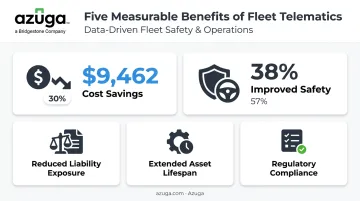
Fleet asset management software earns its cost back through five overlapping categories of savings:
- Cost savings: Automated maintenance scheduling and fuel monitoring cut costs that are easy to miss on a spreadsheet. Azuga customers save an average of $9,462 annually, a 30% reduction in operational costs (based on Azuga's own customer data, though consistent with typical preventive-maintenance savings).
- Improved safety: Driver scorecards and real-time coaching cut accidents by 38% and speeding citations by 57% among Azuga fleets, per internal data.
- FMCSA guidance on two commercial fleets found comparable results: video monitoring paired with coaching cut safety events by 52.2% and severe events by 59.1%. Monitoring only pays off when it's paired with active coaching, not left running in the background.
- Reduced liability exposure: When an accident happens, video-based collision reconstruction replaces guesswork with evidence, helping fleets resolve claims faster and avoid unnecessary settlements.
- Extended asset lifespan: Preventive maintenance done consistently catches small part failures before they cascade into major repairs, pushing back replacement cycles and freeing up capital.
- Regulatory compliance: Automated ELD logs capture date, time, location, engine hours, and driver ID, simplifying DOT, emissions, and safety compliance reporting.
If you want to model your own numbers, Azuga's ROI calculator is a reasonable starting point for estimating savings based on fleet size and current costs.
How to Choose the Right Fleet Asset Management Software
Picking a platform comes down to three practical questions.
Installation and onboarding. Look for hardwired, battery-powered, or Bluetooth beacon trackers that mount to assets and equipment without a complex installer visit. Rolling out tracking across 50 assets shouldn't require a week of scheduling conflicts.
Total cost of ownership and scalability. Compare per-vehicle monthly costs, not just headline numbers. Azuga matches packaging to fleet size and the features you select, but a fair comparison also factors in
- What's included versus billed as an add-on, like cameras, ELD, or asset tags
- How contract length and cancellation terms affect long-term costs
Proven results and support. A platform's case studies should match your industry. A GPS system built for long-haul trucking won't necessarily solve the problems a plumbing or HVAC fleet faces with job-site tools and short-hop routes.
Ask for references from businesses your size, and confirm support runs 24/7 through phone, email, and chat, not just business hours with a ticket queue.
A five-vehicle HVAC fleet and a 200-truck logistics operation need different things from the same category of software. Weigh installation friction, real pricing, and support quality against what your team will actually use every day.
Fleet Asset Management Best Practices
Software alone won't fix broken processes. Pair it with a few operational habits.
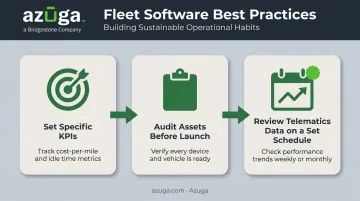
Set specific KPIs before you implement anything. Cost-per-mile, idle time, and accident rate are only useful if they tie back to a business goal, like cutting fuel spend by 10% or reducing at-fault accidents by year-end.
According to ATRI's 2025 cost-per-mile report, the trucking industry's average operating cost sits at $2.336 per mile — a useful gauge for over-the-road trucking, though less relevant for a local service fleet.
Audit your assets before you turn anything on. Build a baseline inventory: every vehicle, trailer, and tool, its current condition, and its remaining lifecycle value. Without this baseline, you can't measure whether the software is actually improving anything six months from now.
Review telematics data on a set schedule, not just when something breaks. Monthly reviews of speeding events, idle time, and maintenance trends inform decisions on
- When to replace an aging vehicle instead of repairing it again
- Which drivers need coaching versus which routes need redesigning
- Whether safety policies need updating based on real behavior data
For context, NETS' 2022 benchmark report found 4.55 collisions per million miles across participant fleets, a solid reference point provided you're comparing similar fleet types and mileage.
Frequently Asked Questions
What is fleet asset management?
Fleet asset management is the process of tracking and maintaining a fleet's vehicles and equipment throughout their lifecycle using centralized software. It combines GPS location data, maintenance scheduling, and cost tracking in one system.
What software is used in fleet management?
Fleet management typically relies on telematics platforms for GPS tracking, paired with maintenance management systems and fuel monitoring tools. Many providers, including Azuga, combine all three into a single platform rather than requiring separate tools.
What is the best asset management software?
The best choice depends on your fleet size and industry, along with your top priority, whether that's safety, maintenance, or cost control. Evaluate options based on ease of use, total cost of ownership, and the quality of ongoing support.
How much does fleet asset management software cost?
Azuga matches packaging to fleet size and the features you select, with add-ons like AI dashcams available as optional add-ons.
Can fleet asset management software track equipment and tools, not just vehicles?
Yes. Modern platforms support standalone asset tags and GPS trackers for equipment like trailers and generators, using battery-powered, hardwired, or Bluetooth beacon mounting that works alongside vehicle-specific hardware for full fleet visibility.
How do I get started with fleet asset management software?
Start with an asset audit, define specific goals like reducing idle time or accidents, then choose a scalable platform and install tracking devices. Most self-install hardware can be deployed fleet-wide within days, not weeks.