
IoT asset tracking is changing that equation. By attaching connected sensors to vehicles, tools, and equipment, businesses now get real-time location and condition data instead of guesswork.
This article covers how IoT asset tracking works, the real benefits it delivers, which industries gain the most, and how to choose a solution that fits your fleet.
Key Takeaways
- GPS, RFID, or BLE tags plus cloud software deliver real-time asset location and condition visibility
- Cut theft, reduce downtime, and catch maintenance issues early with continuous tracking
- Connectivity choice (cellular, LPWAN, BLE) depends on asset type, range, and battery needs
- Plug-and-play platforms like Azuga deploy tracking without a dedicated IT team
What Is IoT Asset Management and Tracking?
IoT asset tracking means attaching a sensor or tag to a movable, reusable asset, such as machinery, trailers, or tools, and using connectivity and cloud software to monitor its location, condition, and usage in real time.
This differs from inventory tracking, which counts consumable stock. Asset tracking focuses on items you reuse and reallocate, like an excavator or a service van.
"IoT" stands for Internet of Things: physical devices with sensors that connect to a network and share data with a software platform. NIST defines IoT devices simply as user or industrial devices connected to the internet. In asset tracking, that means
- Sensor detects location or condition
- Connectivity (cellular, BLE, LPWAN) transmits that data
- Cloud software turns it into maps, alerts, and reports
The global IoT asset tracking and monitoring market is projected to grow from $5.02 billion in 2024 to $9.16 billion by 2029, a 12.8% CAGR, per MarketsandMarkets.
That growth is concentrated in industries where equipment moves constantly and sits unattended for long stretches — construction, HVAC, plumbing, trucking, utilities, and waste management.
How Does IoT Asset Tracking Work?
Three components make asset tracking function: tracking devices, connectivity, and a centralized software platform.
Tracking Technology Types
- GPS trackers — best for outdoor, mobile assets like trailers, generators, and heavy equipment
- RFID tags — suited to checkpoint scanning, like tool rooms or yard gates
- BLE beacons — ideal for indoor proximity tracking of smaller tools and equipment
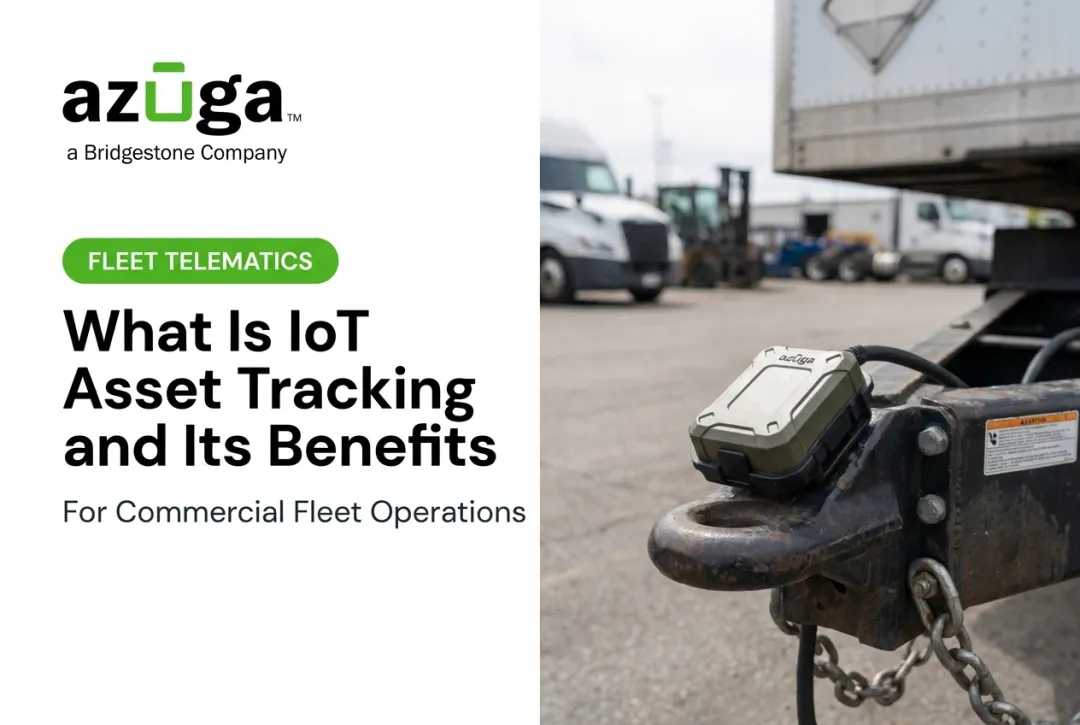
Azuga's Equipment Beacons, for example, use Bluetooth Low Energy 5.1 and get picked up by the Azuga GV620 tracker, which can detect up to 50 beacons simultaneously — useful for job sites juggling dozens of small tools.

Connectivity Trade-offs
| Connectivity | Best For | Pros / constraints |
|---|---|---|
| Cellular | Wide-area mobile assets | Reliable range, higher power draw |
| LPWAN | Dispersed, low-data telemetry | Long battery life, low data rate |
| BLE | Indoor proximity | Low power, limited range |
| Wi-Fi | Sites with existing coverage | Short-range, needs infrastructure |
Connectivity only moves the signal. On-device sensors often add temperature, humidity, motion, and impact data, which feeds condition monitoring and predictive maintenance.
Power and Battery Life
Battery choice shapes where you can deploy a tracker. Long-life units (such as Azuga's Long Life Asset Trackers) can run up to 5 years without wired power—fit for containers, trailers, and generators. Rechargeable trackers suit shorter jobs, like road signs, with up to 6 months between charges.
From Sensor to Dashboard
Data lands in the software platform automatically. Geofence breaches, unexpected movement, or extended stops trigger alerts so managers can respond right away—not days later.

Key Benefits of IoT Asset Tracking for Businesses
Real-Time Visibility and Loss Prevention
Continuous location data means managers stop guessing where equipment sits. Geofencing alerts flag unauthorized movement instantly, and Azuga's in-transit alerts report when an asset starts moving, crosses a geofence, or sits idle too long.
Equipment beacons can't guarantee theft prevention, but they do report an asset's last known location and the team using it before it disappeared, which speeds up recovery significantly.
Predictive Maintenance
Monitoring vibration, temperature, and usage hours helps schedule maintenance before failures happen. The US Department of Energy estimates predictive maintenance can deliver 8-12% savings over preventive maintenance, and up to 30–40% savings where reactive maintenance dominates.
Cost Savings That Add Up
Azuga customers have seen:
- 30% reduction in operational costs
- $9,462 saved annually through better fleet cost management
- 38% fewer accidents on average
A 2024 Verizon Connect survey of 543 fleet professionals found 47% achieved positive ROI within a year of adopting GPS tracking, with fuel savings climbing from 8% to 16% over recent years.

Improved Utilization
Usage data reveals which assets sit idle and which get overworked. That insight lets you reallocate equipment instead of buying more.
Reduced Administrative Time
Searching for missing equipment eats into productive hours. With live location data, crews check a map instead of walking the yard or calling job sites, which frees time for billable work.
Which Industries Benefit Most from IoT Asset Tracking?
Construction, Trucking, and Utilities
Job sites lose tools and leave equipment idle more often than most fleets expect. Putting mixed assets on one IoT view cuts time spent hunting gear and gets crews back to billable work.
Construction, trucking, and utility teams typically track
- Boom trucks, cranes, generators, and dump trucks
- Trailers and dispersed equipment across service territories
- Smaller tools that walk off shared job sites
Azuga Fleet consolidates those assets on one platform so supervisors see location and status without calling around.
Service Businesses (HVAC, Plumbing, Electrical, Pest Control)
For HVAC, plumbing, electrical, and pest control fleets, vehicle location directly affects how fast the next job gets covered. Live tracking tightens dispatch and makes techs more accountable on the road.
service teams use IoT tracking to
- Spot which vehicles are closest to a new job
- Cut response time on emergency and same-day calls
- Confirm arrivals, dwell time, and route adherence
Azuga pairs GPS data with dispatch workflows so coordinators assign the right unit without guesswork.
Waste Management and Towing
Waste and towing operations run on tight routes and fast recovery when a truck or trailer goes offline. Dispatchers need live location, not radio check-ins, to keep schedules intact.
These fleets benefit most when tracking supports
- Route efficiency for garbage trucks and collection runs
- Live visibility for tow trucks and recovery assets
- Faster asset recovery when equipment leaves an expected area
Azuga Fleet gives dispatchers that location feed in real time so reroutes and recoveries happen sooner.
Choosing the Right IoT Asset Tracking Solution
Shortlist platforms against how your assets actually move, power, and connect to the tools you already run
- Connectivity needs: Does the asset move outdoors, sit indoors, or travel between both?
- Battery life: Can you tolerate frequent recharging, or do you need years of runtime?
- Ease of installation: Will your team install devices, or do you need professional setup?
- Software integrations: Does it connect with your existing dispatch, maintenance, or service fleets tools?
Once operational fit is clear, pressure-test cost and growth next.
Plans and Scalability
Pricing models vary between per-device fees and platform subscriptions. Azuga's plans match packages to fleet needs across BasicFleet, SafeFleet, and CompleteFleet, matched to fleet size and the features you need.
Azuga's battery-powered asset trackers and equipment beacons mount without professional help. The platform scales from a handful of assets to tens of thousands, so it fits a small HVAC shop and a national logistics operation alike.
Factor support into total cost of ownership. Azuga includes unlimited 24/7 phone, email, and web support and holds G2 Leader recognition across categories—useful benchmarks when you compare vendors on reliability, not only price.
Frequently Asked Questions
What does IoT stand for?
IoT stands for Internet of Things: physical devices embedded with sensors that connect to a network and share data. In asset tracking, this means equipment reporting its location and condition automatically.
What are the 5 C's of IoT?
One commonly cited framework lists Connectivity, Continuity, Compliance, Coexistence, and Cybersecurity. It's an industry framework, not a formal standard, but it's useful for evaluating IoT deployments.
What is an IoT asset tracker?
It's a sensor-based device attached to equipment or vehicles that transmits location, motion, or condition data to a cloud software platform. Managers get real-time visibility without manual checks.
What are the 5 P's of asset management?
There's no single standardized "5 P's" list in asset management. ISO 55001 and the Institute of Asset Management instead define asset management as balancing cost, risk, and performance to meet organizational goals.
What is IoT in finance?
In finance and procurement, IoT data helps teams track asset depreciation, usage-based lifecycle costs, and ROI, using actual utilization data instead of estimates to inform purchasing and replacement decisions.