
Rules and discipline alone rarely change habits long-term. Driver incentive programs flip that model, turning safety and performance goals into rewards drivers actually want. As turnover costs and accident-related expenses keep climbing across fleets of every size, more companies are betting on positive reinforcement instead of punishment alone.
This guide covers what driver incentive programs are, the types worth considering, how to build one step-by-step, and why telematics data is what makes these programs fair and effective.
Key Takeaways
- Incentive programs reward safe, reliable driving instead of punishing violations alone
- Fleets using structured incentives see fewer collisions, lower costs, and stronger driver loyalty
- Blending financial, recognition, and development rewards outperforms cash-only approaches
- Objective telematics and MVR data keep programs fair and trusted
- Pilot first, then review quarterly and adjust based on driver feedback
What Is a Driver Incentive Program?
A driver incentive program is a structured system that rewards drivers for hitting specific, measurable performance benchmarks: safety scores, on-time delivery rates, fuel efficiency, or clean compliance records. It works alongside, or in place of, write-ups and corrective discipline.
The shift matters because punishment-only models often produce compliance without real commitment. A driver avoiding a citation out of fear behaves differently than one working toward a bonus or recognition. Incentive programs build that second mindset.
There's also a safety-retention link worth understanding. Research sponsored by FMCSA found that drivers averaging three or more job changes per year had more than double the odds of multiple-crash involvement compared to lower-turnover drivers (FMCSA/ATRI, 2003).
Keeping experienced drivers behind the wheel longer strengthens both retention and safety outcomes.
These programs aren't exclusive to long-haul trucking. Any business running vehicles benefits from the same logic
- Construction fleets managing heavy equipment transport
- HVAC and plumbing contractors running service vans
- service businesses with technicians on the road daily
- Waste management and utility fleets covering fixed routes
Wherever an employee gets behind the wheel of a company vehicle, the principle holds: reward the behavior you want to see more of.
Why Driver Incentive Programs Improve Safety and Retention
Safer Habits, Measurable Savings
Speeding, harsh braking, and distracted driving are the behaviors that turn into accidents and citations. Incentives give drivers a tangible reason to change them.
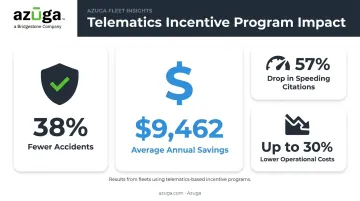
Fleets using Azuga's tracking and incentive tools have seen accidents drop by an average of 38% and speeding citations fall by 57%. Those numbers reflect drivers responding to rewards tied to real behavior change, not a one-off training effect.
The cost impact follows naturally
- Fewer accidents mean lower insurance premiums and claims exposure
- Reduced speeding and harsh braking cut fuel and maintenance costs
- Azuga customers report saving an average of $9,462 per year through better-managed fleet costs
- Some customers see overall operational costs drop by up to 30%
Recognition Keeps Drivers Longer
Turnover is expensive, and it compounds. Losing a driver means recruiting, onboarding, and training costs, plus the safety risk of putting a less-experienced driver on the road.
Recognition changes that math. A joint Gallup and Workhuman study tracking nearly 3,500 employees found that workers who received high-quality recognition in 2022 were 45% less likely to have left their employer two years later (Gallup and Workhuman recognition study, 2024). Drivers who feel seen for doing the job well tend to stick around.
That extends to effort, too. Research from the Incentive Research Foundation found employees recognized weekly were three times more likely to report being engaged, productive, and committed than those never recognized (Incentive Research Foundation study, 2025). That discretionary effort, double-checking a load or showing up early, doesn't come from a rulebook.
Compliance, Litigation, and Sustainability Benefits
Safer driving habits reduce more than accidents. They shrink regulatory violation counts and courtroom exposure. When incidents do happen, collision reconstruction helps establish what actually occurred. That matters since roughly 70% of accidents aren't the fault of the commercial driver involved.
Beyond the ledger, incentive programs support sustainability goals too. Rewarding reduced idling and smoother acceleration lowers fuel consumption alongside costs.
Types of Driver Incentives to Consider
The strongest programs don't rely on one reward type. Drivers value different things, so a blended approach works better than a single lever.
Financial Rewards
Cash still matters. Common structures include
- Bonuses tied to a clean six-month or annual safety record
- Fuel-efficiency bonuses for drivers who consistently minimize idling and harsh acceleration
- Pay-per-trip or mileage-milestone incentives
Many fleets benchmark quarterly bonuses in the range, though this varies by fleet size and budget. Treat it as a starting point, not a rule.
Recognition and Public Acknowledgment
Not every reward needs a dollar sign. Public recognition builds visibility and healthy competition
- Driver of the Month awards
- Leaderboards posted in the break room or shared digitally
- Shout-outs in newsletters or team meetings
- Friendly internal competitions between routes or depots
Professional Development and Career Perks
Some drivers value growth over bonuses. Consider
- Paid defensive driving or hazmat certification training
- Preferred scheduling for top performers
- Upgraded vehicle assignments as a reward for tenure and safety record
These perks build loyalty because they signal long-term investment in the driver, not just a one-time payout.
Gamification and Point-Based Systems
Telematics scoring turns safe driving into a game. Drivers earn points for hitting safety and efficiency benchmarks, then redeem them for rewards. Redemption options like gift cards, cash bonuses, or extra paid time off keep the program feeling fresh, rather than relying on one annual bonus to sustain motivation.
Azuga's platform incorporates this directly. Its Social Telematics feature identifies top-performing drivers from real-time scoring data and delivers monetary rewards straight to a driver's phone, no manual spreadsheet tracking required.
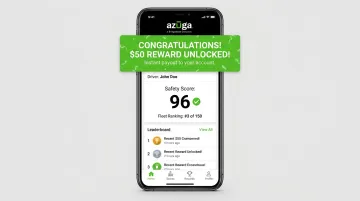
Before launching any of the above, survey drivers on which rewards they'd actually value. A program built around perks nobody wants gets ignored fast.
How to Design, Launch, and Continuously Improve a Driver Incentive Program
Building a program that works takes more than picking rewards. Follow this sequence
- Set specific, measurable goals. Define what "safe" and "reliable" mean for your fleet, for example, reduce harsh braking events by 20% or hit 95% on-time performance.
- Ground the program in objective data. Platforms like Azuga's telematics dashboards surface harsh-braking events, motor vehicle records, and inspection results, so eligibility is based on data, not manager judgment. This removes perceptions of favoritism before they start.
- Involve drivers early and communicate clearly. Gather input on preferred rewards before launch, then explain criteria and timelines through multiple channels, such as driver meetings, mobile apps, and printed handouts.
- Pilot with a small, diverse group. Test with a mix of new and tenured, full-time and part-time drivers before rolling out fleet-wide. This catches design flaws while the stakes are still low.
- Build in compliance safeguards. Bonuses tied to safety, attendance, or production are generally considered nondiscretionary under federal wage law, affecting overtime calculations. Two safeguards matter most
- Loop in payroll or legal counsel before launch.
- Make sure rewards never push drivers toward unsafe shortcuts.
- Review and refine quarterly. Track whether violations, safety scores, and turnover trend in the right direction. Keep gathering driver feedback and adjust as business needs shift.
Static incentive programs quickly become outdated policies. Revisit the data, adjust the rewards, and keep the program aligned with fleet performance goals.
The Role of Telematics in Building Fair, Data-Driven Incentive Programs
None of the steps above work without trustworthy data. Drivers buy into a program when rewards come from facts, not a manager's impression of who's been trying hard lately.
Objective Scoring Removes the Guesswork
Platforms like Azuga's GPS fleet tracking and AI-powered SafetyCam automatically capture speeding, harsh braking, and distraction events at high-frequency, 30-second intervals. That gives fleet managers unbiased scoring data to distribute rewards fairly, and gives drivers confidence the scoreboard isn't rigged.
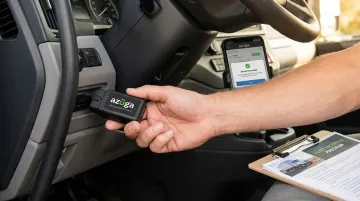
Why this matters for smaller fleets: Azuga's OBD-II device plugs directly into a vehicle's diagnostic port and starts transmitting data within minutes, with no technician visit, service appointment, or downtime required.
Plans use packages matched to fleet needs, putting a data-backed incentive program within reach for small and mid-sized fleets that assumed this kind of tooling was built for enterprise trucking operations only.
Protecting Drivers, Not Just Scoring Them
Fair programs also protect drivers when something goes wrong. Collision reconstruction compiles driver-facing video and event data after an incident to help establish fault, which matters since roughly 70% of accidents involving commercial drivers turn out not to be their fault.
That protection reinforces trust in the broader safety program. A driver cleared by video evidence, rather than left arguing their side against a police report, is far more likely to buy into a scoring system going forward.
Fleets can use Azuga's ROI calculator to model what these savings and protections might look like for their own vehicle count.
Frequently Asked Questions
What is a driver incentive?
A driver incentive is a reward, cash or otherwise, given for meeting specific performance goals like safety, punctuality, or fuel efficiency. It reinforces good habits rather than just penalizing bad ones.
What are the main types of driver incentives?
The four main categories are financial bonuses, public recognition, professional development perks, and gamified point systems. Combining several usually beats relying on just one.
Can I get paid just for driving?
Driving itself isn't separately paid outside standard wages. Many programs add bonuses for consistent safe driving, mileage milestones, or fuel efficiency, essentially extra pay for doing the job well.
How much should a fleet budget for a driver incentive program?
Budgets vary by fleet size and reward mix. Many programs start small, in the $25 to $500 monthly or quarterly range, and scale once they show measurable ROI.
How do you measure whether a driver incentive program is working?
Track accident rates, speeding events, on-time performance, and turnover before and after launch. Telematics data, like the driver behavior reports available through platforms such as Azuga, makes it possible to quantify improvement instead of guessing.
Do driver incentive programs really improve retention?
Yes. Programs built around recognition and rewards make drivers feel valued, and valued drivers are far more likely to stay with a company long-term.