
Unplanned downtime, missed maintenance windows, and repair bills that balloon because a small issue went unnoticed—these are the costs of flying blind. Remote vehicle diagnostics changes that equation by putting real-time engine health data directly in front of fleet managers, wherever they are.
This article breaks down how remote diagnostics works, what it costs, and how platforms like Azuga make predictive maintenance accessible to fleets of any size.
Key Takeaways
- OBD-II telematics plus cloud software monitors vehicle health without a shop visit
- Predictive maintenance cuts downtime and repair costs versus reactive fixes
- Hardware, subscription tier, and fleet size set pricing; ROI comes from fewer breakdowns
- Platforms like Azuga combine diagnostics, GPS tracking, and safety features in one dashboard
What Is Remote Automotive Vehicle Diagnostics?
Remote vehicle diagnostics identifies and monitors vehicle faults without a technician standing next to the vehicle. Onboard sensors feed data to the vehicle's engine control unit (ECU), and a telematics device reads that data through the OBD-II port. A cloud dashboard then translates the resulting diagnostic trouble codes (DTCs) into alerts a fleet manager can actually use.
Core components:
- OBD-II port/ECU – standardized access point required on 1996-and-newer vehicles sold in the US, per CARB's OBD II fact sheet
- Telematics hardware – a GPS/cellular device that reads and transmits DTC data
- Cloud dashboard – software that decodes raw fault codes into readable alerts
This differs from consumer-facing diagnostics, where a driver plugs in a handheld scanner after the check-engine light comes on. Fleet-wide remote diagnostics runs continuously, across every vehicle, without anyone touching a scan tool.
Why It Matters for Fleets Specifically
You can't send a technician to manually inspect every truck at every job site. Fleets distributed across service areas need monitoring that works regardless of vehicle location.
That usually means one stack, not a drawer of scan tools. Azuga's plug-and-play OBD-II device captures real-time engine diagnostics alongside GPS location and driver behavior data in a single system, with no separate tools or logins.
How Remote Vehicle Diagnostics Works
Data Generation and Transmission
Sensors across the ignition, fuel, exhaust, and cooling systems constantly feed data into the ECU. Once a telematics device is installed in the OBD-II port, it reads those diagnostic trouble codes and sensor readings, then transmits them over a cellular network to a cloud server.
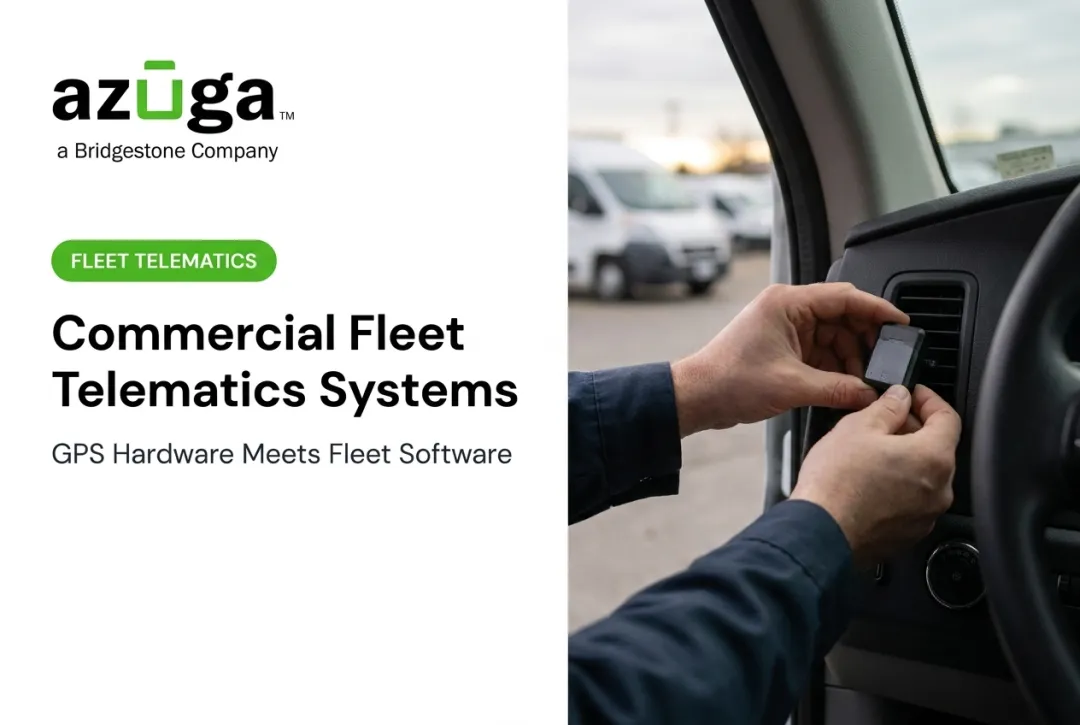
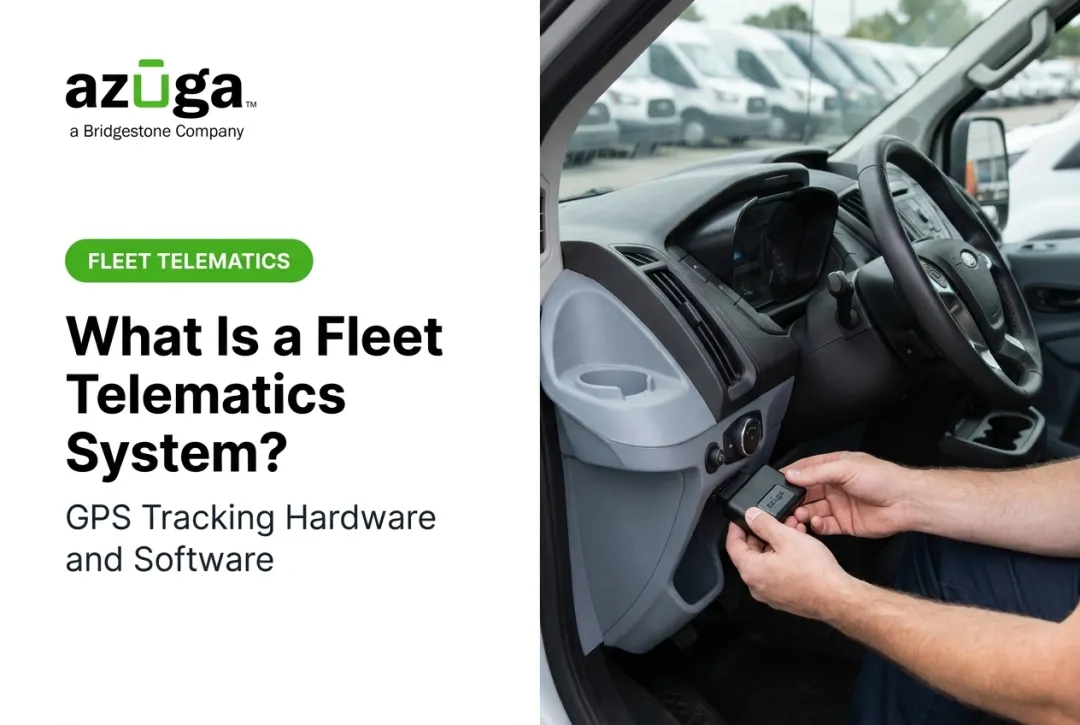
Plug-and-play devices like Azuga's connect directly to the OBD-II port, interface with the onboard computer, and relay engine-performance data without hardwiring or professional installation.
Processing and Alerting
Once data hits the cloud, software analyzes DTC patterns, filters out noise, and flags issues that actually need attention. Fleet managers then receive alerts through a dashboard or mobile app, often before the driver even notices anything wrong.
The workflow typically looks like this:
- Sensor detects abnormal reading (for example, coolant temperature spike)
- ECU generates a DTC
- Telematics device transmits the code via cellular network
- Cloud platform identifies the fault and triggers an alert
- Fleet manager schedules service before the issue escalates

Some platforms close the loop entirely by integrating diagnostic alerts with service scheduling. Azuga Fleet, for instance, sends daily DTC email alerts, captures engine data each time a vehicle is dispatched, and pairs diagnostics with geofencing to trigger work orders automatically—no manual handoff required.
High-frequency polling makes that loop useful: catching a fault when it appears beats waiting for a scheduled inspection weeks later.
Key Benefits of Remote Vehicle Diagnostics for Fleets
Remote diagnostics pay off across uptime, cost, safety, and planning
- Reduced unplanned downtime. Catching engine, transmission, or emissions issues early prevents roadside breakdowns. Geotab's 2025 analysis found that roughly 10% of vehicles in a typical fleet carry a high-severity fault at any given time, and many go unnoticed until a program actively hunts for them.
- Lower maintenance costs. Preventive maintenance consistently beats reactive repair. Azuga customers in HVAC have reported an average of 48% fewer breakdowns, and HomeWorks saw an estimated 80% reduction in vehicle wear and tear using Azuga's maintenance alerts.
- Improved driver safety. Mechanical failure and unsafe driving often overlap. Pairing engine diagnostics with driver behavior monitoring (such as Azuga's SafetyCam) shows managers which faults and habits put vehicles and drivers at risk.
- Faster repair turnaround. When a technician knows the fault code before the vehicle rolls into the shop, they can pre-order parts and skip diagnostic guesswork, so the vehicle spends less time sitting idle.
- Clearer maintenance planning. Historical diagnostic trends help fleet managers plan replacement cycles from real wear patterns, budget maintenance more accurately, and spot vehicles or routes that cause recurring issues.
Azuga's platform brings engine diagnostics, GPS tracking, and safety camera data into one view, so fleets aren't juggling three disconnected tools.

How Much Does Remote Vehicle Diagnostics Cost?
Pricing includes a hardware cost (often discounted or bundled) plus a monthly per-vehicle subscription. Your rate depends on fleet size, feature set, and whether dashcams or AI safety tools are included.
Azuga's plan tiers:
| Plan | Packaging | Includes |
|---|---|---|
| BasicFleet | Packages matched to fleet needs | GPS tracking, alerts, driver scores, geofencing |
| SafeFleet | Packages matched to fleet needs | Adds distracted-driving detection, vehicle diagnostics, panic alerts |
| CompleteFleet | Packages matched to fleet needs | Adds FuelSaver, one-minute tracking, quarterly reviews |
GPS tracking is available with packages matched to fleet needs with hardware options and no large upfront barrier for many fleets, with final pricing matched to fleet size and features.
Hardware cost stays low on the install side too: the OBD-II tracker plugs in yourself in about 20 seconds, so you can skip professional install fees.
What to weigh against the price:
- Fewer breakdowns and towing bills from earlier fault visibility
- Operational costs cut by as much as 30% through tighter fuel and maintenance control
- About 38% fewer accidents on average, which lowers insurance exposure
- Roughly $9,500 a year saved when fleets manage total cost more tightly

For most fleets, the subscription cost is small next to the price of a single unplanned roadside repair.
Remote Diagnostics vs. Traditional Vehicle Inspection Methods
Traditional inspection is reactive by design: a vehicle shows symptoms, a driver reports it, and a technician eventually looks at it. That model depends on technician availability and physical proximity to the vehicle.
Remote diagnostics flips the sequence. Faults surface the moment they occur, regardless of where the vehicle is parked or driving.
| Factor | Traditional Inspection | Remote Diagnostics |
|---|---|---|
| Timing | Periodic or symptom-triggered | Continuous, real-time |
| Location dependency | Requires physical proximity | Works anywhere with cellular coverage |
| Data source | Technician judgment | Standardized DTC codes |
| Response speed | Delayed until next visit | Immediate alert |
Combining remote diagnostics with GPS tracking, as Azuga's platform does, gives fleets visibility into both vehicle location and vehicle health. That dual view matters when you're deciding whether to route a vehicle to the nearest shop or keep it running for one more job.

Getting Started: Choosing a Remote Diagnostics Solution for Your Fleet
Not every telematics provider offers the same diagnostic depth. When evaluating remote diagnostics options, look for
- Self-installation – plug-and-play OBD-II devices that skip professional installation downtime entirely
- 24/7 support – availability matters when a fault alert comes in overnight
- Integration compatibility – with fuel cards, ELD systems, or existing fleet management software
- Bundled safety tools – GPS tracking and dashcams alongside diagnostics for a complete operational view
Azuga's fleet management platform covers each of these: self-install trackers, round-the-clock support, integrations with tools like Fleetio, ServiceTitan, and TowBook, and GPS tracking and dashcams bundled with diagnostics. For fleets that want diagnostics without adding another disconnected app, that bundling matters more than any single feature.
Frequently Asked Questions
How much does remote vehicle diagnostics cost?
Providers like Azuga offer packages that scale with fleet size, hardware, and features.
What hardware is needed for remote vehicle diagnostics?
You need a telematics device connected to the vehicle's OBD-II port, which reads data from the ECU, plus a cloud-based software platform to interpret and display it. Most modern devices, like Azuga's tracker, install in seconds without professional help.
Can remote diagnostics prevent breakdowns?
Yes. Early fault detection lets fleet managers schedule repairs before a minor issue becomes a roadside failure. Azuga customers in HVAC and towing have reported around 48% fewer breakdowns after adopting predictive maintenance alerts.
Is remote vehicle diagnostics only for large fleets?
No. Scalable, scalable packaging models make it accessible to small businesses too. Azuga serves fleets ranging from 5 vehicles to enterprise operations with 50,000-.
How is remote diagnostics different from a check engine light?
A check engine light only tells the driver something is wrong. Remote diagnostics sends the actual fault code, vehicle location, and severity level directly to the fleet manager in real time, enabling action before the driver even reports it.
Does remote diagnostics work with electric vehicles?
Increasingly, yes. Modern telematics platforms can track EV-specific data like battery state of health and charging behavior. Geotab's 2025 study of over 22,700 EVs found an average 2.3% annual battery degradation rate, varying with charging habits and climate.