
Fleet management IoT often gets described in technical terms: sensors, connectivity, data streams. But fleet managers don't care about the technology itself. They care about fewer accidents, lower fuel bills, and spending less time putting out fires.
This article skips the tech-spec talk. Instead, it breaks down the measurable, dollars-and-cents benefits of connecting your vehicles, drivers, and assets, and what happens when you don't.
Key Takeaways
- IoT fleet management connects vehicles, drivers, and assets via GPS and telematics for real-time data
- Connected fleets can lower operational costs by up to 30% and cut accidents through real-time driver insights
- North America's fleet-management installed base is projected to grow from 19.2 million systems in 2024 to 33.2 million by 2029 (Berg Insight)
- Without fleet IoT, maintenance stays reactive and safety incidents become harder to prevent
- Value comes from consistent review and action, not just data collection
What Is Fleet Management IoT
Fleet IoT (Internet of Things) uses connected hardware, such as GPS trackers, OBD-II devices, sensors, and dashcams, to continuously capture and transmit vehicle, driver, and asset data to one central platform.
In practice, this shows up as
- Vehicle location tracking across job sites, routes, and service territories
- Driver behavior monitoring for speeding, harsh braking, and distraction
- Fuel and engine diagnostics that flag problems before they become breakdowns
- Maintenance alerts based on real vehicle condition, not guesswork
- Dashcam footage that documents what actually happened on the road
Construction, HVAC, plumbing, trucking, and utility fleets all use these tools differently, but the goal is the same. The real value comes from the decisions this data enables: which routes to cut, which drivers need coaching, which vehicle needs service before it strands a crew on a job site.
Key Advantages of Fleet Management IoT
The advantages below focus on outcomes fleet managers already track: cost per vehicle, accident rate, fuel spend, and downtime. Each one ties directly to a metric that shows up on a monthly report, not an abstract tech capability.
Lower Operational and Fuel Costs
IoT devices track fuel consumption, idling time, and route efficiency in real time. That visibility shows exactly where money leaks out of a fleet budget, whether it's a driver idling for 20 minutes at every stop or a route that adds unnecessary miles.
Without this data, fleets overspend on fuel and overtime without knowing why. Fuel prices haven't moved in a straight line. U.S. on-highway diesel averaged $3.66 per gallon in 2025, down from a 2022 peak of nearly $5.00 (EIA), but even lower prices don't help if trucks burn fuel unnecessarily.
Idling is a bigger drain than most managers realize. Federal data shows idling can account for up to 8% of fuel burned by medium- and heavy-duty vehicles (U.S. Department of Energy). For a fleet running dozens of vehicles, that's real money evaporating in parking lots.
Azuga customers have reported reducing operational costs by 30% and saving an average of $9,462 annually through better fleet cost management. Idle-time alerts, fuel card integration, and route data turn budgeting from guesswork into forecasting.
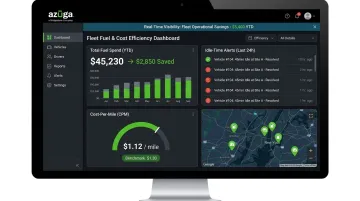
KPIs impacted: cost per mile, fuel spend, idle time, overtime hours, vehicle utilization rate.
High-mileage fleets and multi-stop service routes, HVAC, pest control, waste management, feel this benefit fastest, along with any business running on margins thin enough that every gallon counts.
Improved Driver Safety and Reduced Liability
IoT-enabled dashcams and sensors monitor driving behavior, harsh braking, speeding, distraction, as it happens. Instant alerts give fleet managers the chance to coach a driver before a bad habit turns into an accident report.
Unsafe driving is expensive well beyond the crash itself. It drives up insurance premiums, adds downtime, and increases legal exposure. In Texas alone, average commercial-auto liability premiums rose 70% between 2017 and 2024, or about 8.6% annually (Texas Department of Insurance). That trend isn't isolated to one state.
Fleets using Azuga's platform have seen
- Accidents decrease by 38% on average
- Speeding citations drop by 57%
- 70% of accidents proven not at-fault through AI-analyzed video evidence
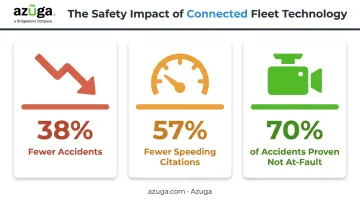
Beyond prevention, there's the fault question. Azuga SafetyCam AI with Collision Reconstruction gives businesses hard evidence instead of a he-said-she-said dispute after a collision.
KPIs impacted: accident rate, insurance premiums, citation frequency, driver safety scores.
Fleets in dense traffic and high-liability industries like trucking and towing see the biggest gains, especially companies watching insurance renewals climb every year.
Real-Time Visibility and Faster Decision-Making
IoT gives fleet managers a live view of vehicle locations, driver status, and asset condition, instead of waiting for an end-of-day report to find out something went wrong. Plug-and-play devices like an OBD-II tracker, combined with frequent location pings, let managers respond to problems as they happen.
Delayed information leads to missed deliveries, poor dispatching, and management that's always reacting instead of getting ahead of issues. A Bobit Business Media survey of more than 1,000 commercial and government fleets found that 59% named productivity as a major telematics benefit, and 92% reported a positive overall impact (Automotive Fleet).
One real-world case backs it up: Second Harvest's route optimization program delivered 7.6% more deliveries over one year, using the same fleet size.
Real-time visibility also changes the customer conversation. Accurate ETAs and proof of service build trust; nobody has to guess whether the plumber is running late.
KPIs impacted: dispatch response time, on-time arrival rate, asset utilization, customer satisfaction scores.
Fleets juggling multiple daily jobs and businesses scaling into new territories benefit most, particularly teams that need to prove where a vehicle was and when.
What Happens When Fleet IoT Is Missing or Ignored
Running a fleet without connected data costs money in ways that stay invisible until the damage is done.
Common consequences include
- Inconsistent fuel and maintenance costs that are difficult to explain or control month to month
- Higher accident and citation rates, simply because nobody has visibility into risky driving until it's too late
- Reactive maintenance, meaning breakdowns happen on the road instead of getting caught in the shop
- Trouble scaling operations, since delegating oversight without real-time data means managers are always a step behind
- Weak footing in accident disputes, with no video or location evidence to back up a driver's account
None of these are theoretical. They're the default state for any fleet still relying on paper logs, driver self-reporting, and end-of-month fuel receipts to understand what's happening on the road.
In fact, collision reconstruction technology reveals that up to 70% of accidents aren't the fleet driver's fault, yet without video evidence, that liability often lands on them anyway.
How to Get the Most Value from Fleet Management IoT
Installing hardware isn't the finish line. Fleets that see the biggest returns treat IoT data as a habit, not a one-time setup.
- Review data on a set schedule. Weekly or monthly check-ins on safety scores and fuel reports catch problems early, instead of only looking after an incident already happened.
- Tie insights to action. Coach drivers based on safety scores, adjust routes based on fuel data, and schedule maintenance from real diagnostics rather than a fixed calendar interval.
- Start small if needed. A self-installable OBD-II device lets smaller fleets adopt IoT without a big upfront investment or a dedicated IT team.
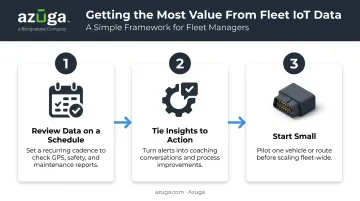
Skipping this review habit is the most common reason fleets underuse their IoT investment. Assign ownership of the weekly check to someone on the team, and the technology starts paying for itself instead of sitting untouched in an app nobody opens.
Conclusion
Fleet management IoT delivers value through cost control, safer driving, faster decisions, and measurable ROI, all backed by data instead of guesswork.
These benefits compound. Safer driving lowers insurance costs, freeing up budget for growth instead of claims, while lower fuel waste tightens forecasting. Better visibility keeps customers happy because they trust your ETAs.
Treat fleet IoT as an ongoing operational habit rather than a one-time installation checkbox.
Frequently Asked Questions
What is IoT in fleet management?
Fleet IoT uses connected devices like GPS trackers, OBD-II devices, and sensors to collect real-time data on vehicles, drivers, and assets. That data feeds into a platform that gives fleet managers continuous oversight instead of periodic snapshots.
What software is used for Fleet Management IoT?
Fleet IoT relies on GPS fleet tracking platforms, such as Azuga, that combine hardware like OBD-II devices and dashcams with cloud-based software for real-time monitoring, reporting, and driver coaching.
How does IoT fleet management reduce costs?
It reduces costs through route optimization, less idling, fewer accidents, and predictive maintenance that catches problems before they turn into expensive roadside breakdowns.
What kind of data can fleet IoT devices track?
Common data points include vehicle location, speed, harsh braking events, fuel consumption, engine diagnostics, and driver behavior patterns like distraction or fatigue indicators.
Is IoT fleet management worth it for small business fleets?
Yes. Affordable, plug-and-play solutions make IoT accessible even for fleets with just a handful of vehicles, and the savings on fuel and insurance often cover the cost quickly.
How long does it take to see ROI from fleet IoT?
Many fleets see measurable savings within the first few months, and Azuga customers save an average of $9,462 annually through reduced fuel waste, fewer accidents, and lower insurance premiums.