
Introduction
Picture a fleet manager at 7 a.m., juggling three spreadsheets, a stack of paper maintenance logs, and a phone that won't stop ringing with "where's my driver?" calls. One truck is late, another needs an oil change nobody tracked, and there's no way to know any of this until something breaks.
This is the daily reality for many fleets still relying on manual tracking methods. Cloud-based fleet management software solves this by centralizing vehicle, driver, and maintenance data on remote servers you can access from anywhere, on any device.
Businesses in construction, HVAC, trucking, plumbing, and waste management are adopting cloud fleet platforms fast. The reason is simple: these systems cut costs, reduce paperwork, and give managers real visibility into operations they used to guess at.
This guide breaks down what cloud-based fleet management actually is, how it works, and why so many fleets are making the switch.
Key Takeaways
- Cloud fleet software stores data on remote servers, accessible via browser or mobile app, not on-site hardware
- One platform combines GPS tracking, telematics, ELD compliance, and driver safety monitoring
- Switching from legacy systems typically cuts costs, boosts safety, and eases scaling
- Choose platforms based on easy installation, packages matched to fleet needs, and required compliance features
What Is Cloud-Based Fleet Management Software?
Cloud-based fleet management software uses cloud computing to collect, store, and analyze fleet data, meaning vehicle location, driver behavior, and maintenance needs, on remote servers instead of local, on-site infrastructure.
According to NIST's formal definition of cloud computing, this "software as a service" model means the provider runs the application on their infrastructure, while you just log in and use it.
Fleet managers pull up their dashboard from a laptop at home, a phone in a job site parking lot, or a tablet in the cab. No office computer required. No physical server room to maintain.
This marks a sharp departure from legacy, on-premise fleet software, which required businesses to buy servers, install software licenses, and keep IT staff on hand for updates and troubleshooting. If the server went down, so did your fleet visibility.
Cloud infrastructure removes that single point of failure. Data flows continuously from hardware installed in each vehicle, GPS trackers, telematics devices, dashcams, and ELDs, straight into the cloud. The result: one unified view of your entire fleet, updated constantly rather than pieced together from disconnected logs.
Core Components of a Cloud Fleet Management System
Every cloud fleet platform rests on three building blocks
- GPS/telematics devices installed in vehicles that capture location, speed, and engine data
- Cloud servers that store, process, and secure that incoming data
- A dashboard or app that turns raw data into insights managers and drivers can actually use
Installation used to be the bottleneck. Many systems today, including Azuga's OBD-II device, ship as plug-and-play hardware that fleets can self-install in minutes. No professional installation crew, no scheduling delays, no downtime waiting for a technician.
How Does Cloud-Based Fleet Management Software Work?
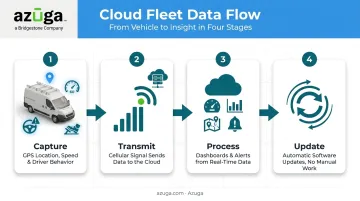
The data journey starts the moment a vehicle turns on. Here's how it typically flows
- Capture – A hardware device in the vehicle records GPS location, speed, engine diagnostics, and driver behavior (harsh braking, speeding, idling)
- Transmit – That data travels via cellular networks to remote cloud servers in near real time, rather than sitting on a local drive waiting for manual download
- Process – The cloud platform organizes raw data into dashboards, alerts, and reports viewable from any internet-connected device
- Update – Software updates, new features, and security patches get pushed automatically by the provider
The Department of Homeland Security's technical review of automatic vehicle location systems confirms that active systems transmit location events through cellular, radio, or satellite links in near real time. Onboard storage preserves the data if the connection drops, so nothing gets lost when signal fails. That's the technical backbone behind the "real-time tracking" claim you see on most fleet software websites.
Refresh frequency varies by provider and plan. Azuga, for example, tracks vehicle location at 30-second intervals, giving managers a near-continuous view rather than a snapshot updated every few minutes.
That same hands-off approach extends to software maintenance: no IT team is required to push these updates manually. The provider handles it on their end, and your dashboard reflects the changes the next time you log in.
Key Benefits of Cloud-Based Fleet Management
Faster Decisions, Lower Costs
Real-time visibility into vehicle locations and driver behavior lets managers reroute a truck stuck in traffic or reassign a job on the fly. It also means answering a customer's "where's my technician?" call instantly instead of guessing.
Cloud platforms also remove the need for on-site servers, IT maintenance, and hardware upgrades. Subscription pricing scales with fleet size, so a 10-vehicle operation and a 200-vehicle enterprise pay proportionally, not for infrastructure they don't need.
Safer Drivers, Fewer Accidents
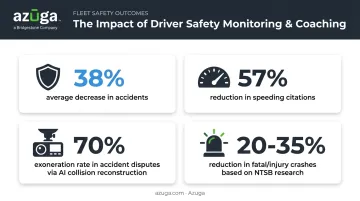
Driver safety monitoring (think harsh braking alerts, speeding notifications, and AI dashcams) gives managers the tools to coach drivers before small habits become expensive accidents. Azuga customers using these tools report
- A 38% average decrease in accidents
- A 57% reduction in speeding citations
- Exoneration in roughly 70% of accidents, thanks to AI-powered collision reconstruction
This tracks with independent safety research. The National Transportation Safety Board cited a model estimating that onboard video monitoring programs, paired with driver coaching, could reduce fatal crashes by 20% and injury crashes by 35%. The takeaway: monitoring plus active coaching drives results, not the camera alone.
Proactive Maintenance and Compliance
Automated maintenance alerts flag issues like check-engine codes before they become costly repairs. Azuga's platform, for instance, combines diagnostic trouble codes with geofence triggers so a mechanic gets notified the moment a flagged vehicle pulls into the shop.
Compliance gets simpler too. Cloud systems automatically organize ELD, DVIR, and IFTA records and send renewal alerts. The stakes here are real: FMCSA estimated its ELD rule prevents 1,844 crashes and 26 deaths annually, generating more than $1 billion in net benefits each year.
Built to Scale
A cloud platform grows from five vehicles to five hundred without new servers or infrastructure. Azuga's own network already tracks more than 400,000 devices logging 3 billion miles a year across 300 million trips, proof the architecture holds up at scale. That makes the platform equally viable for a small HVAC contractor and a national trucking operation.
Cloud-Based vs. Traditional Fleet Management Software
The difference between these two models comes down to who owns the infrastructure and who's responsible for keeping it running.
| Factor | Cloud-Based | Traditional (On-Premise) |
|---|---|---|
| Cost | Subscription-based, scales with fleet size | Large upfront hardware and server investment |
| Accessibility | Anywhere, any device with internet | On-site only, tied to office computers |
| Scalability | Add vehicles instantly, no new infrastructure | Requires new servers/licenses to expand |
| Maintenance | Vendor-managed | In-house IT team required |
| Update Frequency | Automatic, pushed by provider | Manual, scheduled by internal staff |
Growing businesses increasingly favor cloud systems for one simple reason: no server maintenance headaches. When you add a vehicle to the fleet, you add it to the platform, not to a procurement list for new hardware.
That flexibility matters most for seasonal businesses, like landscaping or construction, that scale up and down throughout the year.
Key Features and Considerations When Choosing a Cloud Fleet Management Platform
Not every platform fits every fleet. Before signing a contract, evaluate these must-haves
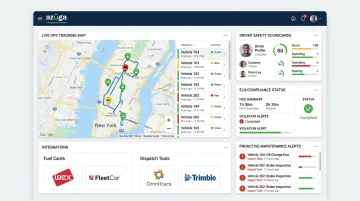
- Live GPS tracking frequency – frequent location refreshes, not 10-15 minute delays
- Driver safety scorecards – flags harsh braking, speeding, and distraction events
- ELD/compliance tools – built-in HOS logging, DVIR, and violation alerts
- Maintenance alerts – proactive diagnostics, not just breakdown reports
- Third-party integrations – fuel cards, dispatch software, and TMS platforms your team already uses
Contract Flexibility Matters
Many providers require a sales call just to get a quote, which slows down decision-making. Azuga matches packages to fleet size and features, so you can budget based on the capabilities your operation actually needs.
Installation and Support
Ease of setup and support availability often separate a smooth rollout from weeks of frustration. Self-install OBD-II devices, like Azuga's, let fleets get running in minutes without waiting on a technician.
Pair that with 24/7 phone, email, and web support, and onboarding friction drops for busy fleet managers who don't have time for a lengthy implementation.
Frequently Asked Questions
What is cloud-based fleet management software?
Cloud-based fleet management software runs fleet operations through remote servers instead of on-site hardware. Managers get real-time access to vehicle and driver data through a web browser or mobile app from anywhere.
How is cloud-based fleet management different from traditional fleet management software?
Traditional systems require businesses to buy and maintain their own servers, with IT staff handling manual updates. Cloud platforms eliminate that infrastructure, offering anywhere access with automatic updates pushed by the provider.
What features should I look for in a cloud-based fleet management system?
Prioritize accurate GPS tracking frequency, driver safety monitoring, ELD/DVIR compliance tools, and integration capabilities with fuel cards or dispatch software. These directly affect daily operations and long-term ROI.
Is cloud-based fleet management software secure?
Reputable providers use encryption, multi-factor authentication, and secure data centers to protect fleet data. Ask any vendor about their specific security certifications, such as SOC 2 or ISO 27001, before signing a contract.
How much does cloud-based fleet management software cost?
Packaging approaches vary widely across the market. Some vendors, like Azuga, offer packages matched to fleet needs, rather than requiring a sales call for a quote.
Can cloud-based fleet management software integrate with other business tools?
Yes. Most cloud platforms integrate with fuel cards, dispatch software, accounting tools, and industry-specific apps like Fleetio or ServiceTitan, creating one unified operational workflow instead of separate disconnected systems.