
That single moment can turn into six-figure repair bills, injury claims, and a lawsuit that drags on for years. A non-injury large-truck crash averages $49,398, while an injury crash climbs to $326,810, according to FMCSA's 2025 crash cost methodology.
A driver risk assessment flips the script. Instead of reacting after a crash, it flags problem behaviors and drivers before they cause one. This guide breaks down what a driver risk assessment actually is, why it matters for your bottom line, what factors it evaluates, and how modern telematics has turned a once-annual paperwork exercise into a continuous safety system.
Key Takeaways
- A driver risk assessment measures crash likelihood using history, behavior, and driving conditions.
- Speeding, harsh braking, distraction, and fatigue rank among fleets' top risk indicators.
- Proactive risk programs cut accidents, lower insurance costs, and strengthen legal defense after crashes.
- GPS telematics, AI dashcams, and scorecards turn risk assessment into an ongoing process.
- Data-driven coaching, not punishment, is what changes driver behavior long-term.
What Is a Driver Risk Assessment?
A driver risk assessment is a systematic evaluation of a driver's skills, behavior, and history to determine how likely they are to be involved in an accident or safety incident. It relies on structured, measurable data instead of guesswork or a manager's hunch.
So what does "driver risk" actually mean? It refers to the probability, and potential severity, of a driver causing or being part of a collision. That probability gets calculated from concrete indicators: prior violations, crash history, observed driving behavior, and even the conditions a driver typically works in.
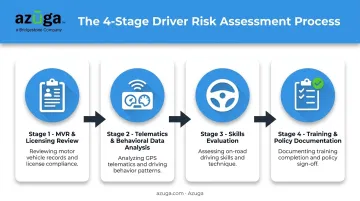
The typical assessment process includes:
- Reviewing motor vehicle records (MVR) and licensing status
- Analyzing telematics and behavioral data collected from the vehicle
- Conducting on-road or online skills evaluations when needed
- Documenting training completion and policy adherence
These assessments aren't limited to a single use case. Fleets use them for pre-hire screening, ongoing safety monitoring, insurance and compliance reporting, and pinpointing exactly which drivers need coaching.
Who Needs a Driver Risk Assessment?
Any business that puts drivers on the road needs one. Period. That includes a two-truck HVAC company just as much as a 500-vehicle utility fleet. Whether you're dispatching a single plumbing van or managing a regional trucking operation, the exposure is the same: a vehicle, a driver, and a public road.
Risk assessments matter at two distinct moments
- At hiring: to screen candidates before they're behind the wheel of a company vehicle
- On an ongoing basis: because a driver's risk level shifts over time with new habits, life changes, or accumulating violations
A driver who passed a clean background check three years ago isn't automatically safe today.
Why Driver Risk Assessments Matter for Fleet Safety
The core value is simple: catching high-risk patterns before they become accidents, injuries, or worse. But the ripple effects reach far beyond the vehicle itself.
Financial impact. Fewer accidents mean lower costs across the board. Costs drop when incidents decline, including:
- Fuel and vehicle maintenance expenses
- Repair and replacement costs
- Medical claims from driver and third-party injuries
- Insurance premiums tied to loss history
FMCSA's latest data backs this up: the average cost of a large-truck crash reaches $49,398 for non-injury incidents, $326,810 when someone is injured, and over $15 million for a fatal crash. Even a handful of avoided incidents changes a fleet's financial picture.
Legal and liability protection. Documented risk data and video evidence do more than support coaching — they can protect your business in court.
Azuga customers have used SafetyCam AI footage to show drivers weren't at fault in disputed accidents. In one case, dashcam evidence helped avoid over $50,000 in forensic reconstruction costs and a potential $1 million claim.
"Cameras don't lie." — Southern Tire Mart safety manager
Proactive versus reactive. Reactive fleets find out about a risky driver after the crash report is filed. Proactive fleets catch the third hard-braking event of the week and intervene before it becomes a fourth. That distinction is everything.
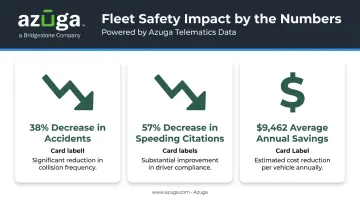
Fleets running Azuga's telematics and scoring tools have seen this play out directly, with customers reporting average decreases of 38% in accidents and 57% in speeding citations, along with roughly $9,462 in annual fleet cost savings from more effective safety management.
Key Factors That Determine Driver Risk Level
Risk scoring pulls from several data streams, not just one report or one bad day.
Driving history forms the baseline. MVR checks reveal past violations, at-fault accidents, and license status — the foundation every other data point builds on.
Behavioral data captured through telematics tells a more current story. Speeding, harsh braking, rapid acceleration, and following distance all get logged automatically, revealing habits a driver might not even realize they have.
So what are the most common examples of driving risk fleets actually watch for?
- Distracted driving: phone use, texting, or eating behind the wheel
- Fatigue or drowsy driving: especially on long routes or early shifts
- Aggressive driving: tailgating, hard cornering, sudden lane changes
- Impaired driving: alcohol or drug use affecting reaction time
Environmental and operational factors add another layer. Night driving, bad weather, heavy traffic, and long routes increase risk exposure independent of how skilled a driver is. A great driver on an icy night route still faces more exposure than an average driver on a clear afternoon.
Training and compliance round out the picture. Completion of defensive driving courses and adherence to company safety policy both factor into a driver's overall profile.
What Factors Make a Driver High-Risk?
No single factor makes a driver "high-risk"; it's the combination that matters. A driver becomes high-risk when several negative indicators stack up together: frequent violations, repeated harsh-driving events, a prior at-fault accident, and a lack of completed safety training. One speeding ticket doesn't define a driver. A pattern does.
How Technology Powers Modern Driver Risk Assessments
Manual reviews used to mean pulling MVRs once a year and hoping nothing changed in between. That approach doesn't hold up anymore, and fleets know it. According to a 2026 Verizon Connect fleet technology trends report, video-telematics adoption reached 46% among fleet professionals, with 74% of users reporting improved driver safety as a result.
GPS telematics now gives fleet managers continuous visibility instead of periodic snapshots. Azuga's platform tracks vehicles at 30-second intervals, capturing location and behavior data in near real time rather than waiting for a monthly report.
AI-powered dashcams take this further. Azuga SafetyCam AI uses a neural learning network to analyze driver-facing video, flagging distraction events as they happen and tagging the underlying cause. That same footage becomes evidence when a driver needs to prove they weren't at fault in a disputed accident.
The evidence for combining monitoring with human coaching is strong. A peer-reviewed commercial fleet trial found that video monitoring paired with manager feedback reduced risky driving events by 37% at one carrier and 52.2% at another. Pairing that technology with a manager who reviews the footage and follows up with drivers delivers the real safety impact.
Driver scorecards tie it all together. Azuga's scoring dashboard ranks drivers based on speeding, harsh braking, and rapid acceleration events, letting managers spot trends and prioritize coaching where it counts most instead of guessing.
Best Practices for Implementing a Driver Risk Assessment Program
Rolling out a risk assessment program works best when it's built on consistency, not guesswork.
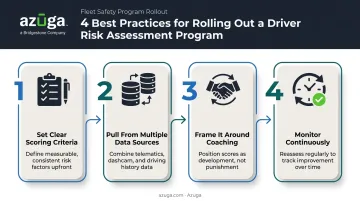
- Set clear scoring criteria upfront. Combine behavior data, driving history, and training records so every driver is measured against the same standard.
- Pull from multiple data sources. Telematics alone won't catch everything. Layer in MVR checks and incident reports for a fuller picture.
- Frame it around coaching. Drivers buy into a program that helps them improve, but resist one built solely to track write-ups.
- Keep monitoring continuously. Driving habits and conditions shift. A risk score from six months ago may no longer reflect reality.
Many fleets keep it simple: monthly feedback sessions built around scorecard data, or a dozen custom alerts covering everything from sudden acceleration to after-hours geofencing. Neither approach requires a massive team — just a system that flags what matters and a manager willing to act on it.
Frequently Asked Questions
What does "driver risk" mean?
Driver risk refers to the measurable likelihood that a driver will be involved in an accident, based on factors like driving history, observed behavior, and the conditions they typically drive in.
What factors make a driver high risk?
A combination of frequent violations, repeated risky-driving events, past at-fault accidents, and a lack of safety training typically classifies a driver as high-risk. It's rarely just one issue.
What are common examples of driving risks?
The most common examples are distracted driving, fatigue, speeding, and aggressive driving. Environmental factors like night driving and bad weather can compound all four.
How often should a driver risk assessment be conducted?
Risk should be assessed at hiring and then monitored continuously through telematics data afterward. Treating it as a one-time check leaves months of behavior changes uncaptured.
What tools help automate driver risk assessment?
GPS telematics, AI dashcams, and driver scorecard software (like Azuga's platform) automate ongoing risk tracking so fleet managers aren't relying on manual reviews.
Can driver risk assessments help lower insurance costs?
Yes. Fewer accidents and documented safe-driving data often lead to lower premiums and better negotiating leverage with insurers. Azuga customer Family Service Foundation saw exactly this after documenting fleet-wide safety improvements.