
Many fleet managers still track accidents with spreadsheets, paper forms, and a filing cabinet of photos. That approach might survive with five vehicles. It falls apart at fifty, especially as insurers demand more documentation and courts hand down bigger verdicts.
This guide covers what fleet accident management software actually does, the features worth paying for in 2026, how the crash-to-claim workflow should run, and how to choose a platform that fits your fleet.
Key Takeaways
- Non-injury crashes cost $49,261 on average; injury crashes cost $330,946.
- AI dashcams with collision reconstruction resolve disputed accidents in days, not months.
- GPS, video, driver scoring, and claims tools are converging into one platform.
- Azuga customers cut accidents by 38% and save $9,462 annually.
- Pricing is flexible, and installation, support, and integrations affect true cost.
What Is Fleet Accident Management Software?
Fleet accident management software automates the reporting, tracking, and resolution of vehicle collisions using telematics, video, and data analytics instead of phone calls and paper forms. When something happens on the road, the system captures the who, what, when, and where automatically, rather than relying on a shaken driver to remember every detail.
Most platforms run on a similar technology stack
- GPS and telematics sensors that log location, speed, and vehicle events
- AI dashcams that record road- and driver-facing video
- Driver behavior scoring based on braking, acceleration, and cornering
- Cloud-based dashboards that turn raw data into alerts, reports, and coaching material
Incident vs. Accident: Why the Distinction Matters
Not every bad moment on the road counts the same way. Federal regulation 49 CFR 390.5T defines an accident as an occurrence involving a fatality, injury requiring immediate treatment away from the scene, or disabling damage requiring a tow.
A near-miss, an equipment glitch, or a security breach falls under the broader "incident" category instead. Good software tracks both, but it should never blur the line. Getting this distinction right protects your federal accident register.
Why Fleet Accident Management Software Matters More Than Ever in 2026
Fleets aren't just managing more vehicles in 2026. They're managing more risk, more scrutiny, and less patience from insurers and juries alike.
Insurance Premiums and "Nuclear Verdicts" Keep Climbing
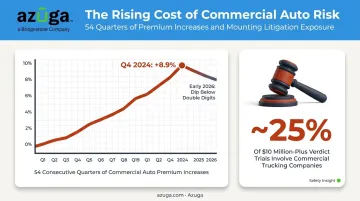
Commercial auto premiums rose an average 8.9% in Q4 2024 alone, marking the line's 54th straight quarterly increase. Rate growth finally dipped below double digits in early 2026, but it hasn't reversed.
Litigation has gotten far more expensive too. A 2024 Institute for Legal Reform study on nuclear verdicts found that commercial trucking companies were involved in roughly one-quarter of auto-accident trials that produced a verdict of $10 million or more. Without time-stamped video and telematics data, fleets are negotiating from a position of guesswork.
AI Video Evidence Is Becoming the Standard for Fault Determination
Video has become the standard for fault determination, not just a nice-to-have. Azuga reports that its SafetyCam AI Collision Reconstruction has helped fleets demonstrate that up to 70% of accidents aren't caused by their own drivers, evidence insurers and courts increasingly expect to see.
The data backs this up: a National Transportation Safety Board review of onboard video systems cites a VTTI analysis of 10,648 crashes where video paired with coaching was associated with 20% fewer fatal crashes and 35% fewer injury crashes.
Regulatory Pressure and Driver Retention Are Colliding
A few forces are converging at once
- FMCSA compliance is tightening. The agency removed 10 ELDs from its registered device list in mid-2026, and carriers still using them face non-compliance status.
- Driver shortages persist. The American Trucking Associations reported a need for 60,800 additional drivers in 2025, making retention a real cost driver.
- Camera acceptance is uneven. ATRI found 86.8% of drivers worry about privacy, yet the same footage exonerated drivers in 52% of insurance claims and 49% of litigation cases.
Fleets that document safety improvements have leverage. Azuga customers, for example, report a 38% average decrease in accidents, a 57% reduction in speeding citations, and $9,462 in annual savings: the kind of numbers that support renewal conversations with insurers.
Must-Have Features in 2026 Fleet Accident Management Software
Not every telematics platform qualifies as true accident management software. Here's what separates the tools worth buying from the ones that just track dots on a map.
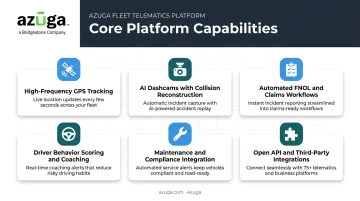
- High-frequency GPS tracking. Polling every 30 seconds, instead of the standard 2-5 minutes, gives you far more data points to reconstruct speed and position in the seconds before a crash.
- AI dashcams with collision reconstruction and distraction detection. Neural-network video analysis flags risky behavior, such as hard braking, distraction, and sudden acceleration, both before and during a collision, not just after the fact.
- Automated FNOL and claims workflows. Direct data feeds to insurers cut down on manual paperwork and speed up the first, most critical hours of a claim.
- Driver behavior scoring and coaching. Harsh braking, acceleration, and cornering alerts feed into gamified scorecards that reduce repeat incidents over time.
- Maintenance and compliance integration. Linking DVIR and preventive maintenance data flags mechanical issues, such as worn brakes and tire wear, before they cause a wreck.
- Open API and third-party integrations. Fuel cards, ELDs, and TMS or insurance platforms all need to talk to each other, or you're back to manual data entry.
One caution: not every vendor documents these features the same way. Ask for specifics on polling frequency, camera resolution, and which insurance partners actually connect to their FNOL process before signing anything.
Inside the Fleet Accident Management Process: From Crash to Claim Closure
The best fleet accident management software also manages what happens after a crash, turning chaos into a repeatable process across four connected stages.
First Notice of Loss (FNOL)
The first hour after a crash sets the tone for everything that follows. Mobile-enabled driver reporting lets a driver submit photos, location, and a brief statement directly from the scene. Fleet managers get an instant alert instead of a delayed phone call, and that head start matters when insurers, tow companies, and repair shops all need to coordinate at once.
Subrogation and Loss Recovery
Time-stamped GPS and video evidence turns a "he said, she said" dispute into a documented fact pattern. Some platforms take this further: Azuga's SafetyCam AI uses collision reconstruction to show drivers weren't at fault in roughly 70% of the accidents it reviews. When a third party is at fault, that evidence speeds up recovery of repair costs, medical expenses, and downtime, rather than leaving your fleet to absorb costs that belong to someone else's insurer.
Repair Management
Centralized vendor coordination keeps a damaged vehicle from sitting idle for weeks. Tracking repair estimates, approvals, and costs in one place, rather than across scattered emails, controls both spend and downtime.
Data Analysis and Prevention
Every accident and near-miss should feed back into your safety program. Aggregated incident data highlights which routes, drivers, or vehicle types carry the most risk, informing coaching sessions and policy updates. This is the step most fleets skip, and it's the one that lowers your accident rate over time.
How to Choose the Right Fleet Accident Management Software for Your Fleet
Picking a platform comes down to four practical checks before you sign a contract.
- Confirm integration readiness. Does it connect with your existing GPS, ELD, fuel card, and insurance systems, or will you be running parallel spreadsheets anyway?
- Weigh installation and usability. A self-install OBD-II device saves weeks compared to a professional hardware install. Check that the driver-facing mobile app is simple enough for daily use.
- Calculate total cost of ownership. Subscription pricing is only part of the number. Factor in hardware, camera add-ons, and any hidden fees. Azuga's packages matched to fleet needs is a useful market benchmark for comparison.
- Verify support and onboarding quality. Vendors offering 24/7 phone, email, and web support minimize downtime during the rollout — a period when problems tend to surface fastest.
Why Fleets Are Choosing Azuga for Accident Management in 2026
Azuga built its accident management approach around one idea: evidence should settle disputes, not slow them down.
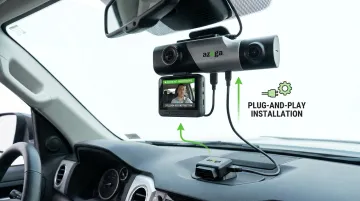
SafetyCam AI with Collision Reconstruction uses artificial intelligence to analyze driver-facing video and help prove fault or innocence when accidents are disputed. It's paired with a self-install OBD-II device (no professional installer required) and packages matched to fleet needs, backed by Bridgestone.
The results customers report speak for themselves:
- 38% average decrease in accidents
- 57% fewer speeding citations
- $9,462 in average annual savings
- Recognition as a G2 Leader across categories
Azuga backs all of it with 24/7 unlimited phone, email, and web support, plus 75+ third-party integrations covering fuel cards, ELDs, and service fleets platforms. These connections matter whether you're running five plumbing vans or a five-hundred-truck logistics operation.
Fleets curious about their own potential savings can run the numbers through Azuga's ROI calculator before committing to anything.
Frequently Asked Questions
What is fleet accident management software?
It's a system that automates accident reporting, tracking, and analysis using telematics and video data instead of paper forms. It captures location, speed, and footage automatically when a collision occurs.
How much does fleet accident management software cost in 2026?
Packaging typically follows a per-vehicle subscription model, often with packages matched to fleet needs and custom enterprise quotes for larger fleets. Camera add-ons and hardware type can raise the total.
Can fleet accident management software help reduce insurance premiums?
Documented safety improvements, including fewer accidents, lower speeding rates, and verified driver behavior data, give fleets leverage in premium negotiations. Insurers respond to evidence, not promises.
What's the difference between a fleet incident and a fleet accident?
An incident includes near-misses, equipment failures, or security events with no damage or injury. An accident, under FMCSA's definition, specifically involves a fatality, injury, or disabling damage requiring a tow.
How does AI dashcam technology help exonerate drivers?
Collision reconstruction analyzes driver-facing footage alongside telematics data to establish what actually happened, rather than relying on conflicting witness accounts. This objective evidence can shift fault away from drivers who weren't responsible.
Is fleet accident management software worth it for small fleets?
Yes. Small fleets still face the same claims costs, legal exposure, and reporting headaches as large ones, often with less cushion to absorb a bad accident. Faster reporting and driver accountability pay off even with a handful of vehicles.