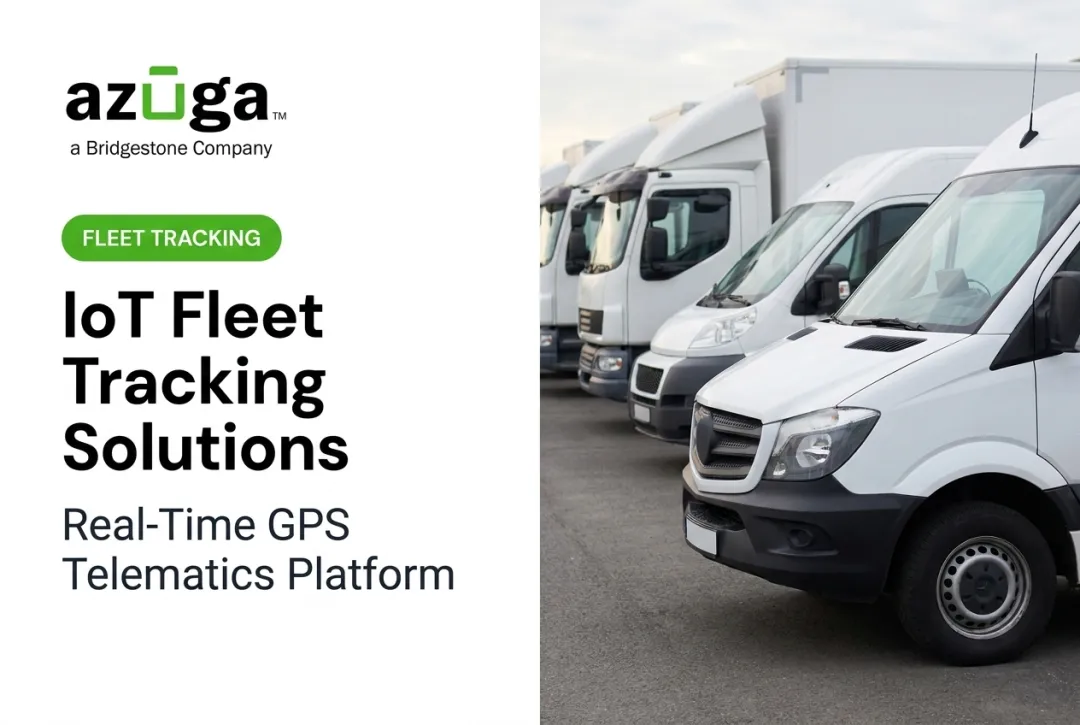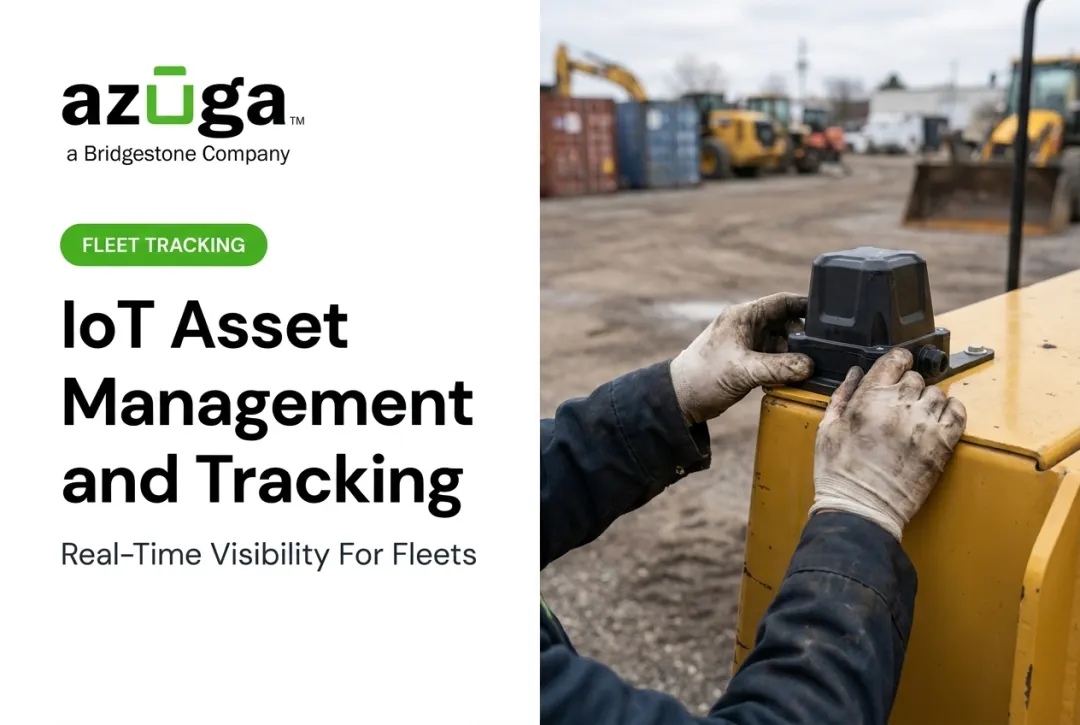

That's the gap connected fleet management fills. It combines GPS, IoT sensors, and telematics software to give fleet managers real-time visibility into where vehicles are, how drivers behave, and when equipment needs attention.
This article covers what connected fleets actually are, the technology running underneath, the benefits worth measuring, and how to pick a platform that fits your business.
Key Takeaways
- Connected fleet solutions unite GPS, IoT sensors, and telematics for real-time vehicle, driver, and asset visibility
- Azuga customers report a 38% average drop in accidents and 57% fewer speeding citations
- Choose platforms for easy install, flexible pricing, scalability, and strong support
- Construction, HVAC, trucking, and utility fleets all use tailored connected fleet features to cut costs and risk
What Is a Connected Fleet Management Solution?
A connected fleet is a network of vehicles equipped with GPS trackers, OBD-II devices, and sensors that stream data to a central platform. Data flows from the vehicle's diagnostic port to a cloud dashboard, letting managers see location, speed, idling, and driver behavior as it happens.
GPS tracking alone shows where a vehicle is. A full connected fleet management system adds
- Driver safety scoring and coaching alerts
- Compliance tools for ELD and hours-of-service tracking
- Predictive maintenance flags before a breakdown happens
- Automated reporting for audits and insurance
Together, those capabilities move fleet management from reactive to proactive. Instead of learning about an accident after the fact or a blown engine on the side of the highway, managers see warnings early enough to act.
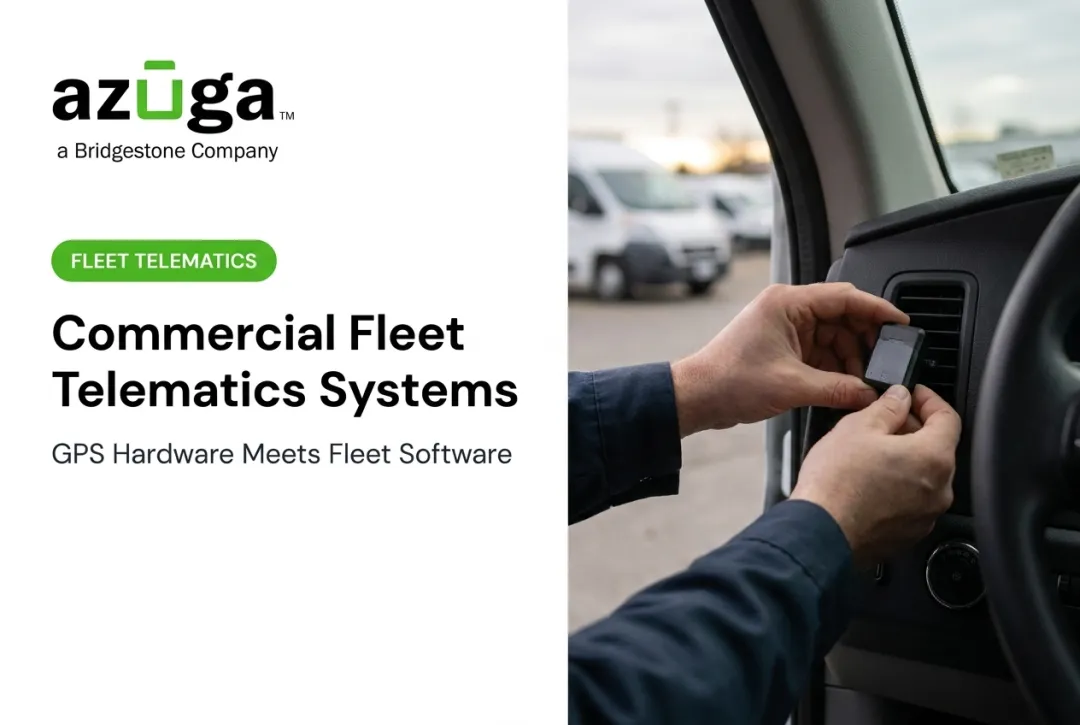
Azuga's plug-and-play OBD-II tracker plugs into the vehicle's diagnostic port and reads engine data every second, without a professional installer. That self-install design puts connected fleet tech in reach for everyone from a five-van pest control company to enterprise fleets running 50,000+ vehicles.

Core Technologies Powering Connected Fleet Solutions
GPS and Real-Time Location Tracking
Continuous location tracking powers route optimization, dispatching, and geofencing alerts. The tracking interval matters more than most buyers realize.
Standard hourly pings leave blind spots. Azuga's CompleteFleet plan updates every 30 seconds, giving dispatchers a near-live view instead of a stale snapshot.
Telematics and OBD-II Devices
An OBD-II device plugs into the vehicle's standardized diagnostic port. It pulls engine data, fuel usage, and diagnostic trouble codes directly from the vehicle's computer.
No technician visit required. Azuga's tracker installs in about 20 seconds and starts capturing diagnostic and driver-behavior data immediately.
Dashcams and AI-Powered Safety Cameras
AI dashcams combine driver-facing and road-facing footage with machine learning to flag distraction, harsh braking, and near-collision events in real time.
They also matter after an accident. Collision reconstruction technology pairs video with sensor data to show exactly what happened, so fault rests on evidence instead of guesswork.
Cloud Analytics and Reporting Dashboards
Cloud platforms pull data across the entire fleet into one place
- Live maps showing every vehicle, driver, and job status
- Driver scorecards ranking behavior over time
- Automated compliance reports for ELD/HOS and DVIR
- Fuel and maintenance summaries by vehicle or route

Key Benefits of Connected Fleet Management Solutions
Fewer Accidents, Fewer Citations
Real-time alerts catch risky driving as it happens, not after a claim gets filed. Azuga customers see a 38% average decrease in accidents and a 57% reduction in speeding citations after rolling out driver behavior monitoring and coaching.
A 2014 DOT field study of 46 trucks found similar results using monitoring, feedback, and incentives: 55% fewer minor unsafe events and 60% fewer serious ones.
Predictive Maintenance Prevents Breakdowns
Engine fault alerts flag problems before they turn into a stranded truck and an expensive tow. HVAC fleets using Azuga's predictive maintenance program see 48% fewer breakdowns on average.

Fuel and Route Optimization
Better routing and less idling add up fast. Route optimization uses historical data, live traffic, and weather to cut deadhead miles
- Azuga customers report a 30% reduction in operational costs
- Average annual savings of about $9,462 per fleet
Compliance Without the Paperwork Chase
Azuga Fleet+ELD provides electronic driver logs and DVIR reporting built to meet FMCSA requirements, including the 11-hour driving limit, 14-hour window, and mandatory 30-minute breaks. Audit-ready reports replace manual log review.
Liability Protection When Accidents Happen
Azuga's SafetyCam AI with collision reconstruction has shown that 70% of accidents aren't the fault of the fleet's driver. Without video evidence, that driver often takes the blame anyway. With it, fleets avoid costly litigation and unfair insurance hikes.
Choosing the Right Connected Fleet Management Solution
Not every platform fits every fleet. Run through this checklist first
- Installation — Can your team self-install the hardware, or does it require a professional technician and a service appointment?
- Pricing flexibility — Does the cost scale with your fleet size, or do you pay enterprise rates for five vehicles?
- Scalability — Can you add vehicles mid-contract without renegotiating everything?
- Support availability — Is help available at 2 a.m. when a driver's device stops reporting?
- Integration — Does it connect to your fuel cards, dispatch software, and existing business systems?

Azuga is built to clear each of those hurdles
- OBD-II devices install in about 20 seconds with no technician
- packaging that scales with fleet size, hardware, and features
- Coterminous contracts so you can add vehicles without resetting renewal dates
- 24/7 support by phone, email, and web chat
- 75+ integrations, including fuel cards, TowBook, and major field-service platforms
Industry Use Cases for Connected Fleet Solutions
Construction, HVAC, and plumbing fleets rely on geofencing to confirm job-site arrival times and catch unauthorized vehicle use after hours. A crew that clocks in at 8 a.m. but the truck shows up at 8:45 is a conversation worth having. Geofencing makes that gap visible instantly.
High-mileage operations need the same visibility at scale. Trucking and waste management fleets lean on connected solutions for three things
- ELD/HOS compliance across long routes
- Route optimization that cuts fuel spend on high-mileage days
- Real-time ETAs based on live traffic and weather
Those same capabilities are no longer limited to large fleets. Small businesses in pest control, electrical, and landscaping use affordable, scalable tools to compete with larger companies. Bug-N-A-Rug Exterminators cut costs by more than 50% after switching to Azuga — with real-time tracking and simplified billing, no enterprise budget required.
Frequently Asked Questions
What is a connected fleet?
A connected fleet uses GPS, telematics, and IoT devices to give real-time visibility into vehicle location, driver behavior, and maintenance needs. It replaces manual tracking with continuous, automated data.
How does connected fleet technology improve driver safety?
Real-time alerts flag risky behavior like speeding or hard braking as it happens. Driver scorecards and AI dashcams add coaching and video evidence to correct patterns before they cause accidents.
What is the difference between GPS tracking and fleet telematics?
GPS tracking shows only vehicle location. Telematics combines that location data with vehicle diagnostics, driver behavior, and analytics for a complete operational picture.
How much does a connected fleet management system cost?
Most providers, including Azuga, match packages to fleet needs rather than one flat rate.
Can small businesses benefit from connected fleet solutions?
Yes. Affordable, self-installable, scalable options make connected fleet tech accessible to fleets with just a handful of vehicles, not only large enterprises.
How long does it take to install a connected fleet system?
Plug-and-play OBD-II devices install in about 20 seconds without a professional technician. No service appointment or downtime is required.