
Introduction
A single excavator can cost more than a house. A skid steer, a generator, a compactor — each one represents real capital sitting on a job site, often overnight, often unattended. Yet plenty of fleets still track this equipment with a clipboard, a spreadsheet, or nothing at all.
That gap creates real problems
- Stolen machines with no trail to recover them
- Surprise breakdowns mid-project that stall a crew
- Assets sitting idle while crews rent duplicates
- Zero visibility into what's happening across scattered job sites
Construction, utilities, landscaping, and waste management crews all feel this pain differently, but the root cause is the same: no real-time data on where equipment is and how it's being used.
This guide breaks down how GPS tracking for heavy equipment actually works, the hardware options available, how to pick the right solution, and what the law says about tracking company-owned assets. We'll also show where Azuga fits for fleets running a mix of vehicles and equipment.
Key Takeaways
- GPS tracking captures engine hours and diagnostics beyond location, powering smarter maintenance and billing
- Construction equipment theft costs $300 million to $1 billion annually, with recovery rates below 25%
- Powered assets need hardwired trackers, while unpowered assets need battery-powered units, and the two aren't interchangeable
- Contract-packages matched to fleet needs and self-installation are becoming the standard fleets expect
- Tracking company-owned equipment is legal in most states, but notice and consent rules vary
What Is GPS Tracking for Heavy Equipment?
Heavy equipment tracking covers a lot more than bulldozers. At Azuga, the category spans excavators, skid steers, generators, compressors, forklifts, cranes, trailers, mowers, and even tool boxes : anything valuable enough to justify visibility, powered or not.
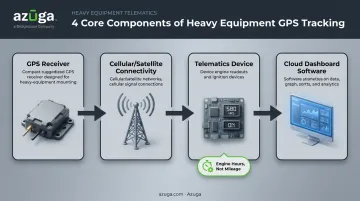
A typical system has four working parts
- GPS receiver: pinpoints the asset's location using satellite positioning
- Cellular or satellite connectivity: sends that location data back to the cloud
- Telematics device: the hardware installed on or inside the machine, capturing engine data, ignition status, and diagnostics
- Cloud dashboard software: where fleet managers view location, usage, and alerts in one place
These four parts form the backbone of every setup, but how they're prioritized changes once you move from trucks to equipment.
How It Differs From Vehicle GPS Tracking
Vehicle tracking is built around mileage, routes, and driver behavior. Heavy equipment tracking flips the priority. Instead of odometer readings, the system cares about engine hours, the real measure of wear and service intervals for machines that might sit still for hours while the engine runs.
Ignition status matters more than speed here too. Knowing whether a generator has been running unattended for six hours tells you more than knowing it hasn't moved an inch.
Key Benefits of GPS Tracking for Heavy Equipment
Theft Prevention and Recovery
Heavy equipment theft is a bigger problem than most owners realize. Industry estimates cited by the National Equipment Register put annual losses between $300 million and $1 billion, with recovery rates staying under 25%. Once a machine leaves the job site, the odds of getting it back drop fast.
GPS tracking changes that math through
- Geofencing: virtual boundaries around job sites or yards that trigger alerts the moment equipment crosses them
- After-hours movement alerts: flagging any activity outside approved working hours
- Real-time location sharing: giving law enforcement a live coordinate instead of a last-known guess
Azuga customers like All-Lift use this exact approach, monitoring vehicle and equipment whereabouts on nights and weekends. The company credits the visibility with eliminating unauthorized use entirely, as staff now flag after-hours needs proactively instead of just taking a truck.
Reduced Unplanned Downtime
A cracked hydraulic line or blown engine mid-project doesn't just cost repair money; it stalls the whole crew. Engine-hour tracking lets fleet managers schedule service based on actual use rather than a calendar guess.
The U.S. Department of Energy's operations and maintenance research found that well-run predictive maintenance programs cut costs 25%-30% and reduce breakdowns by 70%-75% compared to reactive or purely calendar-based approaches. Those figures come from broad industrial data, not a heavy-equipment-only study, but the mechanism translates directly: service the machine when it's actually due, not when the calendar says so.
Improved Equipment Utilization
Idle equipment is money doing nothing. A Teletrac Navman study found construction equipment can sit idle up to 50% of the time, and 67% of respondents admitted to equipment hoarding, keeping machines "just in case" instead of redeploying or renting them out.
Usage reports solve this by showing
- Which assets are actually earning their keep
- Which ones sit unused long enough to sell or rent out
- Where duplicate equipment purchases could be avoided entirely
Enhanced Safety and Compliance
Powered industrial trucks require pre-shift inspections under OSHA 1910.178(q)(7), and cranes require a competent-person check before each shift under 1926.1412. Monthly and annual crane inspections carry specific documentation and retention requirements.
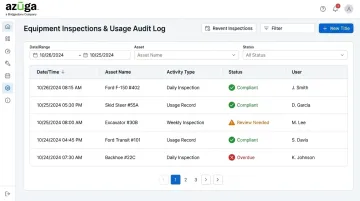
A GPS and telematics platform creates a digital, timestamped record that supports these obligations. It won't replace a physical inspection, but it does give safety managers an auditable trail if a dispute or audit ever comes up.
Job Costing and Billing Accuracy
Engine-hour data tied to job codes eliminates the guesswork in billing. Instead of estimating how long an excavator was on-site, fleet managers can pull exact usage numbers per project, protecting margins and preventing client disputes over hours billed.
Real, Measurable Cost Impact
Azuga's own fleet data backs this up across mixed fleets of vehicles and equipment
- 38% average reduction in accidents
- 57% fewer speeding citations
- $9,462 saved annually per fleet through better cost management
- 30% reduction in overall operational costs
These numbers come from vehicle-focused deployments, but the underlying discipline of visibility plus accountability applies just as directly to equipment.
Types of GPS Tracking Hardware for Heavy Equipment
Not every asset needs the same hardware. Matching the tracker to the equipment type is where most buying decisions go wrong.
Hardwired vs. Battery-Powered Trackers
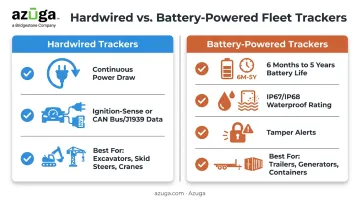
Hardwired trackers draw power directly from the machine's electrical system. They're the right choice for excavators, skid steers, cranes, and forklifts because they capture ignition status and engine hours continuously, with no battery to swap.
Battery-powered trackers are built for unpowered assets: trailers, generators sitting idle, storage containers, and other equipment without a constant power draw. The trade-off is straightforward: more frequent location pings drain the battery faster, so fleets have to balance visibility against service intervals.
Azuga's asset trackers fall into two tiers here: a rechargeable option with roughly six months of battery life per charge, and a long-life tracker rated for up to five years, aimed at equipment that's hard to reach or rarely powered on.
Ignition-Sense vs. CAN Bus/J1939 Integration
Basic ignition-sense installs use a simple three-wire connection to report location and engine-on/off status, enough for most mid-value equipment.
CAN bus/J1939 integration taps into the machine's own data network, pulling fault codes, fuel burn, and (on supported machines) DEF levels. This deeper visibility is worth the added cost for high-value assets where diagnostics justify the investment.
Connectivity, Ruggedization, and Update Frequency
Most job sites have reliable cellular coverage, which is all that's needed for the majority of fleets. Satellite connectivity only becomes necessary for genuinely remote sites (think pipeline work or backcountry logging) where cellular signal simply doesn't reach.
Ruggedization matters just as much as connectivity. Equipment tracking hardware lives through dust, mud, vibration, and rain, so look for
- IP67 or IP68-rated waterproof and dust-tight housings
- Vibration resistance built for heavy machinery
- Tamper alerts that flag attempts to remove or disable the device
Update frequency is the final trade-off. Pinging every 30 seconds gives near-live visibility but uses more battery and data, while periodic updates every few minutes stretch battery life but leave brief gaps in the location trail.
Azuga's high-frequency vehicle tracking updates every 30 seconds. The right interval depends on whether you need to see a theft unfold in real time or simply confirm the machine hasn't moved overnight.
How to Choose the Right GPS Tracking Solution for Your Fleet
Before comparing vendors, map out what you actually own. A fleet running excavators, generators, and trailers needs a provider that supports both hardwired and battery-powered hardware, not one that only does vehicles well.
Prioritize Ease of Installation
Professional installation means scheduling downtime and paying labor costs before the tracker even turns on. Azuga's hardwired and battery-powered equipment trackers sidestep that friction - fleet managers can mount devices themselves in minutes, no lengthy technician appointment required. Match the mounting method to the asset: hardwired for powered machines, battery-powered or magnetic mount for trailers and unpowered gear.
Evaluate Contract Flexibility and Contract Terms
Sales-call-only packaging and multi-year lock-ins are a red flag for growing fleets that need flexibility. Azuga uses packages matched to fleet needs, month-to-month, with no long-term contract required. Flexible terms should be part of how you compare every equipment tracking quote.
Check Integration Capabilities
Your telematics platform shouldn't live in a silo. Open APIs and integrations with maintenance software, ERP systems, and fuel card providers matter as fleets scale. Azuga's marketplace connects with 75+ platforms, including Procore, ServiceTitan, and Fleetio, useful for construction and trades businesses already running project management software.
Confirm Support Quality
Equipment problems don't wait for business hours. A tracker failing at 6 a.m. before a crew mobilizes needs a real answer, not a ticket queue. Azuga offers 24/7 phone, email, and web support, a baseline worth confirming with any provider before you sign up.
Legal Considerations for Tracking Company-Owned Equipment
In the U.S., employers generally have the legal right to install GPS trackers on equipment and vehicles the company owns. Ownership is the deciding factor — but state law adds wrinkles worth knowing.
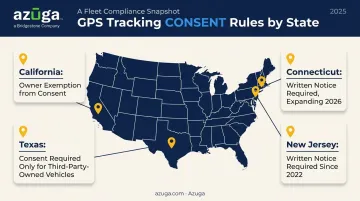
| State | Key Rule |
|---|---|
| California | Penal Code 637.7 exempts the registered owner, lessor, or lessee from consent requirements |
| Texas | Penal Code 16.06 requires consent only when installing on a vehicle owned by someone else |
| New Jersey | Requires written notice before tracking any vehicle used by an employee, effective 2022 |
| Connecticut | Requires prior written notice under its broader electronic monitoring statute, with expanded notice rules taking effect October 2026 |
Given how much this varies, a few best practices apply everywhere
- Put it in writing. A documented GPS tracking policy protects the company and sets clear expectations for operators.
- Disclose it. Even where consent isn't legally required, telling employees builds trust and avoids surprises.
- Be cautious with personal vehicles. Tracking a personally-owned vehicle used for work carries far more legal risk than tracking company assets.
There's an upside beyond compliance, too. Location and engine-hour data give both the company and the operator an objective record during accident investigations, insurance claims, or disputes over hours worked. Platforms with built-in dashcams, like Azuga's SafetyCam, add another layer by reconstructing footage from before an incident to help establish fault.
Frequently Asked Questions
What's the best fleet tracker for heavy equipment?
It depends on your fleet mix, budget, and need for engine diagnostics. Platforms offering both hardwired and battery-powered options with flexible, no-contract packaging tend to serve mixed fleets best.
Do excavators have GPS tracking?
Yes. Excavators and other powered heavy equipment can run hardwired GPS trackers connected to the machine's electrical system, capturing location, engine hours, and diagnostic data.
Is it illegal to put a tracking device on a company vehicle?
Generally no, since the employer owns the asset. Some states, including New Jersey and Connecticut, require employee notification, so check your state's specific rules before installing.
How much does GPS tracking for heavy equipment cost?
Azuga's vehicle tracking matches packages to fleet needs, a useful benchmark when comparing equipment tracking quotes.
Can GPS trackers work on unpowered equipment like generators or trailers?
Yes. Battery-powered trackers are built specifically for unpowered assets. Battery life and weatherproofing are the two factors that matter most when choosing one.
How does GPS tracking help prevent equipment theft?
Geofencing and after-hours movement alerts flag unauthorized activity the moment it happens, giving fleet managers and law enforcement a real-time location instead of a cold trail.