
This guide tackles two problems most towing operators wrestle with: choosing between a dispatch-first platform and a full fleet management suite, and closing the safety and liability gap that most dispatch software simply ignores.
Here's what we'll cover: the top towing dispatch platforms heading into 2026, the features that actually matter, the GPS and safety layer most operators overlook until an accident forces the issue, and how to match your software stack to your fleet size.
Key Takeaways
- Towing dispatch software should handle four core jobs: dispatch, impound/storage, billing, and motor-club integration
- Most platforms only excel at two or three of these four jobs
- Monthly packaging depends on fleet size, with enterprise platforms typically available on request
- Dispatch software books jobs but won't monitor drivers or defend liability claims
- Your fleet size and revenue mix (impound vs. dispatch) should drive your platform choice
What Is Towing Dispatch Software?
Towing dispatch software is the system of record for a tow call's entire lifecycle. It logs the request, assigns the nearest available truck, tracks the job in progress, and closes it out with an invoice.
That's the baseline. Better platforms add impound inventory, lien processing, and direct connections into motor-club networks so jobs never have to be typed in by hand. Azuga, for example, integrates with towing-specific tools like TowBook alongside its GPS and dispatch data, giving fleets one system instead of three.
Who Uses This Software?
- Independent owner-operators running one or two trucks who need basic call logging and invoicing
- Small to mid-sized fleets working motor-club contracts that require digital job acceptance
- Larger operators managing impound lots, police rotation, and multi-location dispatch
Why It Matters More in 2026
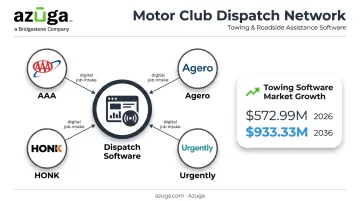
Phone-based dispatch used to be the norm. Now it's becoming the exception. AAA pushes drivers toward its Digital Roadside Request tool. Agero's Swoop platform runs on a Provider API that feeds jobs straight into dispatch software. HONK and Urgently both operate on the same logic: digital in, digital out.
If your software can't plug into these networks, you're stuck manually re-entering jobs while competitors accept them in seconds.
The money backs this up. The global towing software market is projected to grow from $572.99 million in 2026 to $933.33 million by 2036, according to Future Market Insights. That's real investment flowing into digital tools, and it signals where motor-club expectations are headed.
Top Towing Dispatch Software Solutions to Consider in 2026
No single platform wins every category. Some excel at dispatch simplicity. Others are built around impound and lien processing. Your call depends on what actually drives revenue in your operation.
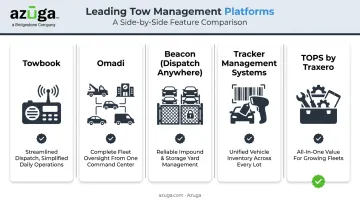
Towbook
Towbook is the go-to all-rounder for small to mid-sized fleets. It's known for a clean interface and built-in digital dispatch from AAA, Agero, GEICO, HONK, Progressive, and Urgently.
Packaging is transparent, which is rare in this industry: tiered by call volume. Overage fees apply per additional call volume, with no setup fee or contract.
The tradeoff? Impound and storage tools exist but are lighter than platforms built specifically around lot management.
Omadi
Omadi leans into full fleet management rather than dispatch alone. Think customizable reporting, back-office operations, and scalability for fleets running multiple service lines, such as towing, roadside, and recovery, under one roof.
Packaging is flexible, which fits growing fleets better than solo operators who want to see a price before booking a demo.
Beacon (Dispatch Anywhere)
Beacon, now part of Autura's Dispatch Anywhere product, combines dispatch with storage and impound management. It's built for established mid-to-large towing operations already handling motor-club contracts at volume.
Its motor-club integration depth is a standout: jobs land in the queue without manual re-entry. Mobile dispatching lets drivers update status from the truck as jobs progress.
Tracker Management Systems
Tracker takes a unified approach: dispatch, inventory tracking, and impound lot operations in one platform. It's a fit for operators where storage fees and lien processing represent meaningful revenue, not an afterthought.
Historical trade data shows integrations with Allstate, Agero, FleetNet, GEICO, and several other motor clubs, though current published pricing wasn't available at the time of writing, so expect to request a demo.
TOPS by Traxero
TOPS positions itself as value-oriented and all-in-one, with accounting, lien processing, and GPS integration built in. It's aimed at smaller to mid-size fleets that handle police rotation and impound work but don't want enterprise-level pricing.
Autura, its parent company, also runs TOPS with connections into major motor-club networks and automatic fee calculation for aging impound inventory. Several of these platforms, including Towbook, also integrate with GPS telematics providers like Azuga, letting dispatch teams pull live vehicle location and driver behavior data straight into their existing workflow.
Must-Have Features in Modern Towing Dispatch Software
Not every feature matters equally. Here's what separates a platform that keeps pace in 2026 from one that's falling behind
- Automated dispatch - assigns the nearest available truck based on real-time location, not guesswork
- Motor-club digital integration - jobs from AAA, Agero, HONK, and Urgently drop straight into your queue instead of arriving by phone
- Impound and storage management - daily charge calculation, release paperwork, and DMV or police notifications handled automatically
- Digital billing and invoicing - pushes clean data into accounting software instead of requiring manual re-entry
- Driver-facing mobile app - lets drivers accept jobs, update status, and capture proof of service (photos, signatures) on-site
- Compliance tracking - automated reminders for licensing, insurance, and driver certification renewals
Skip any of these and you're either losing jobs to faster competitors or drowning your office staff in manual data entry. Neither is a good trade.
The Missing Piece: GPS Tracking, Driver Safety, and Accident Protection
Dispatch software is built to log jobs and generate invoices. It was never built to answer a harder question: how safely is your driver operating a heavy tow truck on a live highway shoulder at 2 a.m.?
That gap matters more in towing than almost any other industry. Roadside recovery work happens where traffic doesn't stop, visibility is poor, and drivers are exposed outside the vehicle.
The numbers make the case bluntly. Motor-vehicle towing recorded 191 deaths and 6,400 nonfatal lost-workday injuries between 2011 and 2016, with a fatality rate of nearly 43 per 100,000 workers, more than 15 times the private-industry average, according to a NIOSH study on towing industry fatalities.
Why Basic GPS Pings Aren't Enough
Most dispatch platforms show a truck's location, but the update interval is often slow enough that you're looking at where the truck was, not where it is. On some platforms, that lag stretches to several minutes, which matters when reconstructing exactly where a truck sat at the moment of impact. That's fine for job assignment. It's not fine for accident reconstruction or proving a driver wasn't speeding.
Azuga's GPS tracking updates every 30 seconds on its CompleteFleet plan, giving dispatchers a far more precise real-time picture than basic dispatch-app location pings typically provide, particularly during high-traffic overnight recoveries.
Closing the Liability Gap
Here's the scenario every towing operator dreads: a contested accident on the highway shoulder, no camera footage, and a driver's word against a claimant's. Dispatch software offers zero evidence in that fight.
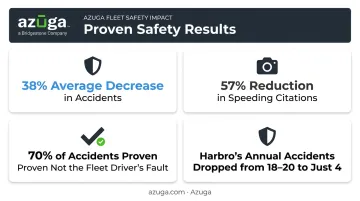
Azuga SafetyCam AI with Collision Reconstruction captures video and telematics data specifically to determine fault. Azuga's own data shows this technology has helped prove 70% of accidents were not the fault of the fleet driver, a significant edge when litigation costs are on the line.
Company-reported results from fleets using Azuga's platform reinforce the ROI case:
- 38% average decrease in accidents
- 57% reduction in speeding citations
- Harbro's annual accidents dropped from 18-20 to just 4 after adopting the platform
Installation isn't a barrier either. The Azuga Tracker is a plug-and-play OBD-II device: plug it into the vehicle's diagnostic port and it's operational in about 20 seconds, no technician visit required.
How to Choose the Right Stack for Your Fleet Size
The right combination depends on truck count, whether impound is a revenue driver, and how much motor-club work runs through your dispatch board.
One or two trucks:
- Start with a low-cost dispatch tool that has motor-club integration built in (Towbook's entry tier fits here)
- Add GPS and safety tracking early. Waiting until after an accident is the expensive way to learn this lesson
- Confirm the platform connects to the specific motor clubs you actually work with
Three or more trucks, or a lot you manage:
- Choose a fuller platform (Omadi, Beacon, or Tracker Management) that handles fleet and storage together
- Prioritize lien processing and DMV notification automation if impound is a real revenue line
- Layer in a dedicated GPS and safety platform - Azuga's AI dashcams and driver safety scoring integrate directly with TowBook - rather than relying on dispatch-app location pings alone
Before committing to any platform, confirm integrations with your accounting software and the exact motor-club networks you rely on. Jobs and invoices that require manual re-keying defeat the entire purpose of going digital.
Frequently Asked Questions
What is towing dispatch software?
Towing dispatch software is the system towing companies use to log calls, assign the nearest truck, track jobs by GPS, and generate invoices. Most platforms also integrate directly with motor-club networks like AAA and Agero.
What features should I look for in towing dispatch software in 2026?
Prioritize motor-club digital dispatch, real-time GPS tracking, impound management, a driver mobile app, and clean accounting integration. Anything missing these five will create manual work down the line.
Is there free towing dispatch software?
Free or very low-cost tiers exist, but they typically lack real motor-club integration and impound management. They also fall short on invoicing depth once call volume grows.
How much does towing dispatch software cost?
Larger, full-suite platforms often share plan details on request rather than listing rates publicly.
Can towing dispatch software integrate with GPS fleet tracking and dashcams?
Most dispatch platforms offer basic location pings, not high-frequency GPS or AI dashcam safety features. That's why many towing operators pair their dispatch software with a dedicated fleet tracking solution like Azuga.
What's the difference between towing dispatch software and fleet management software?
Dispatch software focuses on job assignment, billing, and impound. Fleet management and GPS telematics software focuses on vehicle tracking, driver safety, and accident protection. Most serious towing operators run both together.