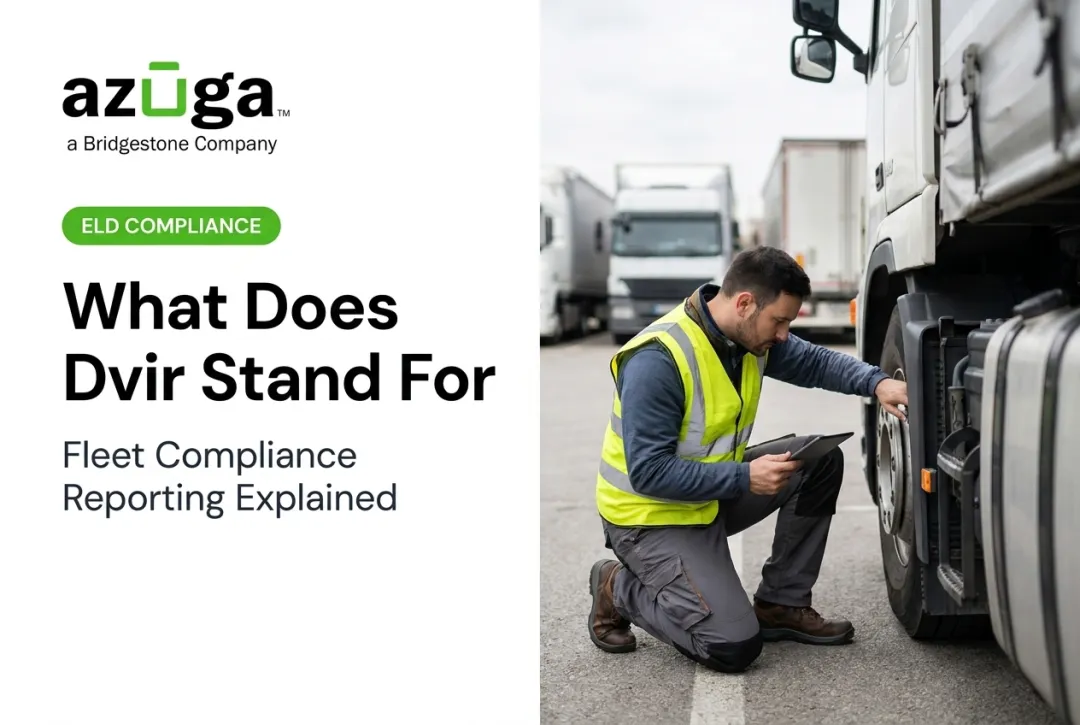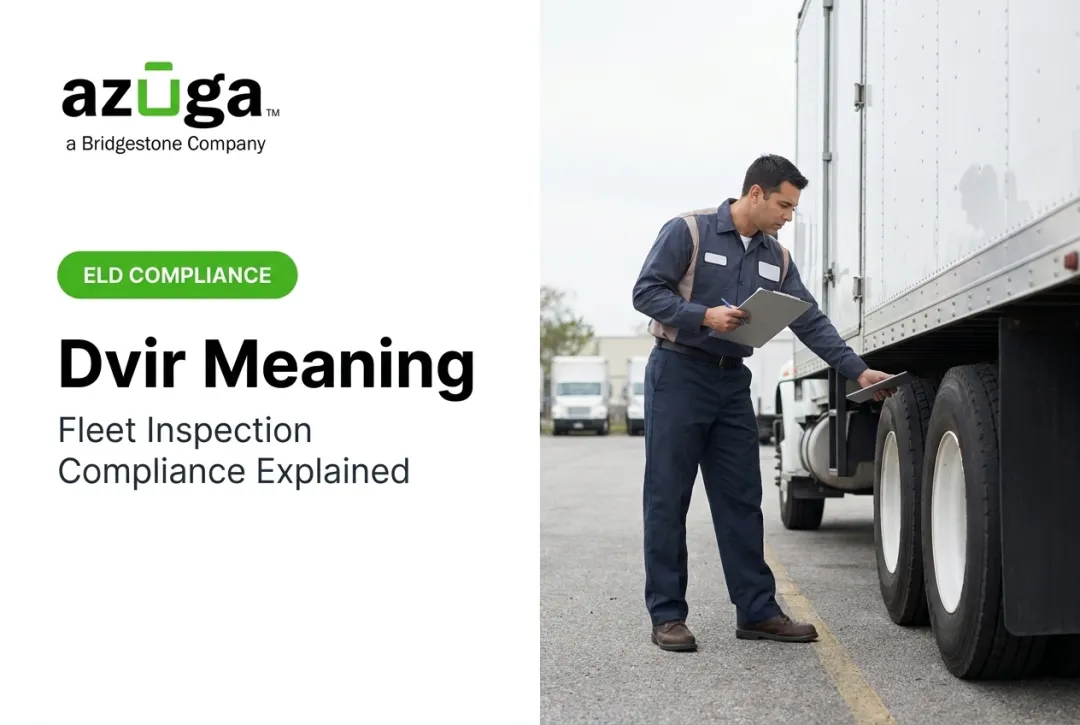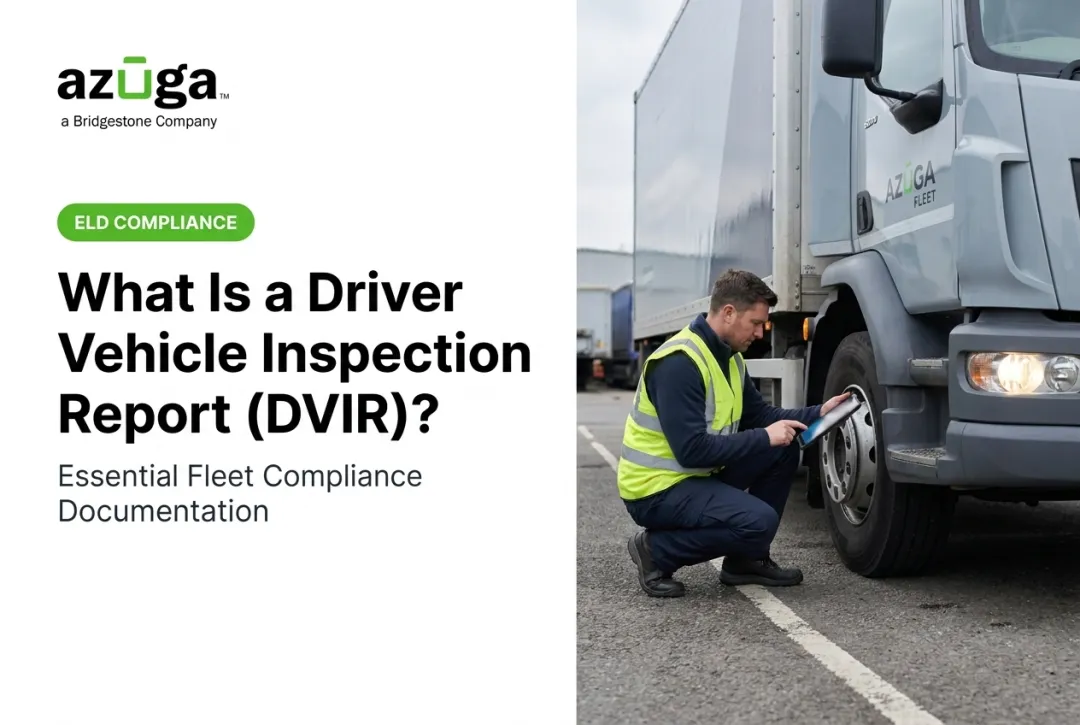

This guide covers the complete DVIR checklist, how to fill one out correctly, signature rules, and whether paper or digital DVIRs make more sense for your fleet. Follow it, and you'll cut violations, prevent breakdowns, and protect your CSA scores.
Key Takeaways
- DVIR is a written defect record required under 49 CFR 396.11
- Cover 11 minimum federal components on every checklist: brakes, steering, lights, tires, and more
- Complete up to three signatures in the chain: driver, certifying official, next driver
- Retain records 3 months minimum; electronic DVIRs meet full FMCSA compliance
- Digital DVIR tools cut missed defects and lost paperwork versus carbon-copy forms
What Is a DVIR and Why Does It Matter?
A DVIR (Driver Vehicle Inspection Report) is the written report drivers prepare to document vehicle condition and any defects found during inspections. FMCSA requires it under 49 CFR 396.11.
It's separate from the physical walkaround. The DVIR is the paperwork that proves the inspection happened and records what it found.
A complete DVIR includes
- Vehicle ID (unit number)
- Driver name and date
- Checklist of inspected systems
- Defects found (or confirmation of none)
- Corrective action taken
- Required signatures
Why it matters for your business:
- Reduces out-of-service violations during roadside inspections
- Protects your CSA scores tied to vehicle maintenance
- Cuts roadside breakdowns before they happen
FMCSA's Large Truck Crash Causation Study found brake problems coded in 29.4% of trucks involved in the crashes studied. Braking capacity, tire/wheel failure, and cargo shift were the three most concentrated vehicle-factor areas.
Those factors alone don't prove cause. They do show why a thorough DVIR is more than paperwork theater.
The Complete DVIR Checklist: What Drivers Must Inspect
Federal law lists 11 minimum component categories under 396.11. Below, those items are grouped the way drivers actually walk the vehicle, along with report header fields and defect-documentation tips.
Vehicle Information & Previous Report Review
Start with the basics: unit number, odometer reading, date, time, and location. Then confirm any defects noted on the previous DVIR were actually repaired before you drive.
Brakes, Steering & Horn
- Service brakes, including trailer brake connections
- Parking brake
- Steering mechanism
Tires, Wheels, Suspension & Coupling Devices
- Tread depth: minimum 4/32 inch on steer tires, 2/32 inch on others, at a major tread groove (not tie bars or fillets), per 49 CFR 393.75
- Rims: cracks, bends, or missing lug nuts
- Suspension: cracked leaf springs, air-bag leaks, or damaged shocks
- Coupling devices and fifth wheel security

Lights, Mirrors & Visibility
- Headlights, turn signals, brake lights, reflectors
- Rear vision mirrors
- Windshield wipers
- Windshield condition (cracks, obstructions)
Fuel, Exhaust & Safety Equipment
- Fuel system leaks
- Exhaust system: leaks, chafing, or insecure mounting
- Emergency equipment: fire extinguisher, warning triangles
Defect Documentation
Vague notes cause disputes. "Brake issue" tells a mechanic nothing. "Left rear brake chamber leaking air, audible hiss at idle" tells them exactly where to look. Attach a photo whenever possible; it removes ambiguity about severity or location.
How to Fill Out and Submit a DVIR Correctly
- Park safely and secure the vehicle. Don't rush this in a live lane or a loading dock.
- Complete identification fields accurately. Include unit number, odometer, date, time, and location. This is what ties the report to maintenance records later.
- Conduct a systematic walk-around, covering every inspection category in the same order every time. Consistency prevents skipped items.
- Record defects clearly, or mark "no defects found" if the vehicle checks out.
- Apply the correct filing rule:
- Property-carrying CMVs: a written DVIR is only required on days a defect is found or reported, per FMCSA's interpretation of 396.11
- Passenger-carrying CMVs: a DVIR is required every day, defect or not
- Submit the DVIR to your fleet manager or mechanic so any listed defect gets repaired before the vehicle is dispatched again.

DVIR Signatures, Recordkeeping & Compliance Pitfalls
The Signature Chain
- Driver signs at the point a defect is discovered
- Carrier or agent certifies the defect was repaired, or that repair wasn't necessary, before redispatch
- Next driver reviews and signs the prior DVIR before operating the vehicle, per 49 CFR 396.13
FMCSA guidance confirms the person who certifies repairs does not have to be a certified mechanic (Question 26).
That third signature, the next-driver acknowledgment, is the one auditors flag most often. It's easy to skip when a truck changes hands quickly at a terminal.

Recordkeeping
Carriers must retain the DVIR, repair certification, and driver review certification for a minimum of 3 months from the date the report was prepared, under 396.11(a)(4). Many fleets keep records longer for litigation and insurance protection, even though 3 months is the federal floor.
Penalties
Filing a false, incomplete, or inaccurate required record carries a maximum civil penalty of $1,584 per day that the violation continues, up to $15,846 total. Those figures come from the 2025 Federal Register civil penalties schedule.
Dispatching a vehicle with a known, uncorrected safety defect creates separate liability exposure beyond the recordkeeping fine itself.
Paper DVIR vs. Digital DVIR: Which Protects Your Fleet Better?
Paper forms have real limits
- Signatures get lost or forgotten in the cab
- No photo evidence attached to defect notes
- Slow handoff between driver, mechanic, and next driver
- Hard to produce records within 48 hours if DOT requests them
Digital DVIR tools close those gaps—and protect the fleet better—with automatic defect routing, timestamped signatures, cloud storage, and instant retrieval during an audit.
Azuga's eDVIR module is built for this. It supports paperless, FMCSA-compliant pre-trip and post-trip inspections under 396.11 and 396.13, with:
- Customizable inspection points by asset or asset class
- Timestamped entries and speech-to-text for faster defect logging
- Web-based review of inspection history, defects, and repair notes for maintenance teams
Azuga's GPS fleet management platform also captures real-time diagnostics through its plug-and-play OBD-II device, including engine-light alerts, diagnostic trouble codes, and TPMS data. Fleet managers get objective vehicle-health data alongside the driver's written defect report.
That mix gives construction, trucking, and utility fleets an audit-ready trail without juggling separate systems—and cuts the costs of paper-based processes.

Frequently Asked Questions
How often does a DVIR need to be completed?
Property-carrying CMVs only need a written DVIR on days a defect is found. Passenger-carrying vehicles require one every day, regardless of defects, under 49 CFR 396.11.
Is a DVIR the same as a post-trip inspection?
No. The post-trip inspection is the physical walk-around inspection. The DVIR is the written report documenting what that inspection found.
What must a DVIR include under 49 CFR 396.11?
The 11 required items: service brakes, parking brake, steering mechanism, lighting devices and reflectors, tires, horn, windshield wipers, rear vision mirrors, coupling devices, wheels and rims, and emergency equipment—plus the driver's signature and date.
Who is responsible for fixing defects identified in a DVIR?
The carrier or its agent must repair the defect, or certify that repair isn't necessary, before the vehicle is dispatched again.
Are electronic DVIRs legal?
Yes. Electronic DVIRs are fully compliant under 49 CFR 396.11, 396.13, and 390.32, with digital signatures and cloud storage accepted.
How long must DVIR records be kept?
Keep DVIR records for at least 3 months from the date prepared. Many fleets retain them longer for litigation and insurance protection.