
Software now touches nearly every link in the waste value chain: collection routing, fleet safety, customer billing, regulatory compliance, and recycling economics. A dispatcher juggling five disconnected tools isn't just inefficient. They're creating blind spots that show up as missed pickups, billing disputes, and preventable safety incidents.
This guide compares the top waste management software for 2026 across three categories: full ERP/billing systems, dedicated route optimization tools, and fleet safety/telematics platforms. Whether you run 15 trucks or 1,500, you'll find a starting point for building the right tech stack.
TL;DR
- Waste management software covers routing, billing, compliance tracking, and fleet/asset visibility in one digital layer
- Most haulers combine 2-3 specialized tools instead of relying on one mega-system
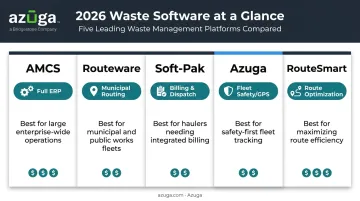
- We compare 5 platforms: AMCS, Routeware, Soft-Pak, Azuga, and RouteSmart, each suited to different hauler needs
- Prioritize compliance support, integration openness, scalability, and total cost of ownership over brand name alone
Overview of Waste Management Software in the Industry
Waste management software is any digital platform that manages collection, billing, compliance, or fleet operations for haulers, municipalities, and recyclers. Environmental regulation keeps tightening while circular-economy pressure mounts, and neither trend works well with paper routes and manual spreadsheets.
That pressure is pushing digital adoption forward. In AMCS's 2024 global benchmark survey, 51% of waste and recycling respondents planned to invest in IT architecture the following year, though 60% cited resistance to change as their biggest obstacle, a sign that budgets are outpacing internal readiness (AMCS Global Benchmark Report).
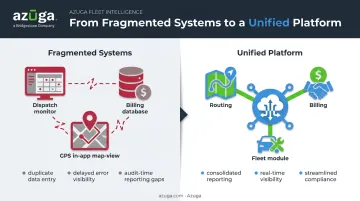
That readiness gap often traces back to fragmented systems: many haulers still run separate legacy tools for billing, routing, and vehicle tracking, and none of them talk to each other.
- Dispatch runs on one platform
- Billing lives in a completely different database
- Vehicle data sits on paper logs or a disconnected GPS dashboard
The result is duplicate data entry, delayed error visibility, and reporting gaps that surface during a compliance audit rather than before one. Industry analysts note that end-to-end platforms solve this by consolidating reporting and analytics, instead of forcing teams to reconcile three separate exports every month.
The rankings below sort the top waste management software for 2026 by operational need, so you can match the right tool to the problem you're actually trying to solve.
Top 5 Best Waste Management Software for 2026
Selection here comes down to five factors: waste-industry specialization, integration capability, compliance support, safety/fleet functionality, and customer trust based on independent reviews.
AMCS Platform
AMCS is a global ERP built specifically for waste and recycling operations, serving more than 4,000 customers across 80+ countries with modules spanning routing, billing, scale-house management, CRM, and sustainability reporting.
Its standout feature is Vision AI, which analyzes camera footage in real time to flag contamination and overfilled containers and retains photo evidence automatically. The platform's route optimization engine also supports dynamic mid-day re-routing, meaning dispatchers can adjust when trucks fall behind or new pickup requests come in.
| Category | Details |
|---|---|
| Pricing | Enterprise custom packaging; estimates vary depending on modules and fleet size |
| Key Features | Route planning, billing, CRM, scale-house operations, ESG/sustainability reporting |
| Best For | Large haulers (100+ trucks) needing one connected operational backbone |
Routeware
Routeware has focused exclusively on waste and recycling for 20+ years, with deep roots in municipal and residential collection programs alongside private haulers.
Its Routeware Control Center uses RFID to confirm container-level service automatically, removing the guesswork around whether a stop was actually completed. Combine that with GIS-based routing tools that don't require a dedicated GIS specialist, plus in-cab computers that replace printed route sheets entirely, and dispatchers get a paperless workflow from the yard to the curb.
| Category | Details |
|---|---|
| Pricing | package matched to fleet size and modules |
| Key Features | Collection operations, customer management, GIS-based routing, RFID service confirmation |
| Best For | Municipalities and government-run residential collection fleets |
Soft-Pak
Soft-Pak is waste-industry-specific billing and dispatch software, now part of the Environmental Solutions Group alongside Heil trucks and 3rd Eye camera systems.
The platform is PCI compliant and includes built-in IFTA support, cutting down on the manual tax-reporting headache most haulers deal with quarterly. Its Mobile-Pak in-cab tablet app gives drivers turn-by-turn guidance and paperless route sheets, and it integrates with 3rd Eye's safety and analytics tools for a more complete picture of driver behavior.
| Category | Details |
|---|---|
| Pricing | Custom packaging, available through a free demo and no-obligation quote |
| Key Features | Billing, dispatch, route optimization, customer account management |
| Best For | Haulers prioritizing billing accuracy and customer relationship management |
Azuga
Azuga is a GPS fleet management platform backed by Bridgestone, serving waste management fleets alongside construction, utilities, and other field-service industries. Rather than a waste-specific ERP, it fills the fleet safety and vehicle visibility gap that many billing and routing systems leave open.
Installation is plug-and-play: the OBD-II device typically goes in without a technician visit, and the platform tracks vehicles at 30-second intervals, tighter than most telematics providers. Azuga's SafetyCam AI adds dual-facing dashcams with Collision Reconstruction, which helps exonerate drivers after an incident and can prevent costly litigation down the line.
Across its customer base, Azuga reports an average 38% reduction in accidents and a 30% reduction in operational costs.
| Category | Details |
|---|---|
| Pricing | packages matched to fleet needs; one of the more affordable fully-featured options |
| Key Features | Real-time GPS tracking, AI dashcams, driver safety scoring, 24/7 support, fuel card/ERP integrations |
| Best For | Small-to-mid-size waste fleets wanting affordable real-time visibility and driver safety without heavy hardware installs |
For haulers already running Soft-Pak or Routeware for billing and dispatch, Azuga slots in as the safety and visibility layer on top, without requiring a full ERP switch.
RouteSmart Technologies
RouteSmart builds route optimization software specifically for the mess that is waste collection: alley navigation, variable bin weights, and synchronized pickup cycles that generic routing tools weren't built to handle.
Its constraint-based routing engine models same-side service, U-turn avoidance, dangerous turns, priority customers, and pulls per truck, all at once.
In a RouteSmart Mill Valley case study, Mill Valley Refuse cut recycling collection days by 22% (from 45 to 35) and reduced overtime by 21%. Truck-capacity utilization also rose from 90% to 95% after implementing RouteSmart.
| Category | Details |
|---|---|
| Pricing | Custom for large operations; no public pricing published |
| Key Features | Constraint-based route optimization, GIS integration, dynamic re-routing |
| Best For | Large municipalities managing extensive, complex residential routes |
How We Chose the Best Waste Management Software
Most buyers make the same three mistakes: picking software based on brand recognition alone, ignoring how open the platform's APIs are, and underestimating how long implementation actually takes. Cloud-based tools can go live in a matter of weeks. Full enterprise ERP rollouts, with data migration and staff training included, can stretch to a year or more.
To help buyers avoid these missteps, we evaluated each platform against five factors that translate into real-world outcomes
- Waste-industry feature depth - purpose-built routing logic for alley routes and bin weights, not features retrofitted from a generic logistics tool
- Compliance and regulatory support - built-in IFTA, PCI, and reporting tools that cut admin time rather than add to it
- Technology capability - AI contamination detection, dynamic re-routing, and telematics that translate into measurable cost savings
- Customer reviews - independent ratings on platforms like G2 and Capterra, weighed against sample size
- Total cost of ownership - realistic cost estimates available upfront, before a lengthy sales cycle
No single factor tells the whole story, but together they separate platforms built for waste operations from ones just adapted to fit.
Conclusion
There's no universal "best" waste management software. It depends on whether your biggest pain point is routing inefficiency, billing accuracy, or fleet safety.
Match the platform to your pain point
- AMCS or Routeware for operators wanting one connected ERP
- Soft-Pak for haulers who live and die by billing accuracy
- RouteSmart for municipalities untangling complex residential routes
Before committing to any platform, pilot or demo your shortlist and evaluate scalability and total cost of ownership, not just the listed rate on the sales call.
If fleet safety, accident-related costs, and real-time vehicle visibility are your priority, Azuga's GPS tracking and AI dashcam platform has helped fleets cut accidents by 38% on average, and it's worth a demo. You can request a fleet demo directly or call (888) 790-0715 to talk through your fleet's specific setup.
Frequently Asked Questions
Which waste management software is best?
It depends on your priority
- AMCS or Routeware suit full operational ERP needs
- Soft-Pak fits billing-focused haulers
- RouteSmart handles complex route optimization
- Azuga covers affordable fleet safety and GPS visibility
Which ERP software is best for scrap business?
Scrap and metal recycling businesses need ERP platforms with strong inventory and margin tracking plus secondary-market reporting. AMCS and ISB Global's Waste and Recycling One both target this niche with dedicated metal-recycling modules.
How much does waste management software cost?
Can waste management software integrate with GPS fleet tracking?
Many waste ERPs support open APIs designed to connect with GPS and telematics providers, letting route, billing, and safety data sync into one dashboard. Confirm specific integration compatibility directly with each vendor before purchasing.
Is cloud-based waste management software better than on-premise?
Cloud-based platforms offer faster deployment, automatic updates, and mobile accessibility, making them the more practical choice for most small-to-mid-size haulers over legacy on-premise systems.
What features should small waste haulers look for in software?
Prioritize ease of use, accessible options, mobile or offline functionality, and basic route and billing support before investing in enterprise-level modules you may not need yet.