
Introduction
Every fleet manager knows the feeling: a vehicle comes back from the road with a suspension groan that wasn't there last month, or a brake job that seems way too early. Two forces are usually behind it — how your drivers handle the wheel, and what the pavement throws at them.
The Federal Highway Administration confirms that pavement roughness directly affects fuel consumption, tire wear, maintenance costs, and vehicle depreciation. For fleets running through construction zones, gravel access roads, or frost-heaved rural routes, that's not an abstract line item. It's a recurring hit to the maintenance budget.
Construction, trucking, utility, and waste management fleets face a double bind: unpredictable road surfaces combined with driver behavior under pressure to hit deadlines.
This article breaks down what rough driving and rough roads actually are, how they wear down your vehicles, and what they cost. Then it covers how modern fleet technology helps you catch problems before they become expensive ones.
Key Takeaways
- Rough driving and rough roads accelerate wear on engines, brakes, suspension, and tires simultaneously.
- Unplanned maintenance, accident risk, and driver fatigue all climb when these two factors combine.
- Telematics and AI dashcams flag harsh driving events in real time, enabling proactive coaching.
- Pairing behavior monitoring with maintenance planning reduces repair, fuel, and insurance costs.
Understanding Rough Driving and Rough Roads
Before you can fix a problem, you need a clear definition of it. "Rough driving" and "rough roads" get lumped together often, but they're distinct issues with different fixes.
What Is Considered Rough Driving?
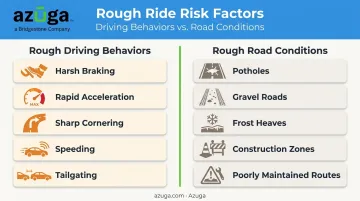
Rough or aggressive driving is a pattern, not a single mistake. It typically includes
- Harsh braking: stopping with more force than the situation requires
- Rapid acceleration: flooring it from a stop or during merges
- Sharp cornering: taking turns faster than the vehicle's load or design allows
- Speeding: driving faster than posted limits or safe for current road conditions
- Tailgating: following other vehicles too closely
Telematics systems don't guess at this. An onboard accelerometer measures G-force and sudden changes in velocity, while GPS contributes speed, time, and location data.
When those readings cross a configured threshold for a set duration, the system logs a "harsh event." Together for Safer Roads describes this exact combination of accelerometer and GPS data as the standard method fleets use to detect speeding, hard braking, rapid acceleration, and cornering.
One caveat worth remembering: a hard-braking event isn't automatic proof of bad driving. Sometimes it means a driver successfully avoided a collision.
What Are Rough Roads?
Rough roads are the surfaces fleets can't opt out of
- Potholes and cracked asphalt
- Unpaved or gravel access roads
- Frost heaves in northern climates
- Active construction zones
- Poorly maintained rural or industrial routes
Field-service fleets, including utilities, landscaping, telecom, and waste management, often have no alternative route. That makes vehicle resilience and driver technique equally important, regardless of how disciplined the driver already is behind the wheel.
How Rough Driving and Rough Roads Damage Your Fleet Vehicles
Whether the stress comes from a driver's foot or the pavement itself, the mechanical damage often lands in the same three places.
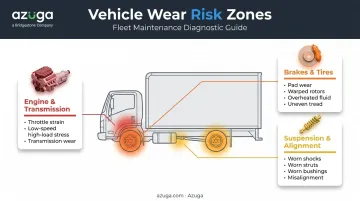
Engine and Transmission Strain
Sudden throttle inputs put real stress on throttle linkages, valves, and cylinder heads. On rough terrain, engines frequently operate in sustained low-speed, high-load conditions — think crawling through a construction zone in low gear for miles.
Stop-and-go driving compounds the problem. It reduces the airflow that non-water-cooled components rely on to stay within safe operating temperatures. Add abrupt clutch engagement or torque converter strain from aggressive shifting, and you shorten transmission life measurably faster than smooth, steady operation would.
Brake and Tire Wear
Hard braking accelerates brake pad wear, warps rotors, and overheats brake fluid, whether it's caused by aggressive driving habits or a driver reacting to a pothole that appeared without warning.
Fleet-wide, higher brake wear translates directly into shorter brake replacement intervals and more unplanned downtime.
Braking technique matters beyond the brakes themselves, too. EPA SmartWay research shows that driver training programs improving fuel economy by 5% can save more than $3,000 per truck annually and cut nearly 8 metric tons of greenhouse gas emissions per vehicle. Fleet telematics that flag harsh-braking events give managers the data to target that training where it counts.
Suspension and Alignment Damage
Potholes, speed bumps, and hard cornering all take a toll on shocks, struts, coil springs, and bushings. They also throw off wheel alignment, which further accelerates tire wear on top of everything else.
The data backs this up at the engineering level. FHWA research found that air-suspended trucks operating on rough roads at 50 mph experience a 16% dynamic loading coefficient, meaning the wheel loads swing far more than they would on smooth pavement.
Separately, road-roughness research indexed by the Transportation Research Board found that suspension fatigue accelerates once a road's Present Serviceability Rating drops below 2.5. In plain terms, once a road gets bad enough, your suspension components start failing faster.
The Real Cost of Rough Driving and Rough Roads for Fleets
Individually, each type of wear seems manageable. Stacked together across a fleet, they turn into a real budget problem.
That impact breaks down into five areas
- Maintenance and downtime: Vehicle damage compounds into more unplanned maintenance events, more days in the shop instead of on the job, and a shorter usable lifespan for every asset in the fleet.
- Accident risk: Aggressive driving on already unpredictable surfaces raises rollover and collision risk substantially, particularly for larger commercial vehicles with higher centers of gravity.
- Insurance and liability: Frequent hard-braking or speeding events are risk signals insurers watch closely. They can influence premiums and, after an accident, become evidence in litigation (for better or worse, depending on what the data shows).
- Fuel costs: Harsh acceleration and braking waste fuel every single time they happen. That EPA SmartWay benchmark of $3,000+ in annual per-truck savings from smoother driving isn't a rounding error at fleet scale.
- Driver fatigue and turnover: Constant vibration from rough roads, combined with the stress of unpredictable conditions, contributes to burnout. In physically demanding fleet roles, that burnout shows up as turnover, and replacing a driver costs far more than most managers budget.
How Fleet Telematics Helps Detect and Reduce Rough Driving
This is where visibility changes the equation. You can't coach behavior you can't see, and you can't plan around road conditions you're not tracking.
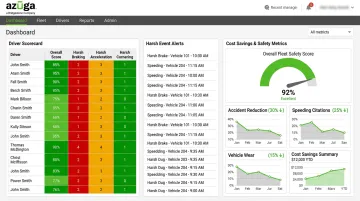
Real-time event detection. Azuga's GPS fleet tracking uses high-frequency reporting to identify harsh driving events, including hard braking, rapid acceleration, sharp cornering, and speeding, as they happen, not days later in a report nobody reads.
Driver scorecards that drive coaching. Azuga's scorecard builds on those events, adding speeding data via SpeedSafe, distracted driving, seatbelt usage, and idling, then rolls everything into one overall rating fleet managers can compare across the team. On average, fleets using Azuga see
- 38% decrease in accidents
- 57% reduction in speeding citations
- 53% reduction in vehicle wear and tear
AI dashcams that protect your drivers. Azuga SafetyCam uses a neural learning network to analyze driver-facing video for distraction events, tagging what it sees rather than just logging raw sensor data.
That combination of video and telematics data supports collision reconstruction, helping exonerate drivers in roughly 70% of the accidents Azuga has analyzed. It's critical protection when a rough road or another motorist, not your driver, caused the incident.
Route awareness. Mileage and route data from the platform give managers visibility into which roads their vehicles travel most, supporting smarter routing decisions that reduce unnecessary exposure to known problem surfaces.
Bottom-line impact. Azuga customers report average annual savings of $9,462 and a 30% reduction in operational costs. That's proof that visibility into driving behavior and vehicle health translates into real budget relief, not just safer stats on a dashboard.
Best Practices to Minimize Rough Driving and Rough Road Damage
Rough roads are unavoidable, but fleets can still limit the damage they cause. These four practices help protect vehicles and drivers alike.
- Train drivers on smooth technique. Coach drivers on gradual acceleration and progressive braking, then reinforce defensive habits for unpaved or unpredictable surfaces.
- Build a proactive maintenance schedule. Schedule tire pressure checks, suspension inspections, and alignment checks more frequently for vehicles that regularly run rough terrain. Highway-only vehicles can stay on the standard schedule.
- Use telematics data for route planning. Flag known problem roads using historical route and incident data, and set tighter speed policies for those specific segments.
- Review scorecards regularly. Don't let driver data sit unused. Monthly or quarterly reviews catch patterns before they become expensive habits.
Frequently Asked Questions
What is considered rough driving?
Rough driving includes harsh braking, rapid acceleration, sharp cornering, and speeding. Telematics systems detect these using accelerometer and GPS data, scoring each event against configurable thresholds.
What car can handle rough driving?
Vehicles with reinforced suspensions and higher ground clearance, such as trucks, SUVs, and work vans, tolerate rough roads better than sedans. That said, driving behavior has a bigger long-term impact on vehicle longevity than the model alone.
How can I tell if my fleet vehicle has suspension damage from rough roads?
Watch for excessive vibration, the vehicle pulling to one side, and uneven or cupped tire wear. Any of these signs warrants an inspection before the damage spreads to alignment or steering components.
Can GPS tracking reduce the impact of rough driving on my fleet?
Yes. Real-time harsh-event alerts and driver scorecards let managers spot risky patterns and coach drivers before repeat behavior causes vehicle damage or an accident.
How much does rough driving cost fleets in maintenance and fuel?
It varies by fleet, but EPA SmartWay research shows driver training that improves fuel economy by just 5% can save more than $3,000 per truck annually. Rough roads add further strain on top of that fuel cost.
Does insurance cover damage caused by rough roads?
Routine wear and tear from rough roads typically isn't covered under standard commercial auto policies. Sudden damage, like hitting a pothole, may fall under collision provisions, though monitoring and maintenance remain your best defense.