
The stakes are real. The global fleet management market is projected to grow from $37.71 billion in 2025 to $70.26 billion by 2030, a 13.3% CAGR, according to MarketsandMarkets. That growth reflects how directly the right platform affects fuel spend, accident rates, and day-to-day operational efficiency.
This guide compares the top fleet management software of 2026, based on features, pricing, and real-world reviews, so you can choose with confidence.
Key Takeaways
- Fleet software combines GPS tracking, safety monitoring, maintenance, and compliance in one platform
- Azuga Fleet, Samsara, Motive, Geotab, Fleetio, Verizon Connect, and Route4Me lead the market for different fleet needs
- Prioritize ease of use, telematics accuracy, safety features, and cost of ownership over brand name
- Small and budget-conscious fleets benefit most from packages matched to fleet needs and plug-and-play installation
- The right choice depends on fleet size, industry, and top priority—safety, maintenance, or routing
Overview of Fleet Management Software in 2026
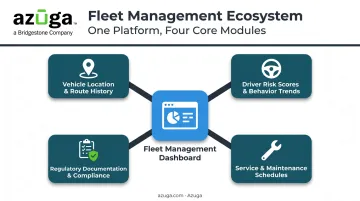
Fleet management software centralizes GPS tracking, driver behavior monitoring, maintenance alerts, and compliance reporting into a single platform. Instead of pulling data from separate tools, fleet managers get one dashboard covering
- Vehicle location and route history
- Driver risk scores and behavior trends
- Service and maintenance schedules
- Regulatory documentation and compliance status
Adoption has accelerated across construction, trucking, utilities, and service industries as fuel prices, insurance premiums, and driver shortages put pressure on margins. Fleets that once tracked maintenance on paper or monitored drivers only after an incident now expect real-time visibility as a baseline requirement.
That demand is reshaping the competitive field. New entrants compete on AI-powered dashcams and predictive maintenance, while established players expand their integration marketplaces to cover everything from fuel cards to ERP systems.
The following section breaks down the top-rated platforms for 2026 based on features, verified pricing evidence, and user reviews, helping businesses of every size make an informed decision.
Top Fleet Management Software Providers in 2026
This list was built around criteria that matter most in daily operations: real-time tracking accuracy, safety features, ease of use, integration depth, and overall fit across small, mid-market, and enterprise fleets. Several vendors share plan details on request rather than listing rates publicly, so we've noted where that's the case.
Azuga Fleet
Azuga Fleet, a Bridgestone company, is built for fleets that want strong safety features without enterprise-level complexity or cost. It's used across construction, HVAC, towing, and waste management, and it's designed so a single technician can get a vehicle online without any professional install.
What makes it stand out:
- A plug-and-play OBD-II device that's ready to transmit data in 20 seconds — no mechanic, no wiring, no vehicle downtime
- High-frequency location tracking at 30-second intervals for tighter visibility than standard polling
- SafetyCam AI with Collision Reconstruction, which combines road-facing and driver-facing video with telematics data to help resolve disputed accidents faster
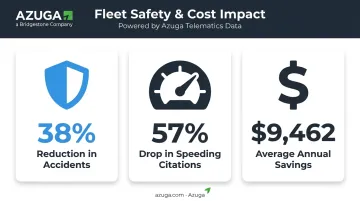
Azuga reports that its customers have seen an average 38% reduction in accidents, a 57% drop in speeding citations, and average annual savings of $9,462 from better fleet cost management. These are company-reported figures rather than independent study results, but they reflect the kind of outcomes fleets can expect from consistent driver coaching and real-time alerts.
Customers like Diamond Engineering have also reported insurance premium discounts of 10% or more after adopting driver scorecards.
| Category | Details |
|---|---|
| Pricing | packages matched to fleet needs, positioned as one of the more affordable full-featured options |
| Key Features | Real-time GPS tracking, driver behavior alerts, SafetyCam AI dashcams, gamified driver scoring, 24/7 support |
| Best For | Small to mid-sized fleets seeking an affordable, easy-to-deploy platform with strong safety and driver behavior tools |
Samsara
Samsara is a unified platform combining GPS tracking, AI dashcams, and maintenance alerts, and it's a popular choice for mid-size to enterprise fleets that want one system instead of several. It stands out for real-time tracking accuracy and driver safety scoring, with location data collected as often as every second.
Review data backs this up: Samsara holds a 4.5/5 rating on both G2 (4,925 reviews) and Capterra (1,018 reviews). Reviewers note the setup can involve a learning curve when configuring the full feature set, even though basic operation is straightforward for most teams.
| Category | Details |
|---|---|
| Pricing | Custom packaging based on fleet size; typically starts higher than budget-tier competitors |
| Key Features | AI dashcams, real-time GPS, driver safety scoring, broad third-party integrations |
| Best For | Enterprise and growing fleets needing a unified, data-rich operations platform |
Motive
Motive is an AI-powered fleet safety and compliance platform built around ELD management and computer-vision dashcams. Its FMCSA-registered devices connect directly to the engine to automatically track hours of service, removing manual logging errors.
What sets Motive apart is automated collision reporting paired with real-time in-cab coaching alerts, both aimed at reducing accidents and, by extension, insurance costs. It carries a 4.4-4.5/5 rating across G2 and Capterra, with reviewers frequently citing its DOT compliance tools.
| Category | Details |
|---|---|
| Pricing | Custom packaging; typically requires upfront hardware costs and a contract term set by the order form |
| Key Features | AI dashcam, ELD compliance, driver safety scoring, natural-language reporting |
| Best For | Fleets prioritizing compliance automation and AI-driven driver coaching |
Geotab
Geotab takes an open-platform approach to telematics, built for fleets that want deep customization rather than a fixed feature set. Its 250+ Marketplace partners and 350-plus solutions cover video telematics, routing, maintenance, and fuel management.
The platform's reporting depth and open SDK/API access make it a favorite among fleets with complex data needs. Geotab Ace, its AI assistant, lets managers ask fleet-data questions in plain language instead of building custom reports from scratch.
| Category | Details |
|---|---|
| Pricing | Custom packaging; positioned at the higher end due to extensive customization options |
| Key Features | Custom reporting, 250+ marketplace integrations, predictive maintenance, open SDK/API |
| Best For | Fleets with complex, industry-specific reporting or integration needs |
Fleetio
Fleetio takes a different angle entirely: it's built around maintenance, not telematics. Service history, inspections, and asset cost tracking are its core strengths, and it connects to existing GPS/telematics hardware rather than shipping its own.
Its biggest advantage is clear packaging details. Fleetio publishes plan details when billed annually, making it one of the more transparent starting points in this comparison. The tradeoff is that fleets needing native GPS hardware will need a separate telematics provider.
| Category | Details |
|---|---|
| Pricing | Billed annually, with tiered plans for added features |
| Key Features | Maintenance scheduling, automated service reminders, fuel/expense tracking, shop network integration |
| Best For | Fleets prioritizing maintenance management and cost transparency over telematics |
Verizon Connect
Verizon Connect is an enterprise-grade telematics platform built around route optimization and around-the-clock live support. Its Route Replay feature lets managers review a vehicle's historical activity over up to a seven-day window and compare up to five vehicles side by side.
Review scores tell a mixed story here: 3.8/5 on G2 and 3.2/5 on Capterra, notably lower than Samsara or Motive. Contract terms are defined per Service Order Form rather than a fixed universal length, so it's worth confirming commitment details before signing.
| Category | Details |
|---|---|
| Pricing | Custom packaging; contact for details |
| Key Features | Interactive route replay, ELD compliance, asset tracking, customizable dashboards |
| Best For | Mid-size to large fleets needing advanced routing and dedicated account support |
Route4Me
Route4Me is purpose-built for teams managing multi-stop deliveries and service fleets routes, not general fleet telematics. Its drag-and-drop Routes Map and fast route-building speed consistently earn praise from reviewers.
It holds a strong 4.7/5 rating on G2 across 129 reviews, with ease of use frequently cited as a top strength.
| Category | Details |
|---|---|
| Pricing | Tiered plans available; contact for details |
| Key Features | Dynamic route optimization, real-time tracking, proof of delivery, API/ERP integrations |
| Best For | Delivery-focused and service teams that plan multi-stop routes daily |
How We Chose the Best Fleet Management Software
Many businesses pick fleet software based on brand recognition alone, then discover the platform doesn't fit their fleet size or industry. That mismatch shows up later as underused features or costly contract renegotiations.
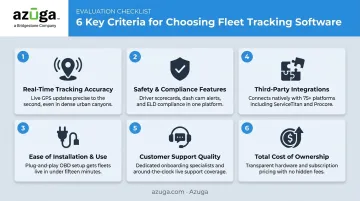
We weighted the following factors, each tied to a measurable business outcome
- Real-time tracking accuracy: how often location data updates, shaping dispatch decisions and customer ETAs
- Safety and compliance features: dashcam quality, driver scoring, and ELD compliance directly influence accident rates and insurance costs
- Ease of installation and use: plug-and-play versus professional install determines time-to-value
- Third-party integrations: compatibility with existing TMS, fleet management, or ERP systems
- Customer support quality: availability and responsiveness when issues arise
- Total cost of ownership: subscription fees plus hardware, contract length, and hidden costs
Conclusion
Name recognition alone won't tell you which fleet management platform fits your operation. What matters is whether it matches your fleet size and industry, along with priorities like safety, maintenance, or routing.
Before signing a multi-year contract, evaluate scalability and total cost of ownership alongside the quality of ongoing support. A platform that looks affordable upfront can get expensive fast if hardware costs or contract terms aren't clear from the start.
If you're managing a small to mid-sized fleet and want affordable, plug-and-play GPS tracking with strong safety features, Azuga's fleet tracking platform is worth a look. Request a demo or quote to see how it fits your operation.
Frequently Asked Questions
What is the best truck fleet management software?
The best choice depends on fleet size and priorities. Samsara, Motive, and Azuga Fleet are frequently rated highly for trucking due to strong ELD compliance, GPS accuracy, and driver safety tools.
What features should I look for in fleet management software?
Prioritize real-time GPS tracking, maintenance alerts, driver safety monitoring, fuel management, and third-party integrations. These core features drive most of the measurable ROI.
How much does fleet management software cost?
Maintenance-only tools like Fleetio sit at a lower entry point, while full-featured platforms with hardware sit higher. Azuga matches packages to fleet needs, with premium safety camera plans available on higher tiers.
Is fleet management software worth it for small businesses?
Yes. Small fleets benefit through reduced fuel waste, fewer accidents, and lower insurance costs, even with basic tracking and maintenance features rather than a full enterprise suite.
What's the difference between GPS tracking and fleet management software?
GPS tracking only shows vehicle location. Fleet management software adds maintenance scheduling, driver safety monitoring, and compliance automation on top of that location data.
How long does it take to implement fleet management software?
Timelines vary by platform. Plug-and-play tools can go live in under a month, while complex enterprise rollouts across hundreds of vehicles can take two to five months.