
Introduction
Construction companies routinely invest six or seven figures in excavators, generators, and trailers. Yet many still rely on the same tracking approach they'd use for office chairs: a location dot on a map and not much else.
That gap matters. High-value equipment carries different stakes than low-cost inventory. A stolen skid steer doesn't just cost you a replacement: it stalls a job site, frustrates a client, and eats into margins you already committed to a bid.
This guide breaks down what high-value asset tracking actually means, why it's become essential for equipment-heavy businesses, how the technology works, and what to prioritize when choosing a system.
Key Takeaways
- Asset tracking blends GPS, RFID, and IoT sensors for both security and real-time operational insight
- Unprotected equipment risks theft, project delays, and costly downtime beyond simple replacement costs
- Modern IoT systems send proactive alerts and offer recovery tools older methods can't match
- The right system depends on reliability, scalability, ease of use, and centralized digital record-keeping
What Is High-Value Asset Tracking?
High-value asset tracking is a monitoring system built specifically for expensive, business-critical equipment. It goes well beyond a simple GPS pin on a map. Instead, it combines location data, condition monitoring, usage patterns, and security alerts into one system designed to protect your investment and inform your operations.
What Makes an Asset "High-Value"?
Not every piece of equipment needs this level of monitoring. An asset typically qualifies as high-value when it meets one or more of these criteria
- High replacement cost - excavators, generators, and specialty trailers often run into six figures
- Operational criticality - losing the asset halts a job or project entirely
- High theft appeal - portable, resellable equipment that's easy to move off-site
Construction machinery, generators, medical equipment, and utility trailers all fall into this category. A stapler doesn't.
High-value tracking captures more than location. It tracks condition data (is the engine running hot?), usage patterns (how many hours has this generator logged this month?), and security alerts (did this trailer move after 8 p.m.?). That combination is what separates true asset protection from a basic tracking app.
Standard Asset Tracking vs. High-Value Asset Tracking
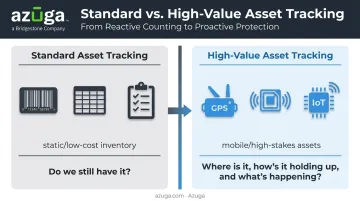
Standard tracking often means barcodes, spreadsheets, and manual counts. It works fine for low-cost, static inventory sitting in a warehouse.
High-value equipment demands something different: a layered approach using GPS, RFID, and IoT sensors working together across mobile, high-stakes assets. The goal shifts too. Standard tracking answers "do we still have it?" High-value tracking answers "where is it, how's it holding up, and is anything happening we should know about?"
That shift, from counting to proactive protection, is what lets you catch a problem before it becomes a lost asset or a stalled job site.
Why Is High-Value Asset Tracking a Must-Have?
Equipment theft is a real and costly problem for contractors, though pinning down a precise current figure is tricky. According to the National Equipment Register, industry estimates put annual heavy equipment theft losses somewhere between $300 million and $1 billion in the U.S. That's a wide range, but even the low end represents a massive drain on an industry already operating on thin margins.
The Cost Goes Beyond the Price Tag
Losing a piece of equipment rarely stops at the replacement invoice. Businesses also absorb
- Project delays while waiting on replacement equipment
- Missed deadlines that strain client relationships
- Police reports and insurance claim administration
- Rental costs to keep a job moving in the meantime
- Higher premiums after a claim gets filed
Real-time visibility changes the equation. Checking an asset's location and condition frequently, rather than once a week or after something goes missing, lets you catch problems early. Rough handling, unauthorized after-hours movement, or unusual engine behavior can surface before it turns into a costly repair or a police report.
Usage Data Unlocks New Revenue and Maintenance Models
Tracking data isn't just defensive. Rental businesses are increasingly using hour-meter tracking and GPS telematics to move away from flat daily rates toward billing tied to actual equipment use, according to the Associated Rental Contractors' Rental Management publication. That's a more precise way to charge, and it rewards businesses that know exactly how their fleet is being used.
The same usage data supports condition-based maintenance. Instead of servicing equipment on a fixed calendar, you schedule based on actual engine hours. That reduces unnecessary maintenance visits and helps you catch mechanical issues before they cause a breakdown mid-project.
Azuga's Asset Management solution reflects this approach directly. It centralizes vehicles, trailers, and high-value equipment on one platform, with maintenance scheduling, expense tracking, and trouble alerts built in.
Diamond Engineering, a construction firm using Azuga, put it simply
"We have equipment and people all over the area. With Azuga, I know where everything is, and I know who's using it on which job site and for how long."
That visibility also earned them a discount of more than 10% on their insurance premium.
How Does High-Value Asset Tracking Work?
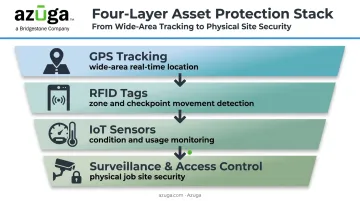
Effective tracking rarely relies on a single technology. It layers several together
- GPS tracking - provides real-time location across wide areas, ideal for mobile equipment
- RFID tags - detect movement across specific zones or checkpoints using readers
- IoT sensors - capture condition and usage data like engine hours, temperature, and idle time
- Surveillance and access control - add physical security at the job site level
Each technology plays a different role. GPS tells you where; RFID confirms movement past a known point; IoT tells you how the asset is being used and whether it's in good shape; surveillance and access control add a physical layer of protection on top.
Modern IoT vs. Older Tracking Methods
Older tracking systems are largely reactive. You notice something's missing, then you go looking for it. That delay can mean the difference between recovering equipment and writing it off.
Modern IoT-based systems flip that model. They're proactive, sending instant alerts the moment something looks wrong.
A geofencing example makes this concrete: if a piece of equipment crosses a job site boundary after hours, the system triggers an alert immediately. That gives you a window to act, potentially stopping a theft before it's completed rather than discovering the loss the next morning.
Advanced Security and Location Features
Two features separate basic tracking from serious asset protection.
Location fusion combines GPS, cellular, and Wi-Fi signals to maintain accuracy even indoors or in dense, obstructed areas where satellite signal alone falls short. Vendors implement this differently, so it's worth asking exactly how a system behaves indoors versus outdoors before you buy.
Recovery-focused design matters just as much. Some systems offer a dedicated recovery mode that generates a shareable page with ownership documentation and live location data for law enforcement after a theft.
Discreet, small hardware design also plays a role here. Trackers that are hard to spot are harder for thieves to disable, which keeps the device transmitting long after the equipment disappears.
Azuga applies a similar concealment principle on high-value mobile assets. Discreet hardwired and battery-powered trackers can mount out of sight on equipment and trailers where a thief won't think to look. In one recovery case, that concealment meant a stolen asset's tracker kept transmitting through the theft, helping police recover it within hours.
What to Look for in an Asset Tracking System
There's no single "best" asset tracking system. The right one depends on your equipment, your environment, and how your business operates. A few factors matter more than the rest.
Reliability comes first. That means accurate data and strong connectivity, even in remote job sites or metal-heavy environments where signals struggle.
Standards matter here too. ISO/TS 15143-3:2020 establishes how telematics data should be exchanged between machinery and software platforms. This standard is worth checking if you run a mixed fleet from different manufacturers.
Scalability is next. Your system should grow with your fleet and integrate with the software you already use, rather than forcing you into a separate silo.
Beyond that, prioritize
- Ease of use - simple installation, mobile app access, minimal training required
- Plug-and-play hardware - self-installable devices cut setup time and installer costs
- Secure digital record-keeping - centralized storage for maintenance logs, expense data, and incident evidence
That last point matters more than it might seem. When Azuga customer FSF needed to contest an at-fault accident claim, breadcrumb tracking data gave them timestamped, objective proof of what actually happened, saving significant time and money on the claim. That kind of documentation turns a tracking system into an insurance and liability tool, not just a locator.
Best Practices for Implementing Asset Tracking
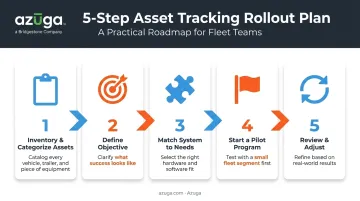
Rolling out asset tracking works best as a phased process, not an all-at-once overhaul.
- Inventory and categorize every asset you own, noting replacement cost, mobility, and theft risk for each
- Define your objective: decide whether you're primarily aiming to cut theft losses or improve utilization and efficiency
- Match the system to your operational needs rather than picking the cheapest or flashiest option
- Start with a pilot on your highest-risk or highest-value equipment before rolling out company-wide
- Review performance periodically and adjust alert thresholds, geofences, or hardware as needed
Common challenges also tend to repeat as pilots scale into full rollouts
- Equipment without constant power, like trailers or generators, needs trackers built for extended battery life
- Remote job sites create connectivity gaps that multi-carrier connectivity can help close
- Complex setup is one of the top reasons rollouts stall, which is why an all-in-one hardware, software, and support package tends to outperform piecing together separate vendors
Starting small also builds internal buy-in. Once your team sees a pilot catch a problem, whether that's an unauthorized after-hours move or an overdue maintenance flag, expanding to the rest of the fleet becomes a much easier conversation.
Frequently Asked Questions
What is meant by asset tracking?
Asset tracking is the process of monitoring the location, condition, and usage of business equipment using technologies like GPS, RFID, or IoT sensors. The goal is preventing loss and improving operational efficiency.
What is the best asset tracking system?
There's no universal "best" system, since it depends on your equipment type and environment. Look for reliability, scalability, ease of use, and features like real-time alerts and secure record-keeping.
How is high-value asset tracking different from standard GPS tracking?
High-value tracking adds usage, condition, and security data on top of basic location pings. It often uses combined GPS, Wi-Fi, and cellular signals for greater accuracy in tough environments like job sites or warehouses.
What types of businesses need high-value asset tracking?
Construction, utilities, healthcare, and equipment rental companies all rely on expensive, mobile machinery or tools that justify the investment. Any business where equipment loss directly threatens project timelines fits this category.
Can asset tracking actually prevent theft, or only help recover stolen equipment?
Both. Geofencing and real-time alerts can flag suspicious movement while theft is in progress, giving you a chance to intervene. Recovery mode and location data then assist law enforcement if a theft does occur.
How much does a high-value asset tracking system typically cost?
Costs vary based on the hardware and features you choose. Azuga's plans, for example, use packages matched to fleet size and features, making it feasible for fleets of varying sizes to get started.