
Introduction
The world generated 2.56 billion tonnes of municipal solid waste in 2022. By 2050, that number climbs to 3.86 billion tonnes — a 50% jump, according to the World Bank's What a Waste 2.0 report.
Handling that growth the curb, where most waste fleets still run on fixed schedules. Trucks hit every bin on a route whether it's overflowing or empty. That's expensive, slow, and hard on the environment.
The Internet of Things (IoT) is changing that equation. Connected sensors, GPS trackers, and smart facilities now feed real-time data into a single operational picture.
This article covers the core technologies behind smart waste management, the benefits fleets are already capturing, real-world case studies, and what to weigh before you invest.
Key Takeaways
- Fill-level sensors and GPS tracking replace fixed routes with on-demand collection
- Smart waste systems cut fuel costs, emissions, and wasted collection trips
- GPS telematics delivers fleet-wide visibility that many waste operations overlook
- Real-time data drives better recycling participation and regulatory compliance
- Scalable, subscription-based tools make adoption realistic for fleets of any size
What Is IoT and How Does It Apply to Waste Management?
The National Institute of Standards and Technology defines an IoT device as anything with a sensor or actuator that interacts with the physical world. It also needs a network interface, such as Wi-Fi, cellular, or Bluetooth, that connects it to the digital one. Strip away the jargon, and it's simple: physical objects that collect and share data automatically.
In waste management, that means
- Bins and containers equipped with sensors that report fill levels, temperature, and condition
- Trucks carrying GPS units that broadcast location and driving data
- Facilities using connected scales, sorting equipment, and cameras to track material flow
Traditional vs. Smart Waste Management
Traditional systems rely on fixed routes and manual checks: a driver visits every bin, every time, regardless of need. Smart waste management flips that model. Sensors and connectivity tell you which bins actually need servicing, which trucks are closest, and where inefficiencies are hiding. The result is fewer wasted stops, lower fuel costs, and routes built around real-time need instead of a fixed schedule.
Key IoT Technologies Powering Smart Waste Management
Four technology pillars typically work together to make smart waste management function: bin sensors, fleet tracking, AI sorting, and asset tracking. Each solves a different piece of the puzzle.
Smart Bin Sensors
Ultrasonic and fill-level sensors sit inside bins and dumpsters, measuring how full they are in near real-time. Instead of servicing a container on a set day, crews get an alert only when it's actually ready for pickup.
Philadelphia's results make the case. The city replaced 700 wire baskets with 500 solar-powered compacting units, later expanding to more than 1,300 units citywide. The impact, according to BigBelly's Philadelphia case study
- Average collection frequency dropped 82%, from 17 times a week to just 3
- The city avoided more than 1.1 million collections annually
- Operating costs fell 70%, saving more than $800,000 in the first year
- Annual fuel savings reached 30,500 gallons, cutting 335 tons of CO2
That's one city's vendor-reported outcome, not a universal benchmark, but it shows the scale of what's possible when bins start talking.
Route Optimization & Fleet Tracking
Fill-level data is only half the story. Someone still has to get a truck there efficiently. GPS-based fleet tracking gives waste haulers live visibility into every vehicle's location, letting dispatchers build dynamic routes instead of driving the same loop every day regardless of conditions.
This is where Azuga's GPS fleet management platform fits into the picture. Waste and recycling fleets use Azuga's plug-and-play OBD-II device (no professional installation required) to get
- Real-time vehicle location updates
- Route optimization that factors in traffic, road closures, and historical patterns
- Idle time and fuel consumption monitoring, which matters for stop-and-go collection routes
- Automatic dispatch notifications so the nearest available truck gets the next job
A modeled study of 300 smart bins in Chandigarh found that dynamic routing based on real fill levels cut travel distance by up to 45% compared to static routes. The routes still collected a similar amount of waste. It's a simulation, not a fleet-measured result, but it illustrates why route intelligence pairs so well with sensor data.
AI-Powered Sorting and Waste Recognition
Contamination is one of recycling's biggest cost drains. AI-powered sorting systems combine cameras and robotics to identify materials on the line and pull out recyclables (or contaminants) faster and more consistently than manual sorting.
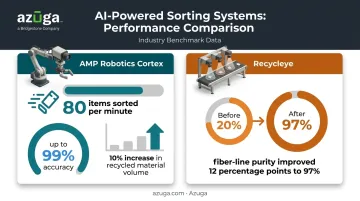
AMP Robotics' Cortex system reportedly sorts 80 items per minute at up to 99% accuracy, and one facility saw recycled material volume increase 10% after deployment, per the Ellen MacArthur Foundation. Recycleye has reported similar gains, pushing fiber-line purity up 12 percentage points to 97% at one facility. These are vendor-reported figures, but the direction is consistent: AI sorting improves both speed and accuracy.
Container and Asset Tracking
Bins, dumpsters, and roll-off containers walk off, get damaged, or sit unused for months without anyone noticing. IoT-enabled tracking tags monitor the location and condition of these assets, which helps fleets
- Prevent loss and theft of expensive containers
- Schedule maintenance based on actual usage instead of guesswork
- Plan inventory more accurately across large service areas
Azuga's asset tracking module, used alongside its GPS fleet tracking at deployments like Reliable Fire & Security, extends this visibility to equipment and trailers, protecting high-value assets on the same platform that manages the vehicle fleet.
Benefits of IoT in Waste Management and Recycling
Cost reduction is the single biggest lever IoT delivers. Eliminating unnecessary stops means trucks only visit bins that need service, and fuel, labor, and vehicle wear all drop as a result. Philadelphia's 70% operating cost reduction remains the clearest documented example, though results vary by fleet size and route density.
That same visibility drives operational efficiency. Dynamic routing paired with driver behavior monitoring reduces idle time and unnecessary mileage. Azuga customers like Acree Air cut accidents from two incidents to zero and saved $80,000 annually in insurance premiums using the platform's safety data. This pattern translates directly to waste fleets managing frequent stops and reversing maneuvers.
Fewer, smarter collection trips also shrink environmental impact. Landfills are the country's third-largest source of human-caused methane, responsible for roughly 14.4% of those emissions in 2022. Optimized routing means:
- Lower fuel consumption per ton collected
- Reduced idling emissions at each stop
- A modeled 42.3% reduction in greenhouse gas emissions from optimized routing in one Chinese case study
Beyond emissions, IoT sensors improve recycling rates by flagging which neighborhoods contaminate bins most often or generate unusual waste volumes. An East Lansing pilot combining truck-mounted cameras with AI analysis and personalized outreach dropped contamination by 22.5% and increased participation by 45% among targeted households.
This same continuous monitoring strengthens regulatory compliance and transparency by creating an auditable data trail. Azuga's eLogs solution supports FMCSA 395.15 compliance with electronic Hours of Service logging and digital Daily Vehicle Inspection Reports. This replaces paper trails that are easy to lose and hard to verify during an audit.
Real-World Applications Across Industries
Municipal Smart City Programs Philadelphia isn't alone. Cities deploying fill-level sensors and solar compactors consistently report fewer trucks on the road and higher effective bin capacity, since compaction alone can extend service intervals. Fleet tracking and route optimization let waste haulers dispatch trucks only when bins need emptying, cutting fuel and labor costs.
Manufacturing and Construction Connected reusable pallets, like those in CHEP's IoT-tagged fleet, record location and environmental exposure throughout the supply chain. That visibility helps flag spoilage risk and recover assets that would otherwise become waste — though measured waste-reduction percentages aren't yet publicly documented.
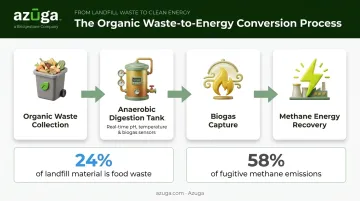
Organic Waste and Energy Recovery Food waste makes up about 24% of landfill material but drives roughly 58% of fugitive methane emissions, according to EPA estimates. IoT-monitored anaerobic digestion systems track pH, temperature, and biogas output in real time, converting organic waste into usable methane instead of letting it escape from a landfill.
Challenges and Considerations for Adopting IoT in Waste Management
Infrastructure Requirements Sensor networks need reliable connectivity. In one deployment, LoRaWAN-connected bins linked to neighborhood gateways with cellular backhaul to the cloud, reaching an 89% transmission success rate even with obstructed bin placement. Coverage gaps and power management remain real hurdles in rural or dense urban zones.
Upfront Investment and ROI Sensors, sorting robots, and platforms all require capital, and those costs compound the connectivity challenges above. Fleet tracking is often the fastest path to ROI because entry costs are lower. Azuga matches packaging to fleet size and the features you select, with its full-featured CompleteFleet tier available via quote, making telematics accessible even for fleets running a handful of trucks.
Data Integration and Change Management Sensors and trackers only help if someone acts on the data. Fleets need
- Staff training on new dashboards and alerts
- Integration planning between IoT platforms and existing dispatch or billing systems
- A clear owner for reviewing data and adjusting routes weekly, not quarterly
Skipping this step is the most common reason smart waste initiatives underdeliver. If you're evaluating where to start, requesting a fleet demo is a low-risk way to see how tracking data translates into route decisions before committing to sensor networks.
Frequently Asked Questions
What is IoT?
IoT stands for the Internet of Things: a network of physical devices with sensors and internet connectivity that collect, share, and act on data. In waste management, that includes smart bins, GPS-tracked trucks, and connected sorting equipment.
What are 5 examples of IoT devices?
Smart bin fill-level sensors, GPS fleet trackers, smart thermostats, wearable fitness trackers, and connected security cameras are all common IoT devices. Each collects data and transmits it over a network for monitoring or action.
What are the 4 types of IoT applications?
IoT applications are commonly grouped into consumer, commercial, industrial, and infrastructure/public categories. Waste management sensors and fleet trackers typically fall under commercial and infrastructure IoT.
What are the 4 types of waste management?
The four primary methods are landfill disposal, incineration with energy recovery, recycling, and composting. Each plays a different role in the EPA's waste management hierarchy.
How does IoT improve recycling rates?
IoT data flags contamination patterns and generation trends, letting municipalities target specific neighborhoods with education campaigns. One pilot program cut contamination by over 20% using this approach.
Is smart waste management technology affordable for small waste operations?
Yes. Subscription-based platforms like Azuga price GPS fleet tracking per vehicle, so small operations can access the same route optimization tools as larger fleets without a big upfront investment.