
These aren't rare stories. They're daily friction for contractors managing equipment across scattered jobsites. A single down machine in an integrated production crew can cost roughly $350 per hour, or close to $2,800 across an eight-hour shift, according to Construction Equipment's cost modeling.
Construction equipment telematics exists to close that visibility gap. It gives contractors real-time data on where machines are, how they're running, and whether they're being used at all.
This guide breaks down what telematics is, the features that matter most, the benefits worth chasing, and how to pick a system that actually fits your fleet.
Key Takeaways
- GPS, onboard sensors, and wireless networks combine to reveal machine location, engine health, and usage in real time
- Contractors cut idle time, catch maintenance issues early, and recover stolen equipment faster
- The right system supports owned, rented, and leased equipment without a rip-and-replace
- Installation speed, pricing clarity, and integration depth separate systems worth adopting from ones that gather dust
What is Construction Equipment Telematics?
Construction equipment telematics is the combination of GPS positioning, onboard diagnostics, and wireless communication used to collect and transmit data from heavy machinery. Sensors on an excavator, loader, or compactor gather information continuously and send it to a cloud dashboard where fleet managers can see it in near real time.
How It Differs From Standard Vehicle Telematics
Road-vehicle telematics leans on mileage and odometer readings. Heavy equipment doesn't drive down highways, so the industry measures things differently.
ISO/TS 15143-3, the technical standard governing off-road machine data, tracks cumulative operating hours instead of miles, alongside fuel burned, idle time, location, and diagnostic codes. That's a meaningful distinction if you're evaluating a platform built primarily for over-the-road trucks and trying to stretch it over a fleet of dozers.
How the Data Actually Flows
Once you know what's being measured, the next question is how that information reaches you. The mechanics are straightforward
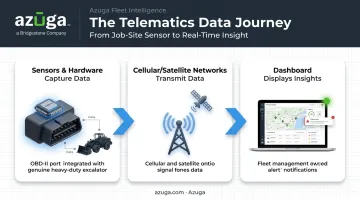
- Sensors and hardware capture data - hardwired devices, battery-powered trackers, Bluetooth beacons, or OEM-embedded modules pull readings directly from the machine's systems
- Cellular or satellite networks transmit it - data moves from the jobsite to the cloud, even in remote areas with limited connectivity
- A dashboard displays it - fleet managers log in from a laptop or phone to see location, status, and alerts across every site
That same collection process extends to operator behavior, flagging patterns like harsh braking or excessive throttle that point to risky habits or training gaps.
Adoption is accelerating fast. The global construction equipment telematics market was valued at $6.92 billion in 2024 and is projected to grow at an 11.5% CAGR through 2034, according to a 2024 market analysis from Global Market Insights. That growth reflects a broader shift: contractors are done guessing where their equipment is and what shape it's in.
Key Features of Construction Equipment Telematics Systems
Not every telematics platform offers the same depth. Here's what separates a basic GPS tracker from a system built for construction fleets.
Real-time GPS tracking and geofencing. Virtual boundaries around jobsites trigger alerts when equipment crosses them unexpectedly. Azuga includes geofencing in its entry-level plan, and multi-location fleet operators use it to flag when vehicles enter maintenance zones or move outside expected hours.
Engine diagnostics and predictive maintenance alerts. Diagnostic trouble codes (DTCs) surface directly from a machine's onboard systems, flagging issues before they become breakdowns. One OEM system referenced by Equipment World identifies more than 40 fault codes and parameters, covering engine temperature, hydraulic pressure, and fluid levels.
Fuel monitoring and idle-time tracking. This exposes waste, fraud, and inefficient equipment use before it eats into margins.
Utilization dashboards. These highlight which machines are overworked and which are sitting idle, informing smarter rental, purchase, or reallocation decisions.
Safety and operator behavior monitoring. AI-powered dashcams add a layer most GPS-only systems miss. Azuga's SafetyCam AI uses collision reconstruction to analyze driver-facing footage and identify distraction events, helping fleet managers determine fault after an incident rather than relying on conflicting accounts.
Centralized, mobile-accessible platforms. One screen showing every site, every machine, and every open alert beats logging into five different portals.
Benefits of Construction Equipment Telematics
The features above only matter if they translate into results. Here's where the payoff shows up.
Increased Productivity
Nonproductive idling consumes 10% to 30% of construction equipment fuel, and telematics-driven monitoring can cut that idling by 10% to 15% on average, according to the Association of Equipment Manufacturers.
One contractor case documented by Construction Equipment saw idle time on some machines fall from 40-45% to 10% after combining telematics data with a three-minute idle policy.
Enhanced Safety
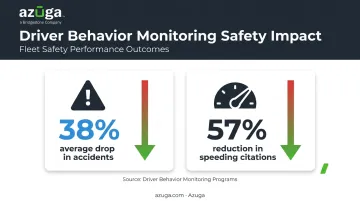
Behavior monitoring changes how equipment gets operated. Azuga customers have reported a 38% average drop in accidents tied to driver behavior monitoring programs, along with a 57% reduction in speeding citations.
Cost Optimization
Fuel savings, maintenance efficiency, and smarter rental decisions compound over a year. Azuga has documented customers saving over $9,462 annually through more effective fleet cost management.
Theft Prevention and Faster Recovery
Geofencing and motion-triggered alerts on high-value assets mean a stolen skid steer gets flagged the moment it leaves the site, not three days later.
Reduced Downtime
Predictive maintenance catches problems before they force an emergency repair, extending equipment lifespan and keeping crews working instead of waiting.
Improved Compliance and Job Costing
Automated engine-hour logs and audit-ready reports remove the guesswork from job costing, replacing manual timesheets with data pulled straight from the machine.
How to Choose the Best Telematics System for Construction Equipment
Picking a system isn't about finding the one with the longest feature list. It's about matching capability to how your fleet actually operates.
- Construction-specific experience with mixed fleets - the provider should support owned, rented, and third-party equipment without separate systems for each
- Ease of installation - plug-and-play devices and mounted asset trackers that crews install in minutes beat hardwired systems that require a technician visit and equipment downtime
- Total cost of ownership and scalability - look for plans that fit your fleet without long-term contracts; Azuga uses packages matched to fleet needs and scales with features like collision reconstruction
- Integration depth - confirm the platform connects to your ERP, accounting, or fuel card systems; Azuga offers 75+ such integrations
- Support quality - 24/7 availability matters more once you're relying on the data daily, not just during the sales pitch
A system that checks these boxes tends to get used. One that doesn't often ends up as expensive shelfware six months in.
Implementing Telematics: Steps and Best Practices
Rolling out telematics badly is almost as common as rolling it out well, and a few key practices separate the two outcomes.
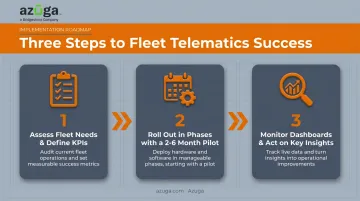
- Assess fleet needs and define KPIs first by deciding upfront whether you're chasing utilization, fuel spend, safety incidents, or all three. Vague goals produce vague results.
- Roll out in phases, not all at once by equipping a representative slice of machines and sites before scaling fleet-wide. Equipment World's coverage of AEMP implementation guidance recommends a 2-6 month pilot with a senior sponsor overseeing adoption.
- Monitor dashboards and act on insights, not everything. The ASCE warns that tracking every available data point creates information overload, so focus on metrics tied to your KPIs and ignore the rest.
Driver and operator buy-in matters just as much as the technology. Rolling out telematics as a surveillance tool tends to backfire; framing it around safety rewards and reduced paperwork gets better adoption. Azuga's hardwired and battery-powered equipment trackers, which crews can mount themselves in minutes, also ease that transition.
Frequently Asked Questions
What is telematics in construction?
Construction telematics uses GPS, onboard sensors, and wireless communication to track equipment location, usage, and mechanical health in real time. It replaces manual logs and guesswork with continuous, cloud-based data.
What is the best telematics for construction equipment?
The best system depends on your fleet mix and goals, but strong options share common traits: easy installation, packages matched to fleet needs, safety features like AI dashcams, and integrations with your existing business systems.
How much does a construction telematics system typically cost?
Azuga's plans match packages to fleet needs, with optional add-ons like AI dashcams available as optional add-ons.
How long does it take to install telematics devices on equipment?
Battery-powered and beacon trackers can be mounted in minutes with no professional help required. Hardwired installations take longer and typically require a trained technician.
Can telematics track non-powered equipment like trailers or generators?
Yes. Battery-powered or Bluetooth asset tags extend tracking to equipment without an engine, including trailers, generators, and other high-value attachments that would otherwise go unmonitored.
Is data collected by construction telematics systems secure?
Reputable providers apply encryption and follow data protection standards to safeguard telematics data. Confirm a vendor's specific security certifications and data handling policies before sign