
Introduction
It's 7 a.m. and your dispatcher is juggling three spreadsheets, a sticky note about a truck due for an oil change, and a phone call from a customer asking where their technician is. Sound familiar?
Many fleet managers still run operations this way—reactive, scattered, and one missed maintenance alert away from a breakdown on a job site.
An integrated Vehicle Management System (VMS) fixes this by pulling GPS tracking, driver safety data, maintenance alerts, and fuel spending into one dashboard. No more toggling between five different logins.
This article breaks down what an integrated VMS actually includes, the benefits fleets see, how to pick the right one, and which industries get the most value from making the switch.
Key Takeaways
- An integrated VMS unifies GPS tracking, driver behavior monitoring, maintenance alerts, and fuel data in one dashboard
- Fleets using AI dashcams and behavior tracking cut accidents by ~38% and speeding citations by ~57% on average
- Prioritize installation ease, integration compatibility, and packages matched to fleet needs when choosing a VMS
- Construction, HVAC, utilities, and trucking fleets use VMS to tighten compliance and control operating costs
What Is an Integrated Vehicle Management System (IVMS)?
An IVMS is software that consolidates vehicle location, driver behavior, diagnostics, and asset data into a single, centralized platform. Instead of checking one app for GPS coordinates, another for fuel-card reports, and a spreadsheet for maintenance schedules, everything lives in one place.
That setup is a clear break from how fleets ran a decade ago
- Old model: Separate point solutions (standalone GPS, fuel card, maybe a dash cam added later), each with its own login and no shared data
- New model: One platform where a speeding event ties to the driver's safety score, the vehicle's maintenance history, and that trip's route data
Berg Insight reports 19.2 million active fleet-management systems in North America as of 2024, projected to reach 33.2 million by 2029, an 11.9% annual growth rate (Berg Insight, 2025).
Video telematics (camera-based systems layered on fleet tracking) is growing faster still, with installed units expected to more than double by 2029.
IVMS isn't just for massive trucking companies. Platforms like Azuga serve everyone from a two-truck HVAC company to enterprise logistics operations, with the same core technology scaled to fleet size.

Core Components of an Integrated VMS
A true integrated VMS covers five functional areas working together, not five separate products stitched together.
GPS Tracking and Real-Time Location Visibility
Live location tracking is the foundation, but frequency matters more than most fleet managers realize. A system that updates every two minutes gives you a rough idea of where a vehicle was. A system updating every 30 seconds gives you near-real-time accuracy for route verification and customer ETAs.
Geofencing adds another layer: automatic alerts when a vehicle enters or leaves a designated zone. That is useful for job-site accountability or theft prevention on construction sites.
Driver Behavior and Safety Monitoring
Modern systems track more than speed. They flag
- Harsh braking and hard acceleration
- Distracted driving (detected via driver-facing cameras)
- Tailgating and rolling stops
- Drowsiness indicators
AI-powered dashcams take this further with collision reconstruction. They use footage and sensor data to determine fault after an incident automatically, so a manager does not have to pull hours of video.
Vehicle Diagnostics and Predictive Maintenance
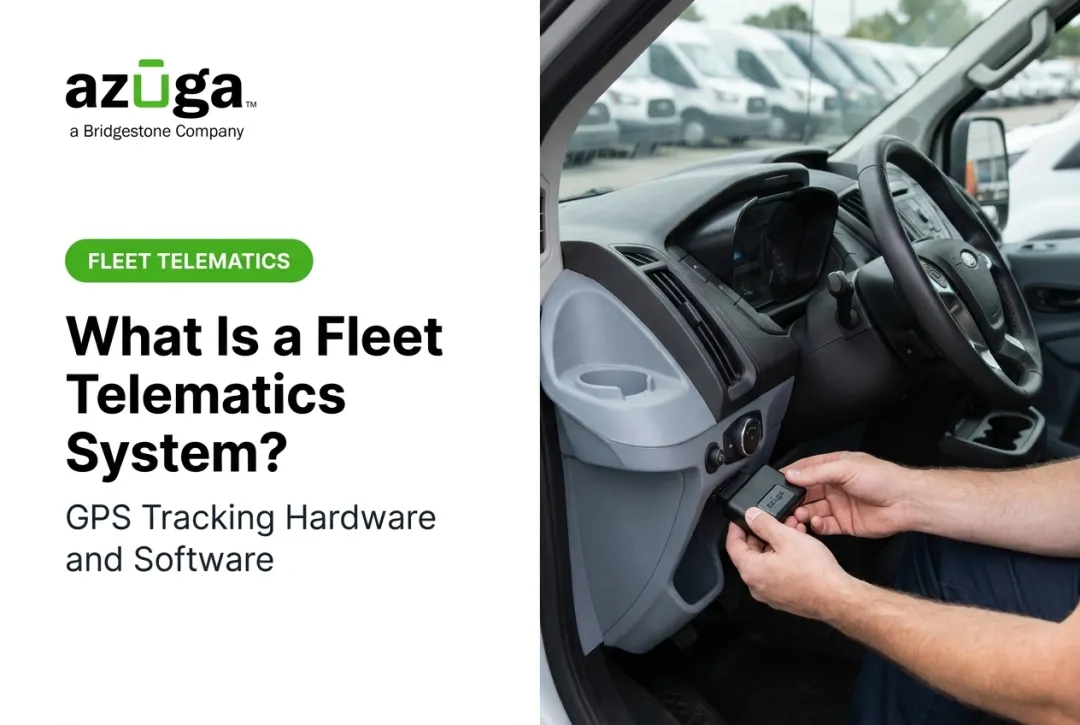
OBD-II based systems plug into a vehicle's onboard computer and pull real-time diagnostics: check-engine codes, battery health, tire pressure, and sensor alerts. These feed into maintenance reminders based on mileage, engine hours, or time, so oil changes and brake inspections happen on schedule instead of after something breaks.
For small fleets without a dedicated IT team, that only works if installation is not a barrier. Azuga's OBD-II device plugs directly into the port and connects in 10 seconds or less, with no professional installer and no downtime.

Fuel Management and Cost Tracking
Fuel-card integrations catch problems that spreadsheets miss. According to a NAFA Institute & Expo panel, up to 22% of fuel spend can be lost to fraud, with construction fleets seeing even higher rates (FleetOwner, 2025).
Integrated systems flag mismatches between fuel-card transactions and vehicle GPS data
- Location of the purchase vs. the vehicle's actual position
- Time of the transaction vs. the trip timeline
- Volume purchased vs. expected tank capacity
That combination catches skimming or unauthorized purchases before they add up.
Compliance and Reporting Tools
For regulated fleets, automation isn't optional. Electronic Logging Devices (ELDs) and reporting tools handle the work that used to sit with admin staff
- Track Hours of Service and flag drivers approaching limits
- Maintain the records FMCSA requires
- Match GPS mileage against fuel purchases for IFTA filings
- Cut the manual receipt-chasing that slows quarterly reporting
Key Benefits of Implementing an Integrated VMS
Improved Driver Safety and Accident Reduction
Fleets using integrated tracking with AI dashcams report clear safety gains. Azuga customers see an average 38% decrease in accidents and a 57% reduction in speeding citations. Real-time coaching alerts catch risky behavior before it becomes a habit, rather than reviewing it after an incident.
Lower Operational and Fuel Costs
Cost control compounds across a fleet. Azuga customers report saving an average of $9,462 annually through better fuel management, reduced idling, and fewer unplanned repairs. McKinsey's 2024 truck-industry report notes some large retailers claim diesel-consumption reductions of up to 8% using fleet-management systems.
Exoneration and Liability Protection
Accident liability disputes are expensive and slow. According to NHTSA data, 70% of commercial vehicle accidents involving a passenger car are not the fault of the commercial driver. Collision reconstruction technology, like Azuga SafetyCam AI, captures footage and sensor data automatically, giving fleets evidence to resolve claims faster and avoid unnecessary litigation.
Data-Driven Decision Making
When location, safety, maintenance, and fuel data sit in one dashboard, patterns become obvious
- Routes that waste fuel through excessive idling
- Drivers who consistently trigger safety alerts
- Vehicles approaching costly repairs
Reduced Administrative Burden
Automated maintenance scheduling, violation flagging, and compliance reporting eliminate hours of manual data entry every week. That gives dispatchers and fleet managers time back for operations instead of chasing paperwork.

How to Choose the Right Integrated VMS for Your Fleet
Not every VMS fits every fleet. Before signing a contract, evaluate these four factors
- Installation and onboarding: Plug-and-play OBD-II devices mean vehicles stay on the road instead of sitting in a shop waiting for a professional install.
- Integration capability: Confirm the platform connects with your existing fuel cards, ELD systems, and field-service software. Azuga's marketplace includes 75+ integrations, from ServiceTitan and Procore to Fleetio and TowBook.
- Packages matched to fleet needs: Look for plans matched to your fleet rather than hidden fees. Azuga's tiers use packages matched to fleet needs for core tracking and can include advanced safety and reporting features.
- 24/7 customer support: Fleets don't stop running at 5 p.m. Support availability around the clock matters when a vehicle issue happens at 2 a.m.
Industries That Benefit Most from Integrated VMS
Integrated VMS pays off most where crews, equipment, and compliance risk stay in motion all day.
- Service fleets trades (HVAC, electrical, plumbing, pest control): job-site accountability, route efficiency, and proof of service windows
- Construction and utilities: equipment tracking, safety compliance, and theft prevention
- Trucking, towing, and waste management: regulatory compliance and driver safety scoring
- Small businesses: idle-time and fuel visibility without enterprise-level complexity
Customer results show up fast. Diamond Engineering, a construction fleet using Azuga, secured more than a 10% insurance-premium discount after sharing driver-behavior and asset-location data with its insurer. Corix Utilities runs telematics and dashcams across a 77-vehicle fleet to improve safety and cost performance. Marlboro Towing gained clearer visibility into truck utilization after adopting integrated tracking.
Kitsap Garage Door Company upgraded from basic GPS to a full platform and finally saw engine idling and fuel usage it had never tracked before. President John Ramer called the ROI "a no-brainer," with immediate gains in efficiency and customer service.

Frequently Asked Questions
What is an integrated vehicle management system (IVMS) and what does it do?
An IVMS is a unified platform combining GPS tracking, driver safety monitoring, maintenance alerts, and fuel data into one dashboard. It gives fleet managers complete visibility instead of juggling separate tools.
What is the difference between GPS tracking and a full VMS?
GPS tracking shows vehicle location. A full VMS includes that plus diagnostics, driver safety monitoring, fuel management, and compliance tools, giving a complete operational picture rather than just a map.
How much does an integrated VMS cost?
Packaging typically follows a per-vehicle model. Azuga's plans use packages matched to fleet needs for core tracking and scale up based on added safety, compliance, and reporting features.
Can a small business benefit from an integrated VMS?
Yes. Affordable, packages matched to fleet needs and self-install hardware make VMS practical for small fleets, not just large enterprises. Kitsap Garage Door Company, a small business, saw immediate ROI after switching.
How does an integrated VMS improve driver safety?
Real-time behavior monitoring flags speeding, harsh braking, and distraction as they happen, with coaching alerts to correct habits. AI dashcams add collision reconstruction that automatically determines fault after incidents.
Is installation of a VMS complicated?
No. Plug-and-play OBD-II devices can be self-installed by plugging into the vehicle's OBD-II port. Azuga's device connects in 10 seconds or less, with no professional installer needed.