
Telematics often gets filed under "nice-to-have technology." But its real value shows up in the small, daily decisions: how long a truck idles at a job site, which route a driver takes to avoid traffic, whether a tire is losing pressure before it becomes a bigger problem.
This article breaks down exactly how telematics data turns into measurable fuel savings, not abstract promises.
Key Takeaways
- Telematics gives real-time visibility into idling, speeding, harsh braking, and vehicle health
- Fuel accounts for 24% of per-mile operating costs, so efficiency gains add up
- Route optimization and fuel card integration close the gap in fuel spend
- Consistent data review, not passive collection, turns telematics into real savings
What Is Fleet Telematics?
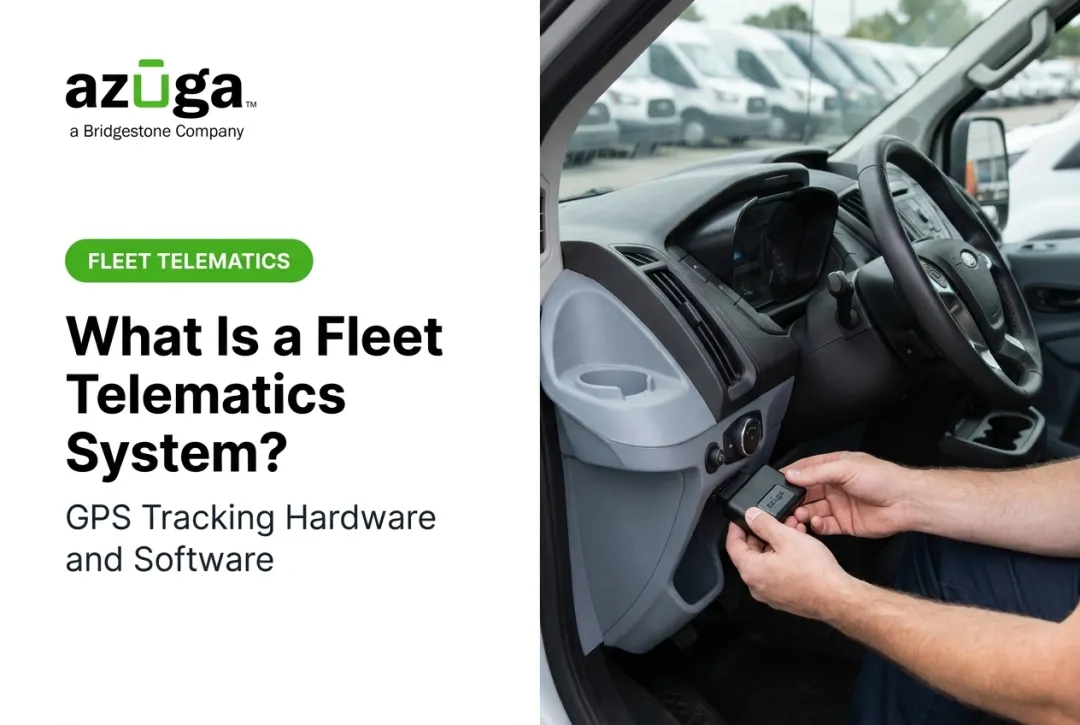
Fleet telematics connects a vehicle's engine data and GPS location to a central dashboard, giving managers real-time visibility into where vehicles are, how they're driven, and how they're running.
It's not limited to trucking. Industries beyond trucking rely on it just as heavily, including
- Construction crews
- HVAC and plumbing contractors
- Utility companies
- Waste management operations
- Last-mile delivery fleets
All of them use telematics to keep tabs on vehicles they can't physically watch all day.
The technology matters less than what it delivers: lower cost per mile, fewer surprises, and tighter control over a budget line that fluctuates constantly.
Fuel typically eats up around 24% of a motor carrier's per-mile operating costs, according to American Transportation Research Institute data reported by FleetOwner. That's a big enough slice that even modest efficiency gains translate into real dollars across a fleet.
Key Advantages of Fleet Telematics for Fuel Efficiency
The advantages below focus on measurable, day-to-day operational impact, not abstract features. Each one ties directly to numbers fleets already track: fuel spend, cost per mile, vehicle uptime, and compliance risk.
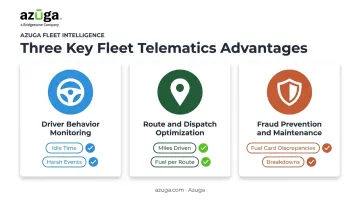
Advantage 1: Driver Behavior Monitoring Reduces Fuel-Wasting Habits
Telematics tracks idling time, speeding, harsh braking, and rapid acceleration through a combination of engine and GPS data. Azuga's platform, for example, pulls data at 30-second intervals and rolls it into a driver scorecard, giving managers near-instant visibility into events that would otherwise go unnoticed until the fuel bill arrived.
Real-time alerts let managers coach specific drivers before a bad habit compounds across dozens of vehicles. That distinction matters
- Without data: Managers guess at fleet-wide waste and address it with blanket policies
- With data: Managers coach the three drivers actually responsible for the spike
Aggressive driving is not a minor factor. Research from the Oak Ridge National Laboratory found that aggressive driving behaviors, such as speeding and rapid acceleration or braking, can lower fuel economy by 15%-30% at highway speeds and 10%-40% in stop-and-go traffic for light-duty vehicles. Idling adds its own drain: a typical combination truck burns roughly 0.8 gallons of diesel per idling hour.
KPIs impacted:
- Idle time percentage
- Fuel cost per mile
- Harsh event frequency (braking, acceleration, speeding)
- Driver safety scores
This advantage matters most for fleets with large vehicle counts, stop-and-go routes, or long idle periods (think delivery vans, construction equipment, or waste collection trucks that sit running at every stop). Pest control fleets using Azuga have reported internal averages of a 29% reduction in idling duration and a 36% reduction in hard braking, proof that these habits are correctable once they're visible.
Advantage 2: Route and Dispatch Optimization Cuts Mileage and Idle Time
GPS data and geofencing let dispatchers pick the shortest, least congested route and send the closest available vehicle instead of the nearest guess. Fewer miles driven means less fuel burned and less wear on the engine.
A peer-reviewed study published in Cleaner Engineering and Technology modeled route optimization for two heavy vehicles operated by Blacktown City Council in Australia. The results were striking: a waste-collection truck saw a modeled 11% reduction in monthly fuel consumption, while a tree-maintenance truck's fuel use dropped by 62% after route modeling.
These are simulation results from two vehicles, not an industry-wide guarantee, but they show the scale of what's possible when routes are actually optimized rather than left to habit.
Geofencing adds another layer. Virtual perimeters around job sites let managers set
- Entry and exit alerts for when vehicles arrive or leave a location
- Authorized hours monitoring to catch unapproved after-hours use
- Duration tracking, flagging when a technician stays at a site far longer than expected
KPIs impacted:
- Total miles driven
- Fuel consumption per route
- On-time arrival rate
- Jobs completed per day
This has the biggest payoff for service fleets and multi-stop delivery fleets working in congested or unfamiliar territory, where a bad route or a slow dispatch decision can cost an extra hour of drive time before lunch.
Advantage 3: Fraud Prevention and Proactive Maintenance Protect Fuel Spend
Fuel card fraud and neglected maintenance are hidden costs. Neither shows up as a single dramatic loss; they show up as a fuel budget that's consistently a little higher than it should be, without an obvious cause.
Telematics closes that gap two ways
- Fraud detection: Cross-referencing fuel card transactions against GPS location and tank data flags purchases that don't match where a vehicle actually was.
- Engine diagnostics: Onboard sensors surface diagnostic trouble codes tied to issues like underinflated tires or engine faults before they chip away at fuel economy.
Maintenance neglect adds up faster than most managers expect. Underinflated truck tires, even just 10 psi below spec, can reduce fuel economy by 0.5%-1%, and EPA data notes truck tires can lose up to 2 psi per month even with tight seals. Multiply that across a fleet of 40 vehicles and it's a measurable line item, not a rounding error.
KPIs impacted:
- Fuel card discrepancies flagged
- Maintenance-related breakdowns
- Average vehicle lifespan
Fleets with multiple fuel card users, older vehicles, or high-value cargo and equipment have the most to lose here: one bad actor or one ignored check-engine light can quietly cost thousands. Construction firm Diamond Engineering used Azuga's asset tracking and driver behavior data to secure more than a 10% discount on its insurance premium, a reminder that clean, verifiable fleet data pays off in more than one budget line.
What Happens When Fleet Telematics Is Missing or Ignored
Skip telematics, or collect the data and never look at it, and the consequences tend to show up slowly, then all at once.
- Fuel spend fluctuates unpredictably, rising and falling without a clear cause to point to
- Fuel theft and breakdowns get addressed reactively, after the damage is already done, instead of flagged early
- Small inefficiencies compound — idling, poor routing, and worn tires quietly stack up into a much bigger annual cost
- Fuel policies and coaching programs stop scaling, because there's no consistent way to track compliance across a growing fleet
None of these problems announce themselves loudly. They just show up as a fuel budget that keeps creeping upward year over year.
How to Get the Most Value from Fleet Telematics
Telematics only delivers savings when someone actually reviews the data. A dashboard nobody checks is just an expensive idle app.
A few practices separate fleets that see real savings from ones that don't:
- Set clear thresholds: Define what counts as excessive idling, speeding, or unusual fuel usage so alerts stay actionable instead of becoming noise everyone ignores.
- Pair scorecards with coaching, not punishment: Enviropest's Kevin Lemasters says Azuga "gives us a new way to drive our meetings and coach techs to improve safety."
- Add incentives: Gamified competitions, rewards, and recognition turn scorecard data into lasting behavior change. Galaxy One rallied 200+ employees around a safety rewards program this way.
- Choose tools your team will actually use: Azuga's plug-and-play OBD-II device installs in minutes, letting fleets start capturing savings almost immediately.
The pattern holds across every case study: the fleets that see savings are the ones reviewing data weekly, not the ones that installed a device and forgot about it.
Conclusion
Fuel efficiency gains don't come from one clever fix. They come from control, visibility, and consistency applied every day, catching the idling truck, correcting the aggressive driver, flagging the tire that's losing pressure before it costs real money.
These advantages compound. A driver who stops idling this month keeps that habit next month. A route that saves 10 minutes today saves it on every repeat trip.
Fleet telematics, like the platform Azuga runs for construction, HVAC, trucking, and utility fleets, works best as an ongoing practice for managing cost, not a one-time software purchase you install and forget.
Frequently Asked Questions
What are the benefits of fleet telematics?
Fleet telematics reduces fuel waste through idling and driving-behavior data, prevents fuel card fraud, catches maintenance issues early, and simplifies compliance reporting. Most fleets see gains in safety scores alongside fuel savings.
How to improve fleet fuel efficiency?
Combine driver coaching on idling and speeding, route optimization to cut unnecessary mileage, proactive maintenance on tires and engine components, and real-time fuel monitoring through telematics. Reviewing the data weekly, rather than just installing the hardware, catches inefficiencies before they become costly patterns.
What is the average ROI for fuel telematics?
Most fleets see measurable ROI within 6-12 months, depending on fleet size and how actively the data gets used. In one industry survey, 32% of fleets reported positive ROI within six months of implementation.
How does fleet telematics detect fuel theft or fraud?
Telematics cross-references fuel card transaction timestamps and amounts with GPS location and vehicle tank data. Mismatches, like a fill-up logged far from the vehicle's actual location, get flagged for review.
Is fleet telematics difficult or expensive to install for small fleets?
No. Plug-and-play OBD-II devices require no special tools or professional installation, and pricing scales affordably. Azuga matches packaging to fleet size and the features you select, accessible even for fleets with just a handful of vehicles.
Can fleet telematics help fuel efficiency for electric vehicle (EV) fleets?
Telematics platforms increasingly support mixed fleets by tracking energy-efficient routing and driving behavior common to both EVs and combustion vehicles. Full EV-specific features like charging pattern analysis are still an evolving part of the industry.