
You might also see ELD used elsewhere, such as "English Language Development" in education circles. This article focuses exclusively on the transportation meaning, since that's the context most fleet managers, drivers, and business owners are searching.
We'll cover what ELD actually means, how the devices work, who's required to use one, and how the right ELD or fleet tracking platform can do more than just keep you compliant.
Key Takeaways
- ELD = Electronic Logging Device, mandated by the FMCSA for most commercial drivers since December 2017
- Auto-records hours of service (HOS), location, and engine data to replace paper logs
- Short-haul drivers, pre-2000 vehicles, and limited paper-log users may be exempt
- Beyond compliance, pairing an ELD with fleet tracking reduces accidents, speeding, and admin time
What Does ELD Mean in Transportation?
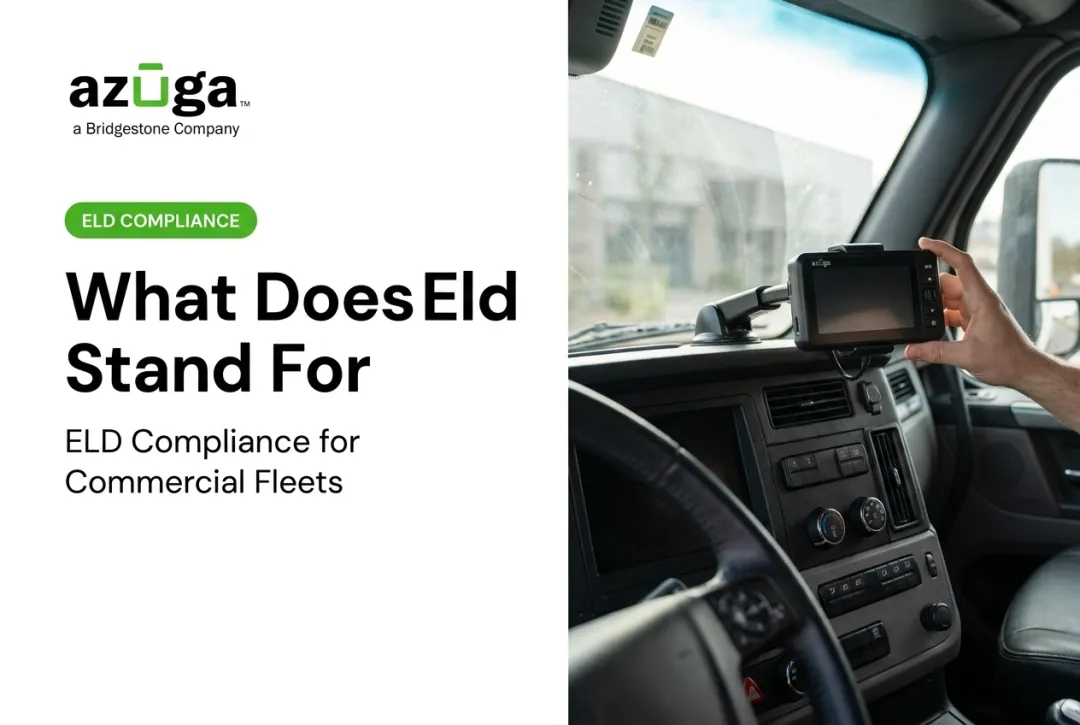
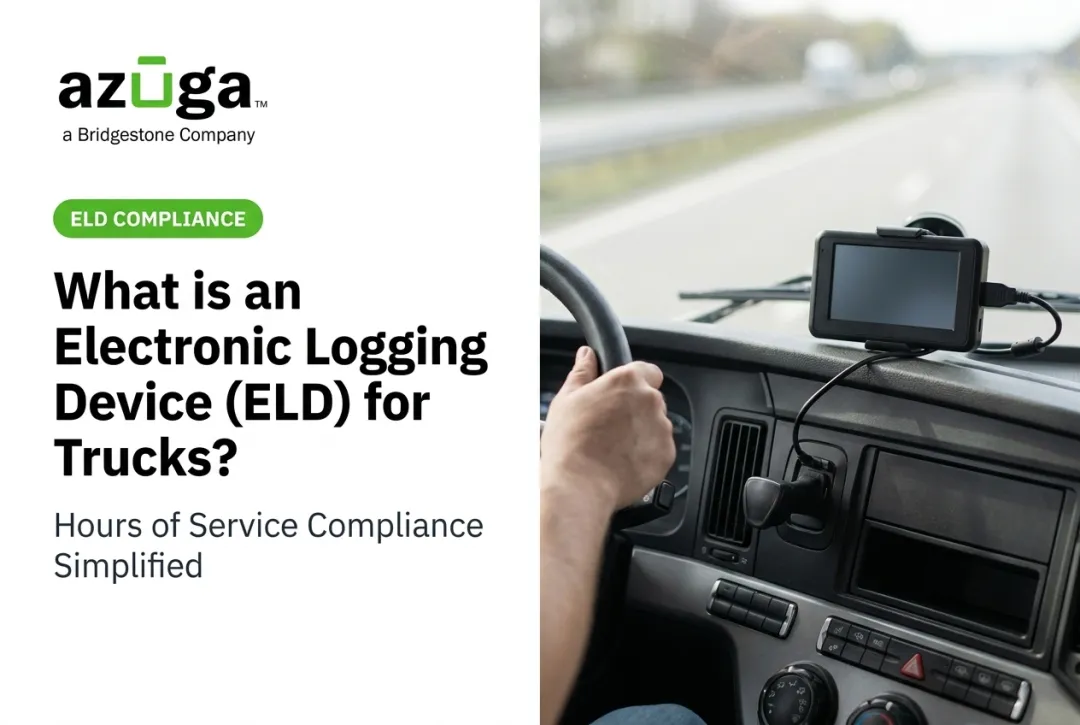
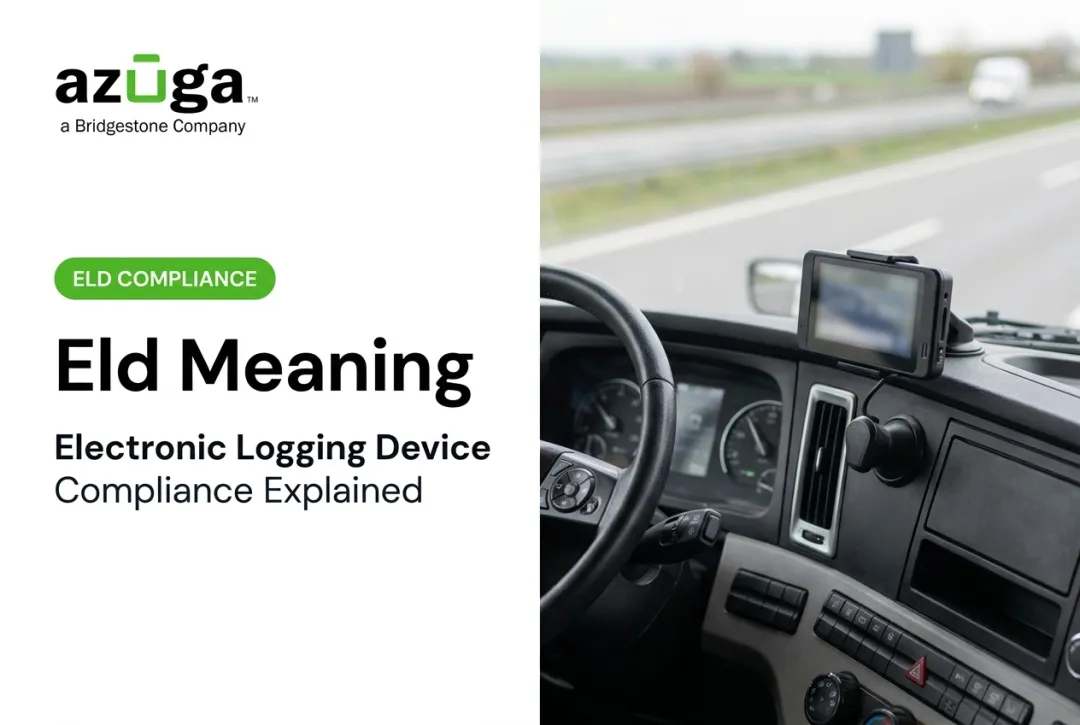
An Electronic Logging Device (ELD) is hardware connected to a commercial vehicle's engine that automatically records a driver's Hours of Service, engine hours, vehicle location, and miles driven. It replaced the paper logbooks drivers used to fill out by hand.
The FMCSA's ELD Mandate made this official. The rule was finalized in December 2015, with compliance required by December 18, 2017. Carriers still running older AOBRDs (Automatic On-Board Recording Devices) got a grace period, but that ended December 16, 2019, after which ELDs became mandatory for anyone previously using AOBRDs.
Common search variations you might come across:
- E-Logs / eLog — electronic logbook (same idea as an ELD)
- AOBRD — older on-board recording tech that ELDs replaced
- RODS — Record of Duty Status, the HOS record ELDs capture
Getting this terminology straight matters for more than curiosity. Operating without a compliant ELD can trigger citations, fines around $1,200 per day, or an out-of-service order that pulls a driver off the road entirely.
Addressing Other Common ELD Searches
Drivers also land on this page with a few unrelated or bilingual queries. Clearing those up avoids real compliance mix-ups.
Does ELD Mean "Old"?
No. People often make that leap because ELDs replaced paper logbooks, but the letters stand for Electronic Logging Device only. The acronym has no link to the word "old."
What Does ELD Mean in Spanish?
In Spanish it's typically "Dispositivo Electrónico de Registro." The device still tracks HOS and engine data under the same FMCSA rules, regardless of language.
How Does an ELD Work?
An ELD connects to a vehicle's engine control module, typically through the OBD or diagnostic port, and pulls data directly from the engine instead of relying on manual entry.
The basic daily workflow looks like this:
- Driver logs in at the start of a shift with their credentials
- Duty status updates automatically when the vehicle moves above roughly 5 mph, switching to "driving" with no input needed
- Driver certifies the log at the end of the day before signing off

What Data Gets Captured
The system automatically records
- Date and time
- Vehicle location
- Engine hours and miles driven
- Driver and vehicle identification
- Motor carrier information
During roadside inspections, this data transfers to safety officials via Bluetooth, USB, or wireless telematics. If the electronic transfer fails, a display or printout serves as backup.
Not every device on the market is legally usable. A device must appear on the FMCSA's registered ELD list to count as compliant. FMCSA does not test or endorse these devices; manufacturers self-certify. Check that list directly before you buy.
Who Needs an ELD and Who Is Exempt?
The mandate generally applies to drivers who are already required to keep Records of Duty Status. That includes
- Commercial vehicles over 10,001 lbs gross vehicle weight
- Vehicles carrying passengers for hire, generally 9+ paid passengers or 16+ unpaid (including the driver)
- Hazmat carriers required to keep RODS due to placarding requirements

Key exemptions include:
- Short-haul drivers within a 150 air-mile radius of their normal reporting location who return within 14 hours
- Pre-2000 model year vehicles, based on engine or VIN date
- Drivers using paper logs 8 days or fewer within any rolling 30-day period
You must meet every condition of an exemption. Miss one, and full HOS/ELD rules apply again. Check your situation against the FMCSA's official exemption list rather than assuming you qualify.
Why ELDs Matter Beyond Compliance
Compliance is only the starting point. Once you're already collecting HOS and engine data, pairing it with broader fleet tracking gives you real-time visibility into where vehicles are and how drivers are behaving on the road.
The safety impact is measurable. Azuga customers using this combined approach have seen
- Accidents decrease by 38% on average
- Speeding citations drop by 57% on average
Those figures show up as lower insurance costs, less downtime, and fewer difficult conversations with drivers about risky habits.

Simplifying Fuel Tax Reporting
Accurate engine and mileage data doesn't just satisfy HOS rules. It also feeds directly into IFTA fuel tax reporting. Instead of manually reconstructing mileage by state each quarter, fleets using integrated tracking (like Azuga's integration with ProMiles) can save up to 8 hours a month on IFTA calculations alone.
Protecting Drivers in Disputes
Objective GPS and ELD records also come in handy when disputes arise: accident claims, detention pay disagreements, or "he said, she said" situations with customers. Having a timestamped, location-verified record can exonerate a driver who did nothing wrong.
Combine ELD-style tracking with dashcams and driver safety tools, and the cost impact compounds. Azuga has reported fleets cutting operational costs by 30% using this kind of integrated platform.
Choosing the Right ELD or Fleet Tracking Solution
ELD and fleet tracking providers differ on install, support, and cost. Before you commit, weigh these factors
- Ease of installation — self-install vs. requiring a technician
- Integration options — dispatch software, fuel cards, and maintenance systems
- Customer support — availability matters when a driver gets pulled over at 2 a.m.
- Pricing that scales — a 5-truck operation shouldn't pay enterprise rates
Azuga's plug-and-play OBD-II device is installed by the driver in minutes—no technician visit. It fits fleets from a handful of trucks to large operations across construction, HVAC, trucking, utilities, and more, with integrations for platforms like ServiceTitan, Procore, and Fleetio, plus 24/7 phone, email, and web support.

Comparing options? Request a demo and match features to your compliance needs and fleet size.
Frequently Asked Questions
What does ELD mean in transportation?
ELD stands for Electronic Logging Device. It automatically tracks a commercial driver's Hours of Service, engine data, and location, replacing paper logs under the FMCSA mandate.
What does ELD mean in Spanish?
In Spanish, ELD translates to "Dispositivo Electrónico de Registro." The function stays the same in any language: tracking HOS and engine data.
Does ELD mean old?
No. ELD stands for Electronic Logging Device, not anything related to "old." The confusion likely comes from ELDs replacing older paper log systems.
How much does an ELD cost?
ELD costs vary by provider and features. Hardware is often bundled with a monthly service plan, and subscription fees scale with fleet size.
What is the difference between an ELD and an AOBRD?
AOBRDs were the older, less standardized predecessor to ELDs, governed by a 1988 rule. They were phased out by December 16, 2019, after which ELDs became mandatory for all covered carriers.
Who is exempt from using an ELD?
Common FMCSA exemptions include:
- Short-haul drivers within a 150 air-mile radius
- Vehicles built before model year 2000
- Drivers on paper logs 8 or fewer days in a rolling 30-day period