
Introduction
Running a vehicle fleet in 2026 means juggling more than gas and maintenance. Routing complexity, driver safety liability, and compliance paperwork have turned fleet operations into a full-time data challenge. Many fleet managers struggle to keep costs down while proving their drivers aren't the ones causing accidents.
Fleet management software solves this by combining GPS tracking, safety scoring, and maintenance alerts into one system. Construction crews, HVAC contractors, trucking companies, and utility fleets rely on it to cut fuel spend and reduce accidents by more than a third, all while keeping vehicles on the road longer.
This guide reviews the 10 best fleet management software platforms of 2026, comparing pricing and features to help you find the right fit for your fleet size.
Key Takeaways
- Fleet software combines tracking and safety scoring with maintenance alerts to reduce costs and risk.
- Azuga, Samsara, Motive, Geotab, and Fleetio lead the 2026 rankings for different fleet needs.
- Choose based on features and total cost of ownership, not brand recognition alone.
Overview of Fleet Management Software in the Fleet & Transportation Industry
Fleet management software pairs telematics hardware, like an OBD-II device or dashcam, with cloud-based software that tracks vehicles, drivers, maintenance schedules, and compliance status in real time. Instead of relying on spreadsheets and paper logs, fleet managers get a live dashboard showing exactly where every vehicle is and how it's being driven. That shift from paperwork to real-time visibility is fueling rapid adoption across the industry.
The numbers confirm it: roughly 19.2 million active fleet-management systems were deployed across North American commercial fleets by the end of 2024. According to Berg Insight, that figure is projected to reach 33.2 million by 2029, reflecting an 11.6% annual growth rate. Construction, trucking, utilities, and service businesses are driving much of that demand as fuel and labor costs rise.
The list below ranks the top platforms for 2026 based on total cost of ownership, ease of installation, safety features, GPS accuracy, and verified customer feedback.
Top 10 Best Fleet Management Software Providers in 2026
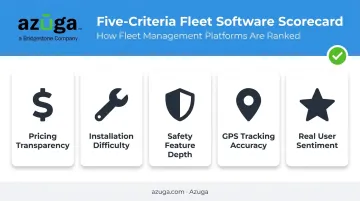
We evaluated each platform on five criteria: total cost of ownership, installation difficulty, safety feature depth, GPS tracking accuracy, and real user sentiment from verified review sites. Platforms with unclear contract terms or forced long lock-ins, for instance, lost points against those offering packages matched to fleet needs.
1. Azuga
Azuga is a GPS fleet management platform backed by Bridgestone, built around a plug-and-play OBD-II device that installs in minutes without a technician. Fleets simply plug it into the OBD-II port and the system starts transmitting data immediately.
What sets it apart
- SafetyCam AI with Collision Reconstruction, which helps prove when drivers aren't at fault in an accident
- A gamified driver rewards program where safe driving earns gift cards, not just warnings
- 30-second GPS tracking intervals for tighter location accuracy
- 24/7 unlimited phone, email, and web support on every plan
Diamond Engineering, a construction and equipment contracting firm, used Azuga's driver behavior data to negotiate a 10% discount on its commercial insurance premium—a real example of how the platform pays for itself beyond fuel savings.
| Category | Description |
|---|---|
| Starting Price | packages matched to fleet size and features |
| Key Features | GPS tracking, AI dashcams with collision reconstruction, driver safety scorecards, fuel management |
| Best For | Small to mid-size fleets wanting an easy-to-install, affordable solution with strong safety incentives |
2. Samsara
Samsara is a versatile all-in-one platform combining IoT sensors, AI dashcams, and maintenance tools. It's popular across fleet sizes because of its clean interface and built-in driver messaging.
Predictive maintenance alerts pull from real engine diagnostics, flagging issues before they turn into breakdowns. The tradeoff: rates are not listed publicly, so budgeting requires a sales conversation.
| Category | Description |
|---|---|
| Starting Price | Contact for details |
| Key Features | AI-powered dual-facing dashcams, predictive maintenance alerts, ELD compliance, environmental monitoring |
| Best For | Businesses wanting a fully customizable, scalable platform for large or growing fleets |
3. Motive
Motive (formerly KeepTruckin, rebranded in 2022) built its reputation on AI dashcams that detect distracted or unsafe driving as it happens. Its live driver coaching feature nudges drivers in real time rather than waiting for a post-incident review.
Hardware is self-installable, which keeps onboarding simple. Like Samsara, Motive doesn't publish plan details. Comparable platforms typically match packages to fleet size and features.
| Category | Description |
|---|---|
| Starting Price | Contact for details |
| Key Features | AI dashcams, live GPS tracking, maintenance alerts, ELD compliance |
| Best For | Fleets prioritizing driver safety coaching and accident prevention |
4. Geotab
Geotab is an open-platform telematics provider known for processing enormous volumes of vehicle data and connecting to over 400 third-party integrations through its Marketplace. That openness appeals to enterprises that want to own their data rather than lock it into one vendor's ecosystem.
Base plans cover GPS and harsh-braking detection, with add-on modules for ELD, IFTA reporting, and EV fleet support.
| Category | Description |
|---|---|
| Starting Price | Contact for details; tiered add-ons for compliance and premium features |
| Key Features | Base GPS tracking, harsh-braking detection, ELD/IFTA modules, extensive Marketplace integrations |
| Best For | Enterprises needing deep data analytics and multi-jurisdiction compliance |
5. Verizon Connect
Backed by Verizon's telecom infrastructure, this platform focuses on route optimization and dispatch for large, growing fleets. Its dynamic routing engine adjusts on the fly and integrates with ERP and dispatch systems many enterprises already run.
Packaging sits on the higher end of the market and isn't publicly listed.
| Category | Description |
|---|---|
| Starting Price | Contact for details |
| Key Features | Dynamic route optimization, asset/trailer tracking, two-way driver messaging, ELD/HOS compliance |
| Best For | Mid-size to large fleets needing scalable dispatch and route planning |
6. Fleetio
Fleetio takes a different angle: process automation. It focuses on maintenance scheduling, fuel tracking, and total cost of ownership visibility rather than leading with dashcams or safety scoring.
Fleetio raised more than $450 million in Series D funding in 2025, signaling strong market confidence in its maintenance-first approach.
| Category | Description |
|---|---|
| Starting Price | Billed annually; among the most packages matched to fleet needs in the category |
| Key Features | Automated maintenance reminders, fuel efficiency tracking, VIN decoding, driver safety plugin support |
| Best For | Fleets wanting affordable, packages matched to fleet needs with strong maintenance automation |
7. IntelliShift
IntelliShift markets itself on "white glove" onboarding, meaning custom training and hands-on setup rather than a self-serve dashboard. Real-time alerts flag tailgating, distraction, and lane drifting as they occur.
A drag-and-drop report builder lets fleet managers customize dashboards without waiting on support tickets.
| Category | Description |
|---|---|
| Starting Price | Contact for details |
| Key Features | AI-assisted dashcams, GPS tracking, custom report builder, dedicated onboarding support |
| Best For | Fleets that want hands-on onboarding and advanced AI safety alerts |
8. Rhino Fleet Tracking
Rhino, part of GPS Insight, targets budget-conscious fleets with low-cost GPS and asset tracking. Packaging often improves as fleet size grows, which rewards businesses scaling up their vehicle count.
An optional smart dashcam add-on lets fleets start with basic tracking and layer on safety features later.
| Category | Description |
|---|---|
| Starting Price | Wired and plug-in GPS plans; contact for details |
| Key Features | Wired and plug-in GPS devices, driver scorecards, optional dashcam add-on |
| Best For | Budget-conscious fleets wanting low-cost GPS tracking with room to add features later |
9. Teletrac Navman TN360
Teletrac Navman builds fully customizable suites around specific business requirements rather than offering fixed packages. TN360 covers GPS tracking, dashcams, ELD, and dispatching, with live and on-demand training included.
The company completed a divestiture to Respida Capital in mid-2026, a shift worth watching if you're evaluating long-term vendor stability.
| Category | Description |
|---|---|
| Starting Price | package matched to fleet size and tracked assets |
| Key Features | GPS tracking via TN360, smart dashcam, ELD compliance, IFTA reporting, route dispatching |
| Best For | Fleets with complex, tailored requirements needing a build-your-own software suite |
10. Linxup
Linxup focuses squarely on small and mid-size fleets rather than chasing enterprise contracts. Its GPS tracking plan runs contract-free, which is rare in this category.
Add-ons like dashcams and ELD service are available as optional add-ons, letting fleets build a package that matches their budget instead of paying for features they don't need.
| Category | Description |
|---|---|
| Starting Price | packages matched to fleet needs, with add-ons like dashcams available as optional add-ons |
| Key Features | GPS tracking, ELD solution, driver safety scorecards, flexible contract terms |
| Best For | Small and mid-size fleets wanting transparent, no-contract GPS tracking |
Key Features to Look for and How to Choose the Best Fit
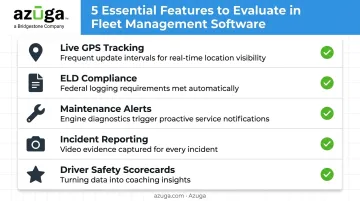
Brand recognition shouldn't drive your decision. Judge platforms on the features that actually matter for your fleet
- Live GPS tracking with frequent update intervals, not 5-minute pings
- ELD compliance built into the platform, since federal rules require electronic logging devices for most drivers, with fines for non-compliance
- Maintenance alerts tied to real engine diagnostics, not just mileage estimates
- Incident reporting with video evidence for accident disputes
- Driver safety scorecards that turn raw telematics data into coachable insights
Contract Flexibility Matters More Than It Seems
Providers package cost differently. Prioritize clear contract terms and packages matched to fleet needs when you're comparing five vendors on a deadline.
Geofencing and Scheduling Reduce Theft Risk
Geofencing creates virtual boundaries around job sites or depots, triggering alerts when a vehicle enters or exits unexpectedly. Paired with driver scheduling tools, it unifies office-to-field communication in one platform instead of scattered texts and phone calls.
Match Features to Your Fleet, Not the Feature List
Azuga stands out specifically for driver safety, thanks to its gamified rewards program and SafetyCam AI, which helps prove drivers aren't at fault in the majority of accidents. That matters more for a delivery fleet racking up daily miles than for a construction crew making three job-site trips a day.
A 2026 Verizon Connect survey of nearly 900 fleet professionals found technology users saw average cost decreases of 11% to 19% across fuel, accidents, labor, and maintenance, with 74% of video-telematics users reporting improved driver safety.
The takeaway: match the feature set to your biggest cost driver, whether that's fuel, accidents, or compliance, instead of buying the most expensive package by default.
Conclusion
The right fleet management software depends on what you're actually trying to fix, whether that's driver safety, fuel costs, or compliance headaches. Brand reputation matters less than whether the platform solves your specific problem.
Before signing anything, evaluate
- Whether pricing stays transparent as your fleet grows
- How responsive customer support is when something breaks
- Whether the platform scales without forcing a full re-implementation
If driver safety and flexible plans top your list, Azuga's plug-and-play GPS fleet tracking is worth a look. It includes AI dashcam options, gamified driver rewards, and 24/7 support from day one.
Frequently Asked Questions
What software is used in fleet management?
Fleet management relies on GPS tracking and ELD compliance tools, often bundled with maintenance management software into one platform. Leading providers include Azuga, Samsara, and Geotab, each offering slightly different feature depth.
How much does fleet management software cost?
Packaging typically depends on fleet size and feature set. Azuga matches packages to fleet needs, Fleetio publishes flat rates, and most others require a quote.
What features should I look for in fleet management software?
Prioritize live GPS tracking, maintenance alerts, ELD compliance, and driver safety scoring. These four cover the core operational and regulatory needs of most commercial fleets.
Is fleet management software worth it for small businesses?
Yes—even basic plans can pay for themselves through better fuel management and fewer breakdowns, often lowering insurance premiums too. Diamond Engineering, for example, secured a 10% insurance discount using driver behavior data from Azuga.
What is the difference between fleet management and fleet maintenance software?
Fleet management software covers broader operations like tracking, compliance, and driver behavior, while fleet maintenance software focuses narrowly on vehicle service and repairs, plus scheduled inspections. Many platforms, including Azuga and Fleetio, combine both functions.
How can I improve fleet management with software?
Use automated maintenance alerts, safety scorecards, and route data to catch problems before they become expensive. Reviewing this data weekly helps fleet managers plan more efficient routes and reduce unplanned downtime.