
Introduction
A driver completes safety training in January. By March, he's back to rolling through stop signs and slamming the brakes at yellow lights. Sound familiar?
Many fleet managers face this exact frustration. Training checks a box, but it rarely changes what happens behind the wheel week after week. Discipline and one-time courses fix knowledge gaps, not habits.
Structured, data-backed coaching does something different. It uses real driving data to have specific, timely conversations that actually stick. This article covers what fleet driver coaching really is, why it works better than training alone, and six practical tips you can use this week. It also breaks down how GPS tracking and AI dashcams make every coaching conversation more effective and fair.
Key Takeaways
- Coaching works best as an ongoing dialogue, not a one-time lecture or training replacement
- Telematics and video evidence cut violations, crashes, and insurance costs
- Addressing risky events within days drives faster, longer-lasting behavior change
- Strong coaching blends fact-based prep, supportive dialogue, one clear goal, and follow-up
- Real-time GPS and AI dashcams give managers the objective evidence to coach fairly
What Is Fleet Driver Coaching? (And How Is It Different From Training?)
Fleet driver coaching is an ongoing, individualized feedback process. It uses driving data, telematics alerts, and video evidence to spot risky behaviors and correct them through dialogue, not through a generic lecture or a punitive write-up. Platforms like Azuga's AI dashcams and GPS tracking generate this data automatically, flagging events like harsh braking, speeding, or distracted driving as they happen.
Training and coaching solve different problems
- Training builds knowledge and skills at fixed points: onboarding, annual refreshers, or after a policy change.
- Coaching is continuous. It's triggered by data and tailored to each driver's specific risk pattern.
As FleetOwner contributor Jane Jazrawy put it, assigning an online course after a safety event doesn't qualify as coaching. The real coaching happens in the conversation surrounding that event.
When Should You Coach a Driver?
Coaching moments should happen
- After a specific incident, violation, or near-miss
- During onboarding or scheduled safety refreshers
- When telematics shows an emerging pattern, such as repeated harsh braking or a creeping speeding trend
- During regular monthly or quarterly check-ins, even for your safest drivers
Why Timing Makes Coaching More Effective
Waiting weeks to address a risky habit weakens the connection between the behavior and the feedback. A Virginia Tech Transportation Institute study covering 354 drivers across seven fleets and 3.8 million miles found that coaching delivered within one week of an event was far more impactful than sporadic, delayed feedback.
High-severity event rates dropped 64% at one fleet in the study and 37% at another during the intervention period.
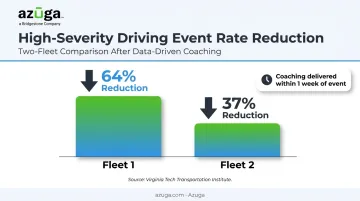
The lesson: don't batch your coaching sessions into a monthly review pile. Address the pattern while it's still fresh.
Why Fleet Driver Coaching Matters: The Business Case
The stakes are real. 5,472 people died in crashes involving large trucks in 2023, according to NHTSA data, though that figure is down 8% from 2022. Every one of those numbers represents a preventable event, and many trace back to habits that coaching could have caught earlier.
The financial exposure is just as sobering. FMCSA's 2024 crash-cost methodology puts the comprehensive cost of a large-truck crash at:
| Crash Severity | Estimated Cost |
|---|---|
| No injury | $46,765 |
| Injury | $383,168 |
| Fatal | $14,578,771 |
Figures reflect FMCSA's 2024 methodology in 2022 dollars and represent broad societal costs, not typical fleet repair bills.
Prevention is cheaper than any of those numbers. Fleets using Azuga's coaching and telematics tools have decreased accidents by 38% on average and reduced speeding citations by 57%, based on Azuga's internal customer performance data.
Coaching also pays off in ways that don't show up on an insurance invoice
- Retention: Employee development programs correlate with stronger staff retention across industries. Coaching framed as growth, not surveillance, keeps drivers engaged rather than defensive.
- Compliance: Coaching on speeding and hours-of-service habits helps drivers avoid violations that hurt CSA scores. FMCSA's Safety Measurement System weights recent violations up to 3x, so catching patterns early matters.
- Liability protection: AI dashcams with collision reconstruction can show drivers weren't at fault in the majority of accidents, giving fleets stronger evidence in insurance disputes and litigation.
Fleet Driver Coaching Tips for Effective Sessions
Tip 1: Prepare With Data Before Every Conversation
Never walk into a coaching session cold. Pull the telematics report, trip history, and any flagged events beforehand.
Real-time GPS visibility removes the guesswork. Instead of relying on a driver's memory or a dispatcher's secondhand account, you'll know exactly where the vehicle was, how fast it was moving, and what happened in the seconds before an event. That turns the conversation into a fact-based review instead of an accusation.
Tip 2: Lead With Curiosity, Not Blame
Open with the driver's safety and wellbeing, not a scolding. "I want to make sure you get home safe every night" lands very differently than "You did this wrong."
Ask open-ended questions
- "What happened here from your side?"
- "Was there something on the road I'm not seeing in this clip?"
- "What would have made this situation easier to handle?"
This invites ownership instead of defensiveness, and it often surfaces context you'd have missed otherwise.
Tip 3: Address Issues Quickly After They Happen
Research from the Virginia Tech Transportation Institute (VTTI) found that coaching within days of an incident is far more effective than coaching weeks later. Frequent tracking intervals and instant alerts let you catch a risky pattern, like three hard-braking events in one week, before it becomes a habit rather than after it's already caused a claim.
Tip 4: Use Video and Data as the "Unbiased Truth"
Reviewing dashcam footage together removes ambiguity. Instead of debating what happened, you both watch it happen.
Video evidence cuts both ways, and that's the point. It can confirm a driver's story just as easily as it can flag a mistake.
Azuga customers have used stored SafetyCam footage to prove a driver wasn't at fault, helping avoid costly litigation and expensive accident reconstruction work. When drivers see that the camera protects them too, trust in the whole coaching process goes up.
Tip 5: Set One Specific, Measurable Goal Per Session
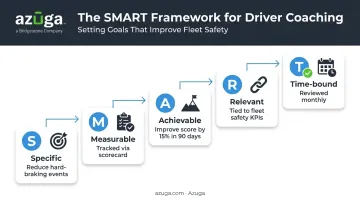
Don't try to fix everything in one conversation. Pick one target using a SMART framework
- Specific — "Reduce hard-braking events" rather than "drive better"
- Measurable — Tracked through a driver scorecard or safety score
- Achievable — Realistic given the driver's route and vehicle
- Relevant — Tied to the driver's specific role and route, not a generic fleet-wide target
- Time-bound — Reviewed at a set follow-up date, not "eventually"
Schedule that follow-up before the driver leaves the room. Then track progress against it using scorecards or automated reports.
Tip 6: Reinforce Progress and Recognize Improvement
Correcting mistakes is only half the job. A violation-free week or noticeably smoother braking deserves a shout-out, not silence.
Recognition programs, leaderboards, or even a quick "nice driving this week" text sustain motivation between formal sessions. Fleets that shift from a "gotcha" model to positive reinforcement tend to see safety conversations become normal team culture instead of a dreaded meeting.
Using Technology to Power Data-Driven Coaching
None of this works without visibility. GPS fleet tracking gives managers real-time insight into where vehicles are and how they're being driven, so you can spot a coachable moment as it happens instead of piecing it together after a claim arrives.
A few technology pieces make coaching genuinely practical
- Self-installable OBD-II devices: No technician, no downtime. Azuga's plug-and-play device captures speeding, hard braking, and idle time within minutes of installation.
- AI-powered dashcams: Azuga SafetyCam AI with Collision Reconstruction flags distraction events and helps prove that 70% of accidents aren't the driver's fault, protecting drivers and the business from costly litigation.
- Driver scorecards and alerts: Behavior data feeds directly into a scorecard, giving managers an objective baseline for every SMART goal they set.
The result is fewer arguments over what "probably" happened and more time spent actually coaching.
Common Driver Coaching Challenges to Plan For
Even a well-designed program hits friction. Plan for these three challenges up front
- Driver buy-in: Drivers often see monitoring as surveillance until they understand it. Be transparent about what data you collect and why, framing it as protection rather than policing.
- Manager skill gaps: Many managers earned their role through operational expertise, not coaching experience. Active listening and non-defensive feedback delivery are learnable skills worth training.
- Frequency balance: Too little coaching lets habits calcify, while too much feels like micromanagement. Set clear escalation criteria for repeated issues so drivers always know what to expect.
Frequently Asked Questions
What is a driving coach?
A driving coach provides ongoing feedback and guidance to help drivers improve safety behaviors over time. Unlike an instructor, who teaches basic driving skills, a coach works with drivers who already know how to drive but need behavior correction.
What are the three types of drivers?
Fleets commonly group drivers into low-risk, moderate-risk, and high-risk tiers based on violation history, crash records, and telematics behavior. There's no universal industry standard for these thresholds; each fleet typically defines its own criteria.
What are the 3 C's of driving?
One version taught by driver safety training provider Hard Hat Training, is Care, Caution, and Courtesy. These principles connect directly to behaviors fleet coaching targets, like following distance, anticipating other drivers' mistakes, and avoiding aggressive maneuvers.
What's the difference between driver coaching and driver training?
Training delivers scheduled, skill-building content at fixed points like onboarding. Coaching is ongoing, data-driven, and personalized to what an individual driver is actually doing on the road right now.
How often should fleet driver coaching happen?
Frequency should follow risk data. High-risk drivers with frequent flagged events need weekly or biweekly check-ins, while consistently safe drivers may only need quarterly conversations to stay engaged.
How do you measure whether driver coaching is working?
Track fewer violations, improved safety scores, and reduced crash or claims rates over time. A steady decline in flagged events for a specific driver is usually the clearest early signal that coaching is landing.