
That volatility is exactly why fuel waste is so dangerous. A few cents per mile feels trivial on one truck. Multiply it across 50 vehicles running 40,000 miles a year, and you're looking at tens of thousands of dollars disappearing quietly.
Here's the part fleet managers often miss: fuel itself isn't the problem. Excessive fuel spend is. It's driven by driver habits, deferred maintenance, and a lack of visibility into what's actually happening on the road. This article breaks down where that spend comes from and how to systematically cut it.
Key Takeaways
- Fuel typically eats 24-28%+ of operating costs, so budgets need annual recalibration
- Waste builds gradually through idling, harsh driving events, and underinflated tires — not one big expense
- Driver behavior is typically the single largest controllable cost driver
- Sustainable savings come from combining smarter procurement, real-time monitoring, and route optimization
- One-time fixes don't stick; continuous tracking is what separates lasting savings from short-term dips
How Fuel Costs Build Up Across a Fleet
Fuel waste almost never shows up as a single, obvious expense. It accumulates in small increments: a driver idling for ten extra minutes at a job site, a tire running 10 psi low, a harsh braking event at a stoplight. None of these look significant in isolation.
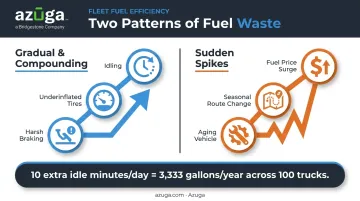
The math changes fast at scale. A long-haul truck idling just 10 extra minutes a day burns about 0.8 gallons per hour of idle time. Across 100 trucks over 250 working days, that's roughly 3,333 gallons a year, gone before a single mile of freight moves.
This build-up follows two patterns
- Gradual and compounding: small inefficiencies stack daily, hidden inside a per-mile cost that looks fine on paper
- Sudden spikes: triggered by fuel price surges, seasonal route changes, or aging vehicles falling out of tune
The real issue is visibility. A few cents per mile per vehicle seems negligible until it's aggregated fleet-wide across dozens of vehicles and thousands of monthly miles. By the time it shows up in a quarterly budget review, months of waste have already happened.
Key Cost Drivers for Fleet Fuel Efficiency
Not every fleet loses fuel the same way. But a handful of drivers explain most of the waste industry-wide.
Driver Behavior Is the Biggest Lever You Control
Aggressive driving is expensive. According to the Department of Energy's fuel-saving research, speeding combined with rapid acceleration and hard braking can cut fuel economy by:
- 15% to 30% at highway speeds
- 10% to 40% in stop-and-go traffic
That's a wider swing than almost any mechanical factor. Unlike weather or fuel prices, driver behavior is fully within a fleet's control, which is why it's usually the first place to look for savings.
Vehicle Condition Degrades Quietly
Maintenance neglect doesn't announce itself. Tires running just 10 psi below spec can reduce truck fuel economy by 0.5% to 1%, per EPA guidance. Clogged air filters and delayed tune-ups add further drag over time, even when the vehicle still "feels fine" to drive.
Route Inefficiency and Other Overlooked Costs
Outdated routing, avoidable detours, and traffic exposure all extend idle time and stop-and-go fuel burn. This isn't a minor factor: congestion cost the U.S. trucking industry more than 6.4 billion gallons of wasted diesel in 2022, totaling $15.1 billion in extra fuel spend.
Two more factors compound the problem
- Vehicle-to-task mismatch: oversized trucks or vans running lightweight jobs waste fuel by default
- Lack of real-time data: without tracking, inefficiencies go undiagnosed until they're expensive
Weighting differs by fleet type. Last-mile delivery fleets feel idling and stop-start driving the hardest. Long-haul fleets are more exposed to speed and route inefficiency over sustained highway miles.
Cost-Reduction Strategies for Fleet Fuel Efficiency
Effective fuel strategies fall into three buckets: decisions made before vehicles hit the road, how fuel use is managed day-to-day, and the broader operating context surrounding the fleet. Each requires a different fix.
Strategies That Reduce Costs by Changing Decisions
These are choices made in procurement, specification, and policy, before fuel is ever burned.
- Right-size vehicle selection to match actual route and payload demands instead of defaulting to larger trucks "just in case"
- Build fuel-efficiency criteria (aerodynamics, engine specs, weight) into vehicle procurement and replacement policy
- Formalize speed and idling limits in written fleet policy rather than relying on informal expectations
- Shift to scheduled preventive maintenance so fuel-degrading issues like underinflated tires or dirty filters get caught before they compound
Strategies That Reduce Costs by Changing How Fuel Use Is Managed
This is where day-to-day visibility and accountability live, and where most fleets see the fastest returns.
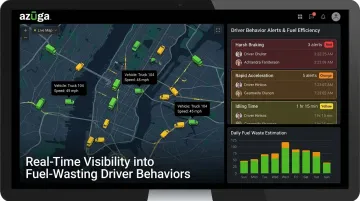
Real-time driver monitoring flags harsh braking, rapid acceleration, and excessive idling as they happen, so managers can coach specific drivers instead of running blanket training sessions. Azuga's plug-and-play OBD-II tracker, for example, installs in about 20 seconds with no professional help and starts feeding live location and behavior data almost immediately.
Location updates can refresh as often as every 30 seconds, giving fleet managers a near real-time view of exactly which drivers and vehicles are burning excess fuel.
Beyond raw monitoring, a few practices make the data actionable
- Score and incentivize drivers using behavior metrics: fleets running programs like this have seen speeding, hard braking, and sudden acceleration events drop to near zero per 100 miles
- Correlate fuel card transactions with vehicle and driver IDs to catch anomalies like unauthorized fuel use or sudden efficiency drops
- Track custom dashboards for idle time and fuel consumption to benchmark progress and catch gradual declines before they get expensive
Kitsap Garage Door Company, for instance, adopted telematics specifically to get better insight into engine idling and fuel used, a common entry point for fleets that have been managing fuel by instinct rather than data.
Strategies That Reduce Costs by Changing the Context Around Fleet Operations
Sometimes the vehicle and driver are fine. The real cost driver is the environment they're operating in.
- Optimize routing and dispatch sequencing to reduce congestion exposure, backtracking, and unnecessary miles
- Consolidate stops and loads to shrink total distance driven per delivery cycle
- Use fuel card integrations to track purchasing patterns and catch pricing inefficiencies across regions
- Evaluate fleet-wide modernization (alternative fuel vehicles or aerodynamic retrofits) when the vehicle mix itself, not daily operations, is the limiting factor
Tools like FuelSaver, which routes drivers to the nearest lower-cost fuel station, address the purchasing side of this equation without requiring any change in driver behavior at all.
Conclusion
Fuel costs don't drop because of one clever fix. They drop when a fleet knows exactly where the waste originates: bad procurement decisions, sloppy day-to-day management, or a broken operating context, and treats each root cause differently.
Sustainable savings come from continuous monitoring, not a single intervention. The fleets that keep costs down are the ones checking their data monthly, comparing trends, and adjusting routes or driver habits before small inefficiencies turn into real costs.
Frequently Asked Questions
How do you calculate fleet fuel efficiency?
The standard formula is miles driven divided by gallons consumed (MPG). Most fleets track this per vehicle and fleet-wide using fuel card or telematics data for accuracy over manual logs.
How can I improve fleet fuel efficiency?
Improvement comes from combining driver behavior monitoring, preventive maintenance, route optimization, and consistent data tracking. No single fix works in isolation.
What is the average MPG for a fleet?
Average MPG varies widely by vehicle class and fleet type, from over 20 MPG for light trucks down to roughly 6 MPG for combination trucks. Compare your fleet against similar vehicle categories rather than one universal benchmark.
What does "fleet fuel" mean?
Fleet fuel refers to the fuel consumed collectively by all vehicles in an organization's fleet, along with the tracking, purchasing, and management of that consumption.
How much can a fleet realistically save by improving fuel efficiency?
Savings scale with fleet size and current inefficiency levels. Fleets that combine driver coaching with maintenance discipline see the biggest gains; Azuga customers report average annual savings of $9,462 through improved fleet cost management, though results vary by program scope.
What role does telematics play in improving fleet fuel efficiency?
Telematics provides the real-time visibility needed to spot high-fuel-use patterns by driver, vehicle, or route. Platforms like Azuga turn fuel management from reactive guesswork into a proactive, data-driven process.