
That shift matters because the stakes are real. Fuel waste, at-fault accidents, and missed compliance deadlines eat into margins for construction crews, trucking fleets, HVAC contractors, and utility companies alike. The right software catches these problems before they become expensive.
This guide ranks the top 10 fleet management platforms of 2026 based on total cost of ownership, safety features, ease of installation, and verified customer sentiment — not marketing claims.
TL;DR
- Fleet management software combines GPS tracking, safety scoring, maintenance alerts, and compliance tools in one dashboard.
- Top 2026 picks include Azuga, Samsara, Motive, Verizon Connect, Geotab, and Fleetio.
- Choose based on total cost of ownership and support quality, not brand name.
- Azuga stands out for affordable, plug-and-play OBD-II hardware and SafetyCam AI collision reconstruction, built for fleets of all sizes.
Overview of Fleet Management Software in 2026
Fleet management software is a platform that pulls together telematics, GPS tracking, maintenance scheduling, and driver behavior monitoring into a single dashboard. Instead of juggling separate tools for tracking, safety, and compliance, fleet managers get one view of the entire operation.
The category has grown fast, driven by fleets chasing cost control, safety, and regulatory pressure all at once
- Global market size: $10.01 billion in 2025, projected to reach $11.61 billion in 2026, according to Fortune Business Insights
- Generative AI adoption: only about 11% of fleets have fully implemented it, though roughly 40% use some form
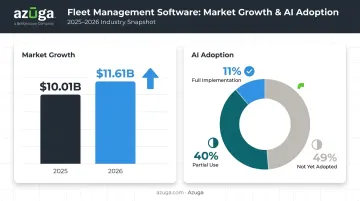
AI-powered dash cams and predictive maintenance get talked about like table stakes now, but adoption tells a different story. These features are increasingly expected, yet far from universal across the base tier of every platform.
One thing hasn't changed — electronic logging devices remain the regulatory floor for covered fleets. An ELD synchronizes with the vehicle's engine and automatically records driving time for hours-of-service reporting.
Vendors build very different platforms on top of that baseline, which is exactly why picking the right one depends on your fleet size, industry, and budget. Here's how the top 10 stack up.
Top 10 Fleet Management Software Providers of 2026
This list compares total cost of ownership, safety tools, installation difficulty, integration depth, and verified customer reviews across each provider, based on real-world performance rather than vendor self-promotion.
Azuga
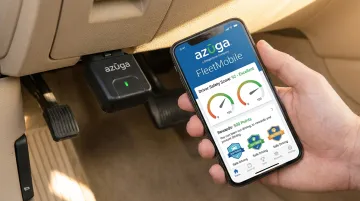
Azuga, backed by Bridgestone, built its reputation on a plug-and-play OBD-II device that installs in minutes with no technician required: plug it into the vehicle's OBD port, and it's operational in about 20 seconds. That kind of simplicity matters for fleets that can't afford downtime for professional installs.
Its SafetyCam AI with Collision Reconstruction captures dual-facing video and compiles telematics data to reconstruct what happened before, during, and after a collision, helping exonerate drivers who weren't at fault.
Azuga's gamified Safe Driver Rewards program adds another layer, letting drivers compete on safety scores and redeem gift cards through the FleetMobile app. It turns compliance into something drivers actually want to engage.
Plans are flexible, with 30-second GPS tracking intervals and 24/7 unlimited support included. That combination of packages matched to fleet needs, fast installation, and driver engagement tools makes Azuga a natural fit for construction crews, HVAC contractors, landscapers, and trucking operations that need results without a steep learning curve.
| Best For | Ease of use and affordability for growing fleets |
| Starting Price | packages matched to fleet needs by fleet size and features |
| Key Feature | Driver rewards program and AI collision reconstruction |
Samsara
Samsara positions itself as an all-in-one platform for fleets of any size, combining IoT sensors, AI dash cams, and predictive maintenance under one roof. Its real-time GPS refresh and customizable dashboards are genuine strengths, but reviewers note a steep learning curve for advanced configuration, and contracts typically run a minimum of three years.
| Best For | Versatility and large fleet customization |
| Starting Price | Contact for quote |
| Key Feature | AI-powered dash cams with automatic incident detection |
Motive
Formerly KeepTruckin, Motive focuses heavily on AI-driven driver safety scoring and automated ELD/HOS compliance. Its computer vision dashcam flags 20+ unsafe driving events, including phone use and drowsiness, and pushes real-time coaching alerts straight to the driver.
| Best For | Safety and automated compliance |
| Starting Price | Contact for quote |
| Key Feature | Computer vision dashcam with real-time coaching alerts |
Verizon Connect
Verizon Connect brings enterprise-grade telematics with dynamic route optimization built to handle millions of route combinations. It's a popular choice among small businesses, backed by 24/7 support and deep integrations. Pricing tends to run higher than most competitors on this list, and contracts also run three years.
| Best For | Large and scaling fleets |
| Starting Price | Contact for quote |
| Key Feature | Interactive route replay and AI dashcams |
Geotab
Geotab runs an open-platform architecture that processes a staggering volume of vehicle data. The company has reported more than 37 trillion data points annually and maintains nearly 530 Marketplace integrations, according to its own Marketplace anniversary letter. That open API access means businesses own and export their own data freely, a rarity in this space.
| Best For | ELD compliance and deep customizability |
| Starting Price | Contact for quote (base plan; add-ons available separately) |
| Key Feature | 200+ marketplace integrations and open SDK |
Fleetio
Fleetio skips native GPS hardware entirely and instead focuses on maintenance automation, work order management, and total cost of ownership tracking. Its AI Service Advisor, launched in 2026, flags cost issues in repair orders and speeds up approvals for high-volume shops. Pair it with a third-party telematics feed and you get a maintenance-first system with real teeth.
| Best For | Maintenance-heavy operations and process automation |
| Starting Price | Contact for details |
| Key Feature | AI Service Advisor for repair order analysis |
IntelliShift
IntelliShift's AI-assisted dashcams detect tailgating, distraction, and lane drifting in real time, feeding data straight into coaching workflows. What sets it apart is its "white glove onboarding": dedicated reps who build role-specific training for dispatchers, safety managers, and drivers rather than handing everyone the same generic tutorial.
| Best For | AI-assisted dashcams and guided onboarding |
| Starting Price | Contact for quote |
| Key Feature | Drag-and-drop custom report builder |
Teletrac Navman TN360
TN360 bundles GPS tracking, dashcams, ELD compliance, IFTA reporting, and dispatching into one modular suite. You build the package module by module, which means pricing flexes heavily based on what you select. That's a good fit for fleets whose needs shift as they grow, but harder to budget for upfront.
| Best For | Customized, modular fleet management |
| Starting Price | Contact for quote |
| Key Feature | Configurable software suite built module by module |
Linxup
Linxup was built specifically for small and mid-size fleets, not enterprise operations. Its no-contract option and a la carte feature selection (GPS, dashcams, and ELD are billed separately) keep monthly costs predictable for lean teams that don't want to overpay for features they won't use.
| Best For | GPS tracking for small fleets |
| Starting Price | packages matched to fleet needs |
| Key Feature | Contract-free service with clear add-on packaging |
Rhino Fleet Tracking
Rhino, now part of GPS Insight, goes a step past basic GPS tracking by adding driver scorecards and optional smart dashcams. Pricing is no-contract and scales down as fleet size grows past 20 vehicles, published in bands rather than a single flat rate. It's worth confirming directly since third-party estimates vary.
| Best For | Budget-conscious fleets needing low monthly pricing |
| Starting Price | Contact for quote |
| Key Feature | Wired and plug-in GPS hardware options |
How We Chose the Best Fleet Management Software
Our evaluation weighed total cost of ownership, safety features, ease of installation, integration depth, and real customer sentiment, not marketing copy.
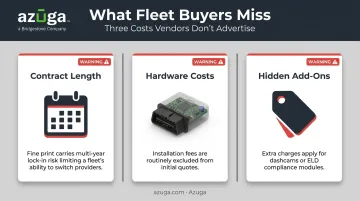
A common buyer mistake: picking a platform based on brand recognition or the lowest listed rate alone. That approach overlooks three factors that drive up total cost over time
- Contract length — some vendors lock you in for three years before you know if the platform fits
- Hardware costs — installation fees and device pricing aren't always included in the quoted rate
- Hidden add-ons — features like dashcams or ELD compliance are often separate from the base package
Platforms with flexible or no-contract terms and 24/7 support scored higher in this ranking. They reduce long-term risk for fleets that are still figuring out how fast they'll grow.
Conclusion
There's no single "best" fleet management software; the right choice depends on your operational goals, whether that's compliance, safety, cost control, or scalability. Chasing the most popular brand instead of the right fit is how fleets end up locked into three-year contracts for features they never use.
Before committing fleet-wide, take these steps
- Request demos from multiple vendors
- Compare total cost of ownership, not just the listed rate
- Pilot-test the platform on a small subset of vehicles
- Watch how easy installation actually is, not just how it's described in the sales pitch
If simple setup, packages matched to fleet needs, and a program that gets drivers to actually engage with safety scoring matter to your fleet, take a look at Azuga's plug-and-play platform. It suits growing operations that don't want long-term lock-in.
Frequently Asked Questions
What is the best fleet management software to choose?
It depends on fleet size, budget, and priority features. Samsara and Verizon Connect lead for large fleets, while Azuga and Fleetio suit small to mid-size fleets needing affordability and easy setup.
How much does fleet management software cost?
Many providers require a quote rather than publishing rates.
What's the difference between GPS tracking and fleet management software?
GPS tracking only shows vehicle location. Fleet management software adds maintenance alerts, driver safety scoring, fuel management, and compliance automation on top of that.
Is fleet management software worth it for small fleets?
Yes. Small fleets benefit from reduced fuel waste, fewer accidents, and avoided compliance fines, often offsetting software costs within the first year of use.
How does fleet management software reduce operational costs?
Automated idling alerts, optimized routing, and improved driver behavior lower fuel consumption, insurance premiums, and unplanned maintenance expenses together. A 2025 Together for Safer Roads telematics report found that driver feedback cut speeding time per vehicle by 8.9%.
Which providers offer plug-and-play hardware installation?
Azuga, Samsara, and Motive all offer self-installed OBD-II devices that fleet managers can set up in minutes without a professional technician.