
Distracted driving is a human behavior problem. But it's no longer one we have to solve with willpower alone. From phone-blocking apps to AI dashcams, technology now gives individuals and fleets real tools to catch distraction before it becomes a crash.
This article covers four categories of solutions: personal phone-blocking tech, in-vehicle safety systems, AI dashcams, and fleet management software that ties it all together.
Key Takeaways
- Distraction comes in three forms — visual, manual, and cognitive — and tech must address all three to work
- Phone-blocking apps and vehicle safety features reduce risk; they don't replace an attentive driver
- AI dashcams and telematics flag distraction in real time and turn video plus telematics into coaching that lowers crash rates
- Fleets with the right stack cut accidents by nearly 40% on average and trim liability and operating costs
Understanding Distracted Driving Today
Not all distraction looks the same. The CDC breaks it into three categories
- Visual — taking your eyes off the road, like glancing at a text
- Manual — taking your hands off the wheel, like eating or changing a song
- Cognitive — taking your mind off driving, even while your eyes stay forward (think emotional stress or a tense phone call)
Phones get most of the blame, yet NHTSA data shows a wider picture. Cellphone use accounted for 404 fatal crashes in 2024 — just 14% of distraction-affected fatal crashes. The rest involved navigation systems, eating, adjusting music, or talking with passengers.
Why This Matters More for Fleets and Businesses
Commercial drivers can legally be on the road for up to 11 hours after 10 hours off duty, within a 14-hour window, per FMCSA hours-of-service rules. More hours on the road means more exposure to distraction risk, multiplied across an entire fleet.
The financial exposure is steep. Typical costs include

Commercial auto litigation raises the stakes further. Median nuclear verdicts hit $44 million in 2023, which is why fleet operators can't treat distraction as a personal problem alone.
Personal Technology Solutions
Individual drivers can cut phone-related distraction with built-in phone modes and dedicated blocking tools.
Smartphone driving modes:
- Apple's Driving Focus silences notifications when it detects motion or connects to CarPlay/Bluetooth, and lets Siri read messages aloud
- Android Auto shifts navigation, calls, and messages to the car display so drivers aren't handling a phone directly
Third-party and fleet-grade blocking:
- Azuga DriveSafe pairs an OBD-II device with a mobile app to block calls, texts, email, and app use while the vehicle is moving
- On iOS, DriveSafe can only detect calls (a platform limitation, not a product one) — Android detects a broader range of activity
The catch: hands-free doesn't mean distraction-free. AAA Foundation research found that in-vehicle speech-to-text was the most cognitively distracting of six tasks tested. It increased reaction time and reduced visual scanning even with hands on the wheel. These tools reduce manual and visual distraction. Cognitive distraction sticks around.
In-Vehicle Safety Technology
Advanced Driver Assistance Systems (ADAS) are now standard on most new vehicles. By late 2023, all 20 automakers in the IIHS voluntary pledge equipped nearly every US-market light vehicle with automatic emergency braking.
Core ADAS features:
- Forward-collision warning: cuts rear-end crashes by 23%
- Automatic emergency braking: required to stop vehicles from contact at speeds up to 62 mph under new FMVSS 127 rules
- Lane-departure warning: associated with an 18% drop in all-severity crashes and an 86% drop in fatal crashes
- Lane-keeping assist: linked to a 24% reduction in fatal road-departure crashes

Driver-monitoring systems extend protection beyond the vehicle's external sensors. Azuga's SafetyCam AI uses driver-facing video and AI to detect fatigue and trigger voice alerts for phone use, missing seatbelts, or collision hazards.
These systems have real limits. IIHS notes that many only work at certain speeds, struggle in low light or bad weather, and can misread poorly marked lanes. Drivers still need to understand how their specific system behaves. Reading the owner's manual matters more than most people think.
The bigger point: ADAS reduces the severity of a distraction-caused crash. It doesn't stop the distraction itself. That's where a wider tech stack comes in.
Fleet-Grade Technology: AI Dashcams and Telematics
For businesses managing multiple drivers, personal apps and consumer ADAS aren't enough. Fleet-grade technology closes the gap between individual driver behavior and company-wide accountability.
How AI dashcams catch distraction in real time
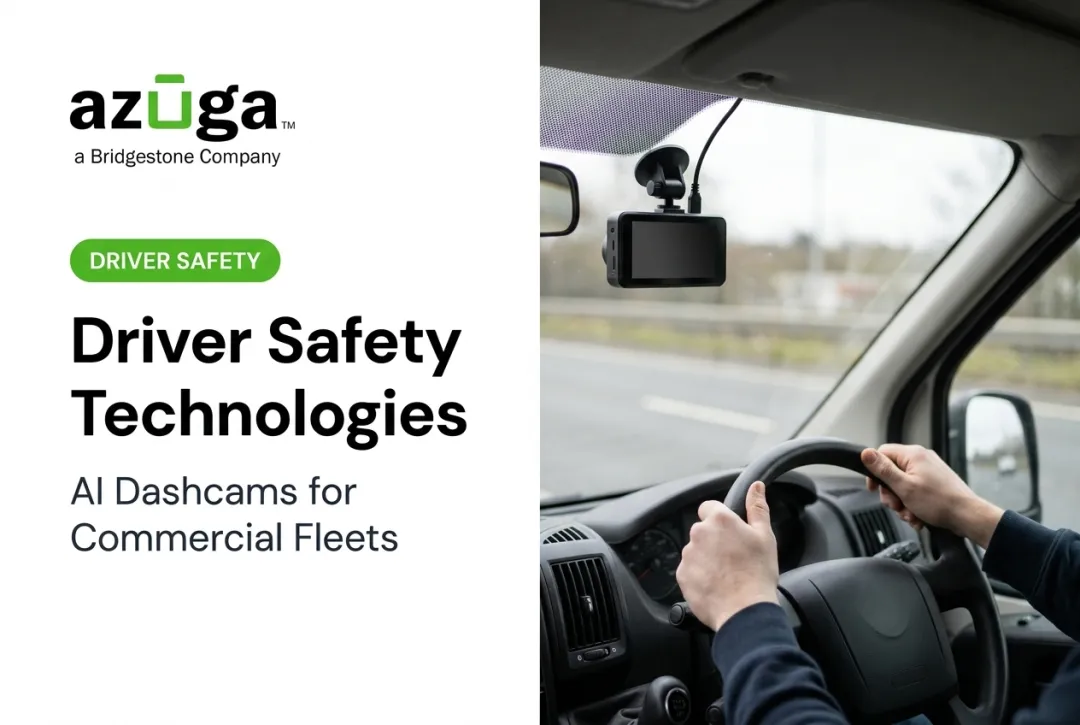
AI-powered dashcams with driver-facing cameras use neural learning networks to flag distraction events as they happen: phone use, eating, drowsiness, or looking away from the road too long. Azuga's SafetyCam Pro and SafetyCam Plus use dual-facing cameras to capture the road and the driver at the same time. They tag the underlying cause of each risky event instead of only logging that one occurred.
GPS tracking adds the location layer
High-frequency GPS tracking, at intervals as tight as 30 seconds, lets fleet managers see exactly when and where speeding, hard braking, or risky driving happens across an entire fleet. That data turns vague safety concerns into specific, coachable moments.
Proving fault, not just flagging risk
Azuga's SafetyCam AI with Collision Reconstruction found that 70% of accidents involving fleet vehicles aren't caused by the fleet driver. Video evidence lets businesses exonerate drivers quickly instead of settling questionable claims.
A Southern Tire Mart delivery driver had a green light when another vehicle ran a red and struck his truck. Camera footage settled the claim immediately, avoiding what could have been a lengthy, costly dispute.
Real-world results: Fleets running Azuga's safety platform see
- 38% fewer accidents on average
- 57% fewer speeding citations
- Issues caught earlier through automated driver scorecards, before they become patterns

Low-friction adoption
One of the biggest adoption barriers for fleet tech has always been installation complexity. Azuga's OBD-II devices plug in directly, no wiring or technician required, making it practical for a five-truck landscaping company and a 500-vehicle logistics operation alike.
Building a Distraction-Free Driving Culture
Technology works best when it's backed by policy, not deployed as a standalone fix.
- Write a distracted driving policy: define acceptable phone use, set install expectations for SafetyCam and tracking devices, and make consequences clear
- Pair coaching with data: use scorecards and video evidence to have specific, fact-based conversations instead of vague warnings
- Gamify safe behavior: programs like Azuga's Safe Driver Rewards turn safety into something drivers compete for, not just comply with
- Build pre-trip routines: have dispatchers confirm route plans and phone storage before drivers leave the lot, cutting mid-drive temptation before it starts

Companies that combine policy, coaching, and real-time data consistently see stronger results than those relying on hardware alone.
Frequently Asked Questions
What is the best way to deal with a distracted driver?
As a passenger, speak up directly. For individuals, phone-blocking apps remove the temptation entirely. For fleets, video-based coaching paired with real-time alerts corrects behavior before it becomes a habit.
What are the top 3 distractions while driving?
Phone use and texting top the list, followed by eating or grooming behind the wheel, and interacting with navigation or infotainment systems. All three pull attention away visually, manually, or cognitively.
Can technology fully prevent distracted driving?
No. Technology reduces risk and creates accountability through alerts, scorecards, and video evidence, but it can't replace an attentive driver. Every system still depends on the person behind the wheel responding appropriately.
How does AI dashcam technology detect distracted driving?
Driver-facing cameras analyze behavior in real time, flagging phone use, drowsiness, or extended glances away from the road. Alerts trigger immediately so drivers can self-correct, and the footage supports later coaching.
Are hands-free devices considered safe while driving?
Hands-free reduces manual distraction since your hands stay on the wheel, but it doesn't eliminate cognitive distraction. Research shows speech-based tasks can still slow reaction time and reduce visual scanning.
How can fleet businesses reduce distracted driving among employees?
Combine GPS tracking, AI dashcams, and automated driver scorecards with a clear written distracted driving policy. Fleets using this combination have seen accident rates drop by an average of 38%.