
Introduction
Paper logbooks ruled trucking for decades. Then, in December 2017, the FMCSA's ELD mandate flipped the industry to automatic, engine-connected recordkeeping almost overnight.
The stakes for getting this wrong are real. Non-compliance can mean hours-of-service (HOS) violations, fines, and out-of-service orders that pull a truck off the road mid-route. For fleet owners and owner-operators, understanding this technology isn't optional anymore.
This guide breaks down what an ELD actually is, how it captures and transfers data, and who's required to run one. It also covers what the mandate demands and how to pick a device that fits your fleet without overpaying for features you'll never use.
Key Takeaways
- ELDs automatically record driving time and HOS by syncing with a truck's engine, replacing paper logs
- Most CMVs over 10,001 lbs GVWR must use a device from FMCSA's self-certified registry
- Exemptions exist for short-haul drivers, pre-2000 vehicles, and certain agricultural operations
- FMCSA regularly removes non-compliant devices from its registry, so verify compliance before and after purchase
- Modern ELDs like Azuga's OBD-II device install in minutes and bundle GPS tracking with compliance
What Is an Electronic Logging Device (ELD)?
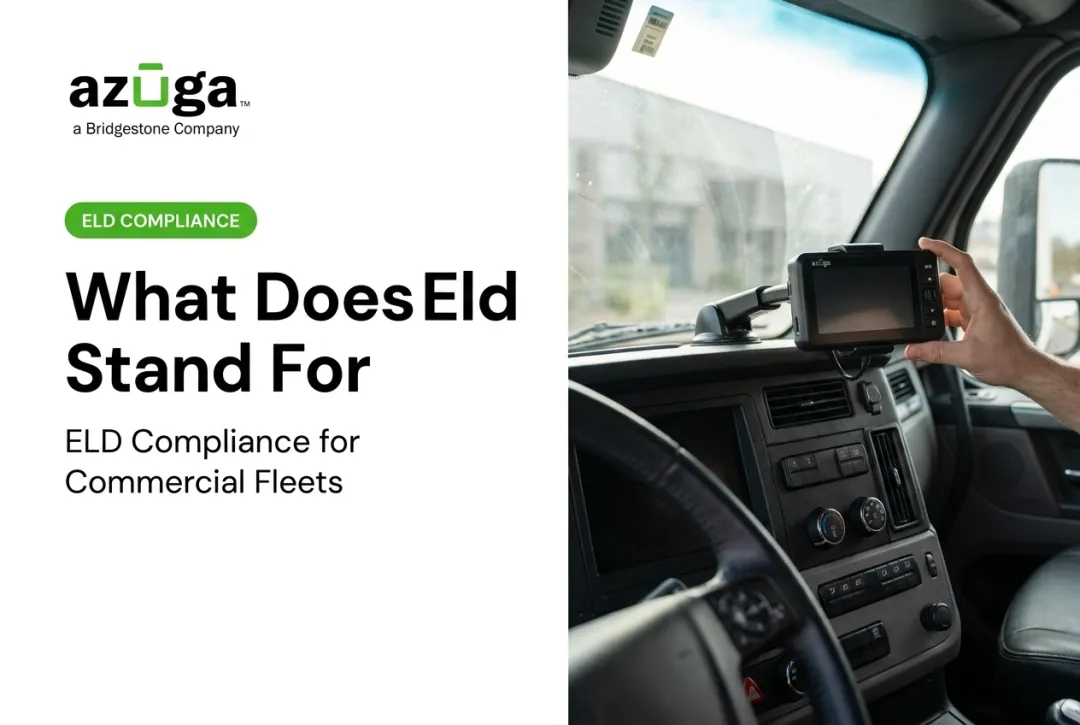
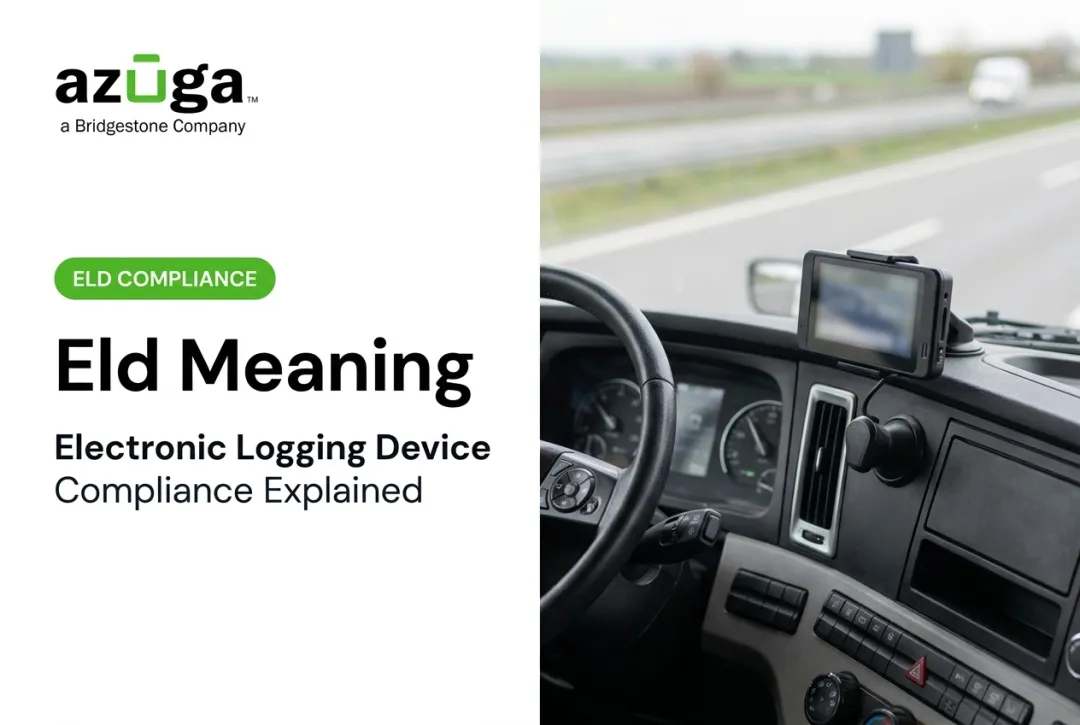
An ELD is a device that connects to a commercial truck's engine control module to automatically record driving time, engine hours, and location data. Under 49 CFR 395.2, it's defined as technology that captures driving time and supports accurate hours-of-service recordkeeping, meeting the technical standards laid out in Subpart B of the regulation.
Every compliant ELD setup has three moving parts
- A telematics device wired to or synced with the engine, pulling real-time data
- Backend fleet management software that stores and organizes records for compliance and reporting
- A driver-facing app or in-cab display showing current duty status and remaining drive time
ELD vs. GPS Tracker: Not the Same Thing
A standard GPS tracker only knows where a truck is. An ELD does far more. It has to synchronize with the engine and capture power status, motion, mileage, and engine hours, not just location.
GPS is just one data point feeding into an ELD's output. A fleet running a GPS-only tracker isn't meeting FMCSA's ELD specification, even if the map view looks identical to a compliance dashboard.
How ELDs Replaced AOBRDs
These stricter data requirements are exactly why regulators retired the ELD's predecessor. Before ELDs, many carriers used Automatic On-Board Recording Devices (AOBRDs), governed by a 1988 rule under the old 49 CFR 395.15. AOBRDs synchronized with the engine too, but the technical bar was lower, with fewer standardized data fields and looser edit controls.
| Feature | AOBRD | ELD |
|---|---|---|
| Governing rule | 1988 rule (395.15) | 2015 Final Rule (395.2, Subpart B) |
| Data standardization | Basic engine sync | Standardized event records and data elements |
| Edit controls | Limited | Driver review, annotation, and audit trail required |
| Roadside transfer | Manual/printout focus | Telematic and local transfer methods required |
| Status as of today | Phased out | Required |
Carriers could run grandfathered AOBRDs through December 16, 2019, after which the ELD mandate became universal for covered vehicles. The bigger win with ELDs is tamper-resistance. Automatic engine sync and locked driving-time records make it far harder to falsify a log than it was to fudge a paper entry at the end of a long shift.
How Does an ELD Work?
Installation and Data Capture
Most ELDs plug into the vehicle's diagnostic port, though FMCSA's actual technical spec doesn't mandate a specific 6-pin or 9-pin connector. That detail comes down to vehicle compatibility, not federal rule. Some devices sync wirelessly instead of hardwiring.
Once connected, the device automatically captures
- Engine hours and vehicle motion/speed
- Miles driven and GPS location
- Date and time stamps
- Driver and vehicle identification
Daily Driver Workflow
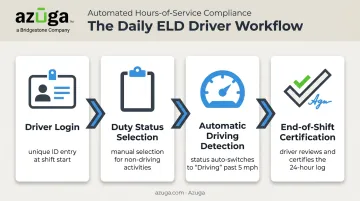
Drivers log in with a unique ID at the start of a shift and manually select duty status for anything that isn't driving, like loading dock time or on-duty-not-driving.
Once the truck crosses a speed threshold no greater than 5 mph, the ELD automatically flips the status to "Driving." There's no need to fumble with the screen while the truck is moving.
At the end of the shift, drivers review and certify their 24-hour log. Original driving-time records can't be edited outright. Any correction requires an annotation, which keeps the audit trail intact and gives inspectors confidence the log hasn't been altered after the fact.
Transferring Data to Inspectors
FMCSA requires ELDs to support one of two transfer method pairs:
- Telematic transfer: wireless data delivery via web services or email
- Local transfer: direct connection using USB 2.0 or Bluetooth
If electronic transfer isn't available roadside, the driver can show the standardized display or a printout instead. Either way, this beats the old process of an officer flipping through a paper logbook page by page.
Who Needs to Use an ELD? Mandate Coverage and Exemptions
Vehicles and Drivers Covered
The mandate applies to commercial motor vehicles that meet any of these thresholds
- GVWR, GCWR, or gross weight of 10,001 lbs or more
- Designed to transport more than 8 passengers for compensation, including the driver
- Designed to transport more than 15 passengers not for compensation, including the driver
- Any vehicle hauling hazardous materials requiring placards, regardless of size
Beyond vehicle type, there's a usage test. Drivers required to keep records of duty status (RODS) on more than 8 days within any 30-day period must use an ELD. Stay under that threshold and paper logs remain an option for those specific days.
Common ELD Exemptions
Not every regulated vehicle needs an ELD. Current exemption categories include
- Short-haul drivers: Operating within a 150 air-mile radius and returning to the reporting location within 14 consecutive hours
- Pre-2000 vehicles: Trucks with a VIN reflecting a model year before 2000, or engines predating that year with supporting records on file
- Agricultural commodity transport: During state-designated planting and harvesting windows, for movements entirely within 150 air-miles of the source
- Driveaway-towaway operations: When the vehicle itself is the commodity being delivered, or it's towing a recreational vehicle trailer
Fleets running mixed operations often have some drivers who qualify and others who don't. Auditing routes and vehicle ages before assuming a blanket exemption applies helps avoid violations. Platforms like Azuga's ELD solution flag each vehicle's compliance status automatically, taking the guesswork out of managing mixed fleets.
ELD Mandate Timeline and Compliance Requirements
Background and Key Dates
Congress mandated electronic logging through the Moving Ahead for Progress in the 21st Century Act (MAP-21). Three dates mark the mandate's rollout
- December 16, 2015: FMCSA published the Final Rule establishing ELD requirements
- December 18, 2017: Initial compliance deadline, requiring an ELD or qualifying grandfathered AOBRD
- December 16, 2019: Full AOBRD phase-out, making registered ELDs mandatory for all covered operations
Core Compliance Rules Carriers and Drivers Must Follow
Staying compliant means covering a specific checklist
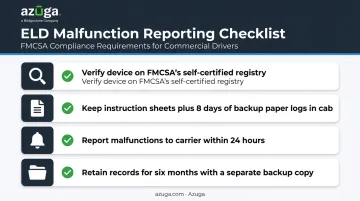
- Use only a device that's currently on FMCSA's self-certified and registered ELD list (self-certification isn't the same as government endorsement)
- Keep required instruction sheets in the cab covering data transfer and malfunction reporting, along with at least 8 days of blank paper logs as backup
- Maintain a malfunction-reporting procedure, notifying the carrier within 24 hours of a device failure
- Retain ELD records and supporting documents for at least six months, with a backup copy stored separately
Compliance is a two-way street. Carriers are responsible for supplying working, registered hardware; drivers are responsible for using it correctly. That shared burden matters because FMCSA actively polices the registry, removing non-compliant devices when they fail to meet standards.
During the 2025 International Roadcheck, CVSA reported 1,076 hours-of-service violations, accounting for 32.4% of all driver out-of-service violations, with another 332 false-log violations making up 10% more. Those numbers show HOS and recordkeeping issues remain a leading cause of drivers getting pulled off the road, even years into the mandate.
Benefits of Using an ELD for Your Trucking Fleet
The compliance angle gets the headlines, but the operational upside is where fleets actually see value day to day.
- Faster roadside inspections: Digital logs transfer in seconds instead of an officer manually reviewing a paper logbook page by page
- Fewer HOS violations: Automatic tracking catches errors before drivers hit a limit. FMCSA data reported by Overdrive shows roadside violation rates fell from 1.3% to 0.64% after the ELD mandate took effect, roughly cut in half
- Reduced administrative burden: No more end-of-shift log entry by hand, freeing up time for drivers and dispatch staff alike
- Improved fleet visibility: Real-time location and duty-status data let dispatchers reroute around delays instead of finding out hours later
- Fuel savings: Telematics integration flags excessive idling and harsh driving behavior that drain fuel budgets over time
Turning Video Data Into Fewer Disputes
Accident disputes cost fleets time and money, often in litigation that drags on for months. This is where AI-powered video adds a different kind of benefit beyond basic HOS tracking.
Azuga's SafetyCam AI with Collision Reconstruction analyzes footage from risky driving events and reconstructs what happened during a collision. Azuga's own product data shows this technology can demonstrate that roughly 70% of accidents are not the fault of the fleet's drivers. That evidence helps fleet managers exonerate drivers and shut down bogus claims before they turn into costly litigation.
How to Choose the Right ELD for Your Fleet
Picking an ELD isn't just about finding the cheapest box that plugs into a truck. A few priorities matter more than others.
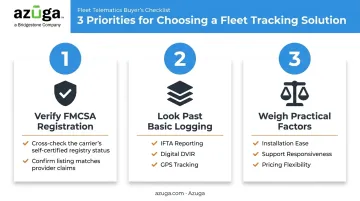
- Verify FMCSA registration first. Check any device against the official self-certified ELD registry before you buy. FMCSA regularly removes non-compliant devices, sometimes dozens in a single year, so a device that was fine last quarter might not be today.
- Look past basic logging. Strong ELD platforms add automated IFTA reporting, digital DVIR, GPS tracking, configurable violation alerts, and flexible transfer options covering Bluetooth, USB, and telematic methods.
- Weigh the practical stuff. Installation ease, how fast support answers the phone, pricing flexibility, and whether the platform scales as you add trucks all affect total cost of ownership more than the listed rate alone.
Solutions like Azuga's ELD use a plug-and-play OBD-II device that installs in minutes without a mechanic, making it a practical fit for small to mid-sized fleets and owner-operators without a dedicated IT team. The platform pairs the core ELD with
- GPS fleet tracking for real-time vehicle visibility
- DVIR support for digital inspection reports
- Configurable HOS alerts to flag violations early
- 24/7 phone, email, and web support
Frequently Asked Questions
How much does an electronic logging device for trucks cost?
Costs range from low monthly subscriptions to one-time hardware purchases, depending on the provider. Total cost typically includes the device itself, any installation fees, and ongoing software charges.
Can I use a smartphone as an electronic logging device for trucks?
A smartphone alone isn't FMCSA-compliant. It must pair with a registered ELD hardware device that connects to the engine to meet the mandate's requirements.
Can you buy an electronic logging device for trucks at a truck stop?
Some truck stops and retailers sell ELD hardware. Always confirm the specific device is listed on FMCSA's current registered ELD list before purchasing.
What is the difference between an ELD and an AOBRD?
An older, less strict 1988 rule governed AOBRDs, with fewer data standardization requirements. ELDs meet stricter FMCSA technical standards and became fully mandatory starting December 2019.
Do all commercial trucks need an ELD?
Most CMVs required to keep records of duty status need an ELD. Exemptions exist for short-haul drivers, pre-2000 model year vehicles, and certain agricultural operations during planting and harvest seasons.
Can I install an ELD myself?
Many modern ELDs, including plug-and-play OBD-II devices like Azuga's, are built for simple self-installation. No professional installer or mechanic is needed, and most drivers finish in minutes.