
Semi truck GPS tracking exists to close that gap. Unlike the navigation app on your phone, it's a purpose-built system that pulls engine data, driver behavior, and location straight into your fleet management software, in real time.
This guide covers how semi truck GPS tracking works, the hardware options available, the features that actually matter, and how to pick a solution that fits your fleet's size and budget.
Key Takeaways
- Heavy-duty trucks need GPS hardware built for J1939/J1708 connectors, not OBD-II car trackers
- GPS tracking cuts fuel waste, reduces breakdowns, and improves driver safety in real time
- The global vehicle-tracking market will grow from $21.5B in 2022 to $60.9B by 2030
- Top providers pair easy installation and packages matched to fleet needs with responsive, round-the-clock support
What Is Semi Truck GPS Tracking?
Semi truck GPS tracking devices communicate with satellites and cellular networks to send location, speed, and engine data to a centralized dashboard in real time. Fleet managers see where every truck is, how fast it's moving, and what's happening under the hood, all from one screen.
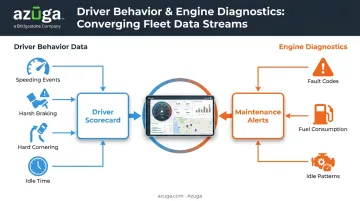
The Data Points That Build Driver Scorecards
Modern trackers capture far more than a dot on a map. They log
- Travel speed and speeding events against posted limits
- Harsh braking and rapid acceleration
- Hard cornering
- Idle time between stops
These behaviors roll into a driver scorecard, a running safety score fleet managers use to identify risky habits before they turn into accidents. Azuga's platform, for example, tallies scores across each behavior category so managers can target coaching where it's needed instead of guessing.
Engine Diagnostics Catch Problems Early
Beyond driving behavior, semi truck trackers tap into the engine's diagnostic bus to surface fault codes, fuel consumption, and idle patterns. A check-engine light that would otherwise go unnoticed until a roadside breakdown shows up on the dashboard first.
Some platforms, including Azuga, display live Diagnostic Trouble Codes and schedule maintenance alerts automatically. That gives a fleet manager the chance to route a truck to the shop before a minor issue becomes a multi-day repair.
Why this matters for heavy trucks specifically: consumer-grade OBD-II trackers aren't built for the vibration, mileage, and voltage patterns of Class 7 and 8 vehicles. Semi truck-grade systems are engineered to withstand that punishment while pulling deeper engine data than a passenger-car device ever could.
That reliability difference pays off across industries in distinct ways. Trucking and logistics, construction, oil and gas, food and beverage, and agriculture all lean on this technology, each capturing a different payoff. Cold-chain carriers use it for temperature integrity, construction fleets for theft prevention, and long-haul carriers for accurate ETAs that keep shippers happy.
Types of GPS Trackers for Semi Trucks
Choosing hardware comes down to three questions: how permanent does the install need to be, are you tracking the tractor or the trailer, and how much engine-level data do you actually need?
OBD-II and Diagnostic Port Trackers (Plug-and-Play)
Most Class 7 and 8 trucks use heavy-duty diagnostic connectors, commonly the 9-pin J1939 or 6-pin J1708 ports, rather than the standard OBD-II port found in passenger vehicles. A tracker built for commercial trucks needs adapters for both, since fleets often run mixed truck ages and manufacturers.
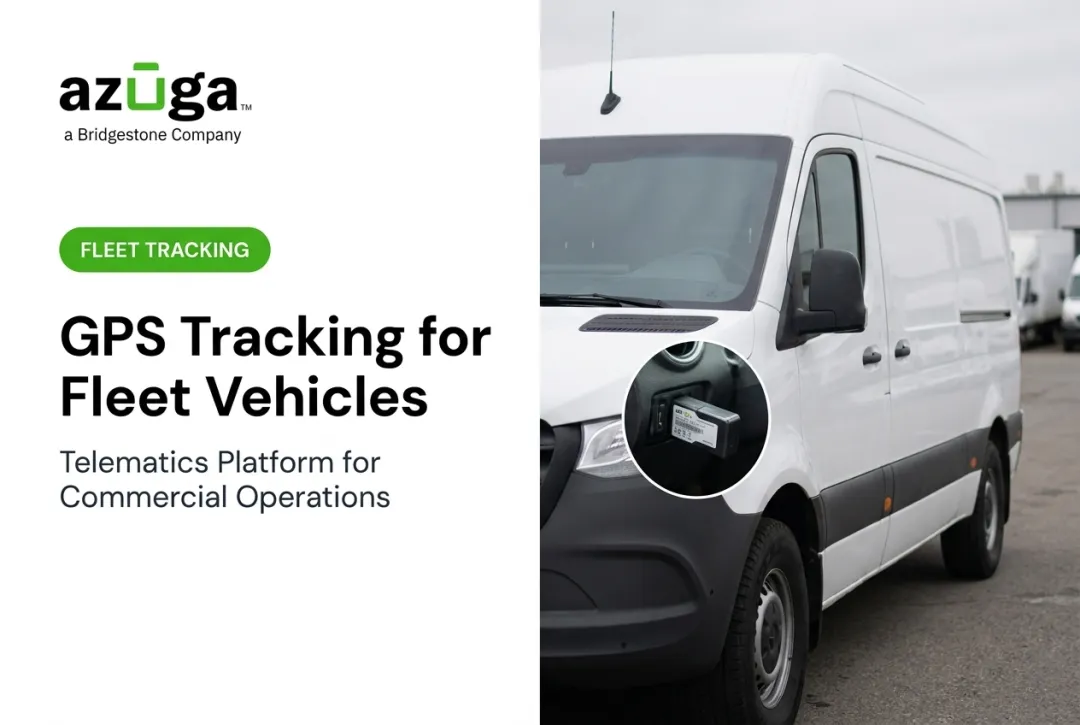
The appeal here is speed. Azuga's plug-and-play device, for instance, is ready to go within minutes of being plugged into the diagnostic port, no wiring, no technician, no waiting on a service bay. That also means the device can move with the truck if a fleet rotates equipment or swaps trucks between routes.
Hardwired GPS Trackers
Hardwired units connect directly to the truck's power, ground, and ignition wiring. The tradeoff is straightforward
- Pro: More discreet placement and stronger resistance to tampering or removal
- Con: Requires professional installation, typically 30-60 minutes per vehicle
Fleets that prioritize theft-recovery security over installation speed often lean toward hardwired options, especially for high-value tractors.
Battery-Powered Asset Trackers
Trailers, flatbeds, and other non-powered equipment don't have a constant electrical source to tap into. Battery-powered asset trackers solve that problem.
According to FleetOwner, trailer trackers can report location as often as every 10 seconds while moving, then drop to as little as once a day while parked to conserve battery life. That tradeoff, frequent updates versus battery longevity, is worth understanding before you buy, since it directly affects how "real-time" your trailer visibility actually is.
Must-Have Features of a Semi Truck GPS Tracking Device
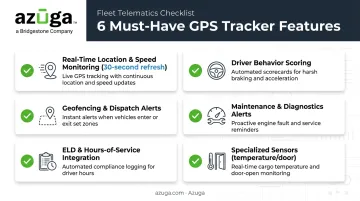
Not every tracker on the market is built for the demands of a commercial fleet. Here's what separates a solid system from a basic one.
Real-time location and speed monitoring. Look for refresh intervals as low as 30 seconds. That's a meaningfully different experience than a device pinging every 5-10 minutes, especially when you're trying to give a shipper an accurate ETA.
Driver behavior scoring. Harsh braking, speeding, and rapid acceleration should flag automatically, feeding into a coaching program rather than sitting unused in a report nobody opens.
Geofencing and dispatch tools. Managers get alerted the moment a truck leaves a defined zone or strays from its planned route, which matters for both security and on-time performance.
Maintenance and diagnostics alerts. Fault codes, fuel consumption, and idle time should trigger proactive notifications, not just historical reports.
ELD and Hours-of-Service integration. FMCSA requires ELDs to synchronize with the engine and record location at 60-minute intervals while moving, with roughly 1-mile accuracy during on-duty driving.
That's a compliance minimum, not a dispatch-ready standard. Many platforms treat compliance tracking and day-to-day operational tracking as separate needs for exactly this reason.
Specialized sensors. Reefer temperature monitoring protects cold-chain cargo, while door sensors flag unauthorized trailer access. Not every fleet needs these, but if you're hauling perishables or high-value freight, they're not optional.
Benefits & ROI of GPS Tracking for Semi Truck Fleets
The financial case for semi truck GPS tracking rests on a few key factors: fuel savings, safety outcomes that reduce accidents and litigation exposure, and stronger customer trust through reliable ETAs.
Fuel and Idle Time Savings
Fuel savings are only part of the equation — GPS tracking also delivers measurable gains in safety and risk reduction. Azuga customers have reported the following results after adopting GPS-based fleet tracking:
- 38% average decrease in accidents
- 57% drop in speeding citations
- $9,462 in average annual savings from better cost management
Exoneration and Litigation Protection
When an accident happens, video evidence changes the conversation. Azuga's SafetyCam AI uses collision reconstruction to help fleets prove fault, or the lack of it, which can prevent a costly lawsuit from dragging on based on assumptions rather than data.
Customer Trust Through Accurate ETAs
Real-time location data doesn't just protect drivers. Accurate, GPS-based ETAs build trust with shippers and cut down the flood of "where's my truck" check-calls that dispatch fields every day, freeing that team up for actual problem-solving instead of status updates.
Choosing the Right GPS Tracking Solution for Your Fleet
Picking a provider comes down to matching capability to your actual operation, not just chasing the lowest listed rate.
Start with these checks
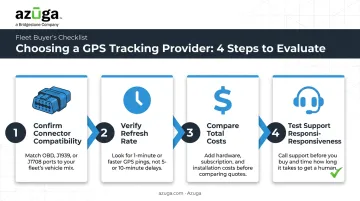
- Confirm the connector compatibility. Make sure the device supports the correct heavy-duty diagnostic port (J1939/J1708) for your specific trucks, not just standard OBD-II.
- Verify the refresh rate. A system pinging every 30 seconds gives dispatch far better visibility than one updating every few minutes.
- Compare total costs, not just the headline price. Ask about activation fees, hardware costs, and contract length. Month-to-month flexibility beats a multi-year lock-in if your fleet size changes often.
- Test support responsiveness before you commit. Request a demo and ask pointed questions. How they answer tells you how they'll handle a 2 a.m. breakdown call.
Azuga is a useful benchmark for what a fleet-friendly setup looks like. It's built to scale from a five-truck operation to a large enterprise fleet without forcing a system change along the way.
Azuga's setup includes
- A self-installable, plug-and-play OBD-II device with packages matched to fleet needs
- 24/7 phone and email support for real-time issues
- Integrations spanning fuel cards and third-party platforms
Before rolling a new system across your entire fleet, run it on a handful of trucks first. Watch how the data holds up, how fast support responds to a real issue, and whether drivers adapt without friction.
Frequently Asked Questions
What is the best GPS for semi-trucks?
The right tracker depends on your fleet's specific needs. Strong options combine J1939/J1708 compatibility, real-time updates as frequent as 30 seconds, driver safety scoring, and packages matched to fleet needs without long lock-in contracts.
Is there a way to track semi-trucks?
Yes. GPS hardware, whether diagnostic-port, hardwired, or battery-powered asset trackers, pairs with fleet management software to show live location, speed, and engine data on a single dashboard.
Do semi-trucks have a special GPS?
Semi trucks typically use heavy-duty diagnostic connectors (9-pin J1939 or 6-pin J1708) instead of a standard OBD-II port, so trackers need adapters built specifically for commercial trucks.
How much does semi truck GPS tracking cost?
Azuga matches packaging to fleet size and the features you select.
Can a regular car GPS tracker work on a semi truck?
Not reliably. Most consumer OBD-II trackers aren't built for J1939/J1708 ports or the vibration and high-mileage demands heavy trucks put on hardware, so a commercial-grade device is the safer bet.
Does GPS tracking help with ELD and compliance?
Many GPS tracking platforms integrate directly with ELD systems, syncing location and Hours-of-Service data to simplify roadside inspections and keep audit records ready.