
Fleet management often gets treated as a tech checkbox — something you buy, install, and forget. But the real value shows up in the numbers that matter most: accident rates, fuel bills, and vehicle uptime. This article breaks down the practical, measurable benefits of a fleet management system for construction, HVAC, trucking, and other vehicle-dependent businesses.
TL;DR
- Unify GPS tracking, driver behavior monitoring, and maintenance alerts in one real-time platform
- Fewer accidents, lower operating costs, longer vehicle lifespan, and stronger compliance
- Azuga customers report 38% fewer accidents, 57% fewer speeding citations, and average annual savings of $9,462
- Results compound when you review the data and act on it—not when you only collect it
What Is a Fleet Management System
A fleet management system pairs hardware (GPS devices, sensors, cameras) with software that tracks vehicle location, driver behavior, and vehicle health in real time. Businesses running anywhere from two vehicles to several thousand use these platforms across construction, plumbing, waste management, HVAC, and utilities.
These platforms turn raw driving and vehicle data into day-to-day operational gains
- Safer, more efficient routes
- Lower repair bills from earlier maintenance alerts
- More consistent, reliable service windows
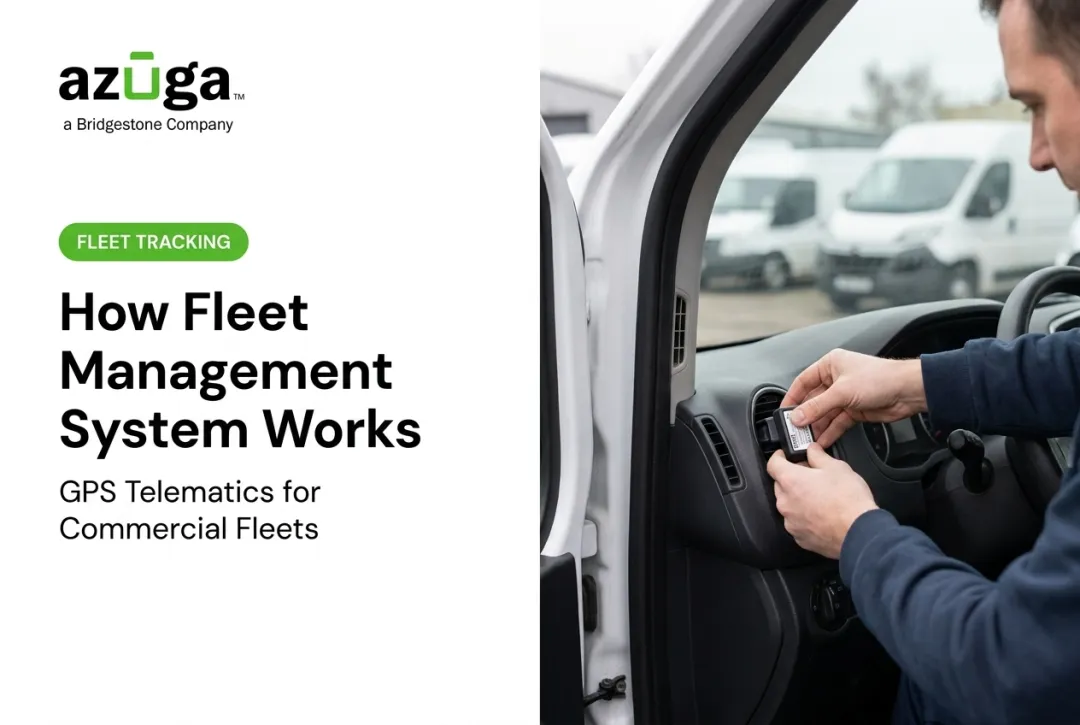
Azuga's OBD-II device plugs into a vehicle's diagnostic port and self-installs in minutes, with no technician required.
Key Advantages of a Fleet Management System
These advantages aren't abstract. They're grounded in metrics fleets already track: safety incidents, cost per mile, vehicle uptime, and compliance risk.
Improved Driver Safety and Reduced Accidents
In-cab alerts, driver scorecards, and AI dashcams flag risky behaviors (speeding, harsh braking, distracted driving) before they turn into accidents. Real-time coaching nudges drivers toward safer habits, while collision reconstruction footage protects fleets from false liability claims. According to FMCSA's Crash Cost Methodology, a non-injury large-truck crash averages $49,398, an injury crash $326,810, and a fatal crash over $15.2 million. ATRI reports commercial auto liability premiums climbed 18.6% between 2021 and 2024, even as crash rates fell slightly. Insurers are still pricing in risk. Fleets using Azuga's safety platform report
- 38% fewer accidents on average
- 57% fewer speeding citations
- 48% fewer idling and breakdown events in towing fleets KPIs impacted: accident frequency, insurance premiums, citation counts, litigation costs. High-mileage fleets in trucking, towing, and utilities feel this first, especially when liability exposure and insurance renewals keep climbing.

Reduced Operational and Fuel Costs
Route optimization, idle time tracking, and preventive maintenance scheduling cut fuel waste and unplanned repair costs directly. Automated maintenance alerts catch small issues before they become expensive breakdowns, extending the useful life of every vehicle in the fleet. Fuel and maintenance are typically a fleet's largest controllable expenses. Based on ATRI's 2025 operating-cost data, fuel represents roughly 20.5% of total per-mile operating costs ($0.48 of $2.336 per mile). That share fluctuates by route type and vehicle age, but it rarely leaves the budget. Azuga customers see this play out in real numbers
- Average annual savings of $9,462 per fleet
- Fuel savings of up to 15%
- 30% reduction in overall operational costs
- 12% reduction in unauthorized vehicle use KPIs impacted: cost per mile, fuel spend, maintenance costs, vehicle downtime. The payoff is largest for fleets watching fuel prices, aging vehicles, or thin margins—typical pressure points in small-business trucking and service fleets.

Real-Time Visibility and Data-Driven Decision Making
Live GPS tracking and reporting dashboards let managers see vehicle locations, job status, and driver performance without a single phone call. High-frequency tracking (Azuga updates every 30 seconds) supports accurate ETAs, smarter dispatching, and faster response when something goes wrong. This shifts fleet managers from reactive firefighting to proactive decision-making. Dispatchers can reroute a vehicle before a delay becomes a missed appointment, and reassign jobs from a computer without disturbing a driver mid-route. KPIs impacted: dispatch efficiency, customer satisfaction, utilization rates. Multi-location fleets, delivery and service teams with tight time windows, and operators adding vehicles faster than they can staff oversight gain the most from this visibility.

What Happens When Fleet Management Is Missing or Ignored
Unmanaged fleets tend to hit the same wall eventually
- Inconsistent driver behavior drives up accident and citation rates
- Reactive maintenance leads to surprise breakdowns and costly downtime
- Untracked fuel and operational costs quietly erode margins
- Scaling operations becomes harder without centralized oversight
- Compliance gaps raise the risk of fines and legal exposure
An FMCSA field study of 46 Class 8 trucks found that without structured feedback and coaching, unsafe driving events (hard braking, sudden lane changes, rapid acceleration) stayed high. Once telematics-based coaching was introduced, unsafe events dropped almost 50%, and fuel economy improved 5.4% to 9.3% depending on the vehicle type.
Without that feedback loop, bad habits and rising costs go unchecked.
How to Get the Most Value from a Fleet Management System
Value doesn't come from installing hardware and walking away. It comes from consistent use across the entire fleet, not sporadic spot-checks.
- Review scorecards regularly. Use driver data for coaching conversations, not just record-keeping.
- Act on maintenance alerts immediately. Address them before they stack into costly repairs.
- Choose plug-and-play hardware. An OBD-II device you can install in minutes makes rollout easier, especially for small businesses without a dedicated fleet manager.
- Track the same KPIs monthly. Spot trends before they turn into expensive problems.

Azuga's data points to five distinct sources of ROI that unlock over time as fleets use the reports and data already available to them, but only when someone is actually reviewing them.
Conclusion
The real value of a fleet management system comes from safety, cost control, and visibility working together across daily operations. These benefits compound: safer drivers mean lower premiums, lower premiums free up budget for maintenance, and better maintenance means fewer surprise repairs.
Fleet management works best as an ongoing practice rather than a one-time purchase. Solutions like Azuga, with self-installable hardware and pricing that scales from a handful of vehicles to tens of thousands, give fleets of any size an affordable way to cut costs, improve safety, and stay in control every day.
Frequently Asked Questions
What is the purpose of a fleet management system?
A fleet management system helps businesses track vehicles, monitor driver behavior, schedule maintenance, and control costs from one platform. Real-time data ties those functions together so managers can act quickly.
What are the 5 pillars of a fleet management system?
There's no single official standard, but a practical framework covers: safety and compliance, vehicles and maintenance, fuel and utilization, financial and business control, and data and people management.
How much money can a fleet management system save?
Savings vary by fleet, but Azuga customers report average annual savings of $9,462 and up to a 30% reduction in operational costs, driven largely by fuel efficiency and preventive maintenance.
Do small businesses need a fleet management system?
Yes. Even fleets with just a few vehicles gain safety and cost visibility, especially with affordable, scalable options and self-install hardware that don't require dedicated fleet staff.
How does a fleet management system improve driver safety?
It flags risky habits like speeding and hard braking through behavior monitoring, real-time coaching alerts, and AI dashcams—often before those habits cause accidents. Video evidence also helps protect drivers from false liability claims.
Is fleet management software difficult to install?
No. Modern systems typically use plug-and-play OBD-II devices that businesses can self-install in minutes, without needing a technician or professional installer.