
The market is responding fast. The global GPS tracker market hit $4.0 billion in 2024 and is projected to reach $9.8 billion by 2030, growing at a 17.4% CAGR. That growth isn't happening in a vacuum — it reflects how many fleets are done guessing where their trucks and cargo actually are.
This article breaks down the types of GPS trackers available for logistics fleets, the features that actually matter, the benefits you can expect, and how to pick a provider. We'll reference Azuga's fleet management platform throughout as a real-world example of what a modern setup looks like.
Key Takeaways
- GPS trackers deliver real-time visibility into vehicle location, driver behavior, and delivery status
- Choose OBD-II, hardwired, or asset trackers based on your vehicles and cargo
- Reduce accidents, fuel spend, and citations with continuous fleet visibility
- Prioritize geofencing, route optimization, and 24/7 support when comparing providers
What is a GPS Tracker for Logistics and Why It Matters
A GPS tracker uses satellite positioning to monitor a vehicle's or asset's location in real time. Unlike a personal navigation app that just tells a driver where to turn, logistics-grade GPS tracking continuously reports position, speed, and status back to a central dashboard — for fleet vehicles, trailers, pallets, and last-mile delivery vans alike.
The core problem it solves is a lack of visibility. Without it, dispatchers find out about a delay when the customer calls to complain, not when it happens. Cargo goes missing without anyone noticing until it's too late.
Logistics GPS tracking closes that gap by feeding live data operations teams can act on
- Real-time location for vehicles, trailers, and high-value assets
- Speed and status updates on a central dashboard
- Route deviation alerts and more accurate ETAs
- Faster recovery when cargo or equipment goes off-plan
Azuga's GPS Tracking puts those vehicle and asset locations on a live map so fleets can reduce equipment loss and improve utilization. A tracker connects to the GPS satellite network — roughly 30 satellites — and can pinpoint location within a few meters, which is what makes those alerts and ETAs reliable enough for daily dispatch decisions.
Types of GPS Tracking Devices for Logistics Fleets
Not every vehicle or asset needs the same hardware. Four main tracker types cover most logistics fleets.
OBD-II Plug-and-Play Trackers
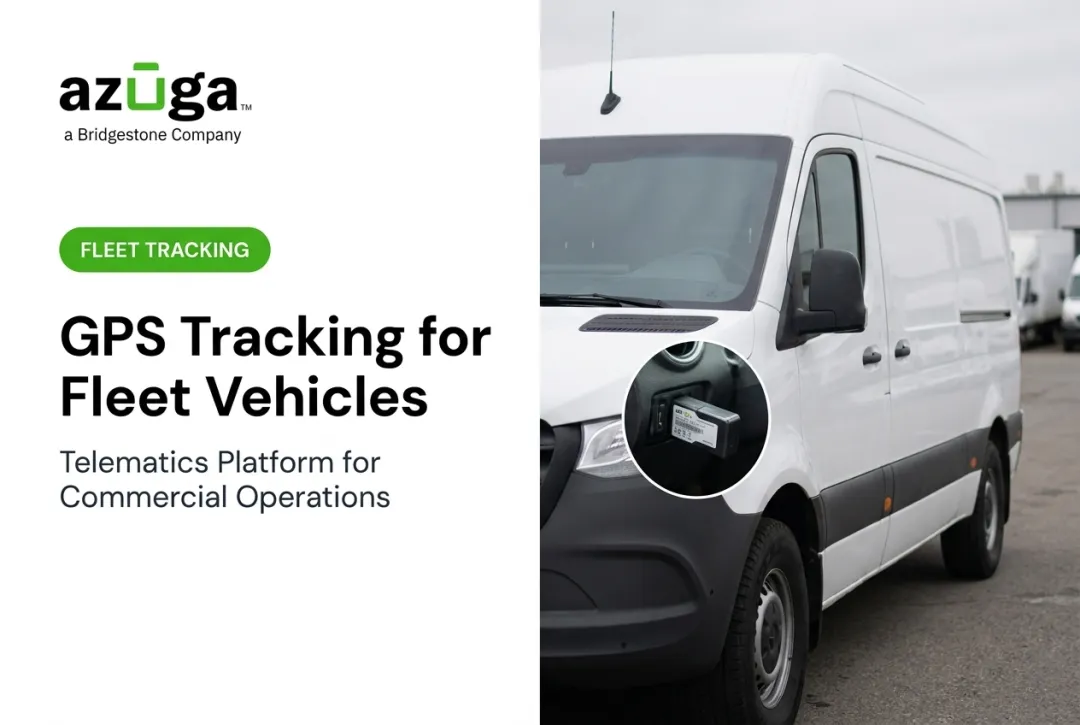
These plug directly into a vehicle's OBD-II port — no wiring, no technician. Azuga's self-install OBD-II device takes about 20 seconds to set up and immediately starts capturing diagnostic data and driver behavior. This is the go-to option for light and medium fleets that want to get moving fast without scheduling installation appointments.
Hardwired GPS Trackers
For heavy-duty trucks and long-haul rigs, a hardwired connection to the vehicle's wiring harness offers a more permanent, tamper-resistant setup. It's typically installed by a technician and hidden from view, which matters for high-value or long-distance routes where tampering is a real risk.
Asset/Battery-Powered Trackers
Trailers, containers, and other non-powered equipment don't have an OBD port to plug into. That's where battery-powered trackers come in. Azuga's Long Life Asset Tracker runs up to five years on a single charge, making it a fit for trailers, shipping containers, and mobile storage units that sit idle for stretches at a time.
Portable Trackers
For high-value cargo or last-mile packages, portable trackers offer flexible, temporary tracking that moves with the shipment rather than the vehicle. They're useful when you need visibility on a specific load for one leg of the trip, then can redeploy the same unit on the next shipment.
| Tracker Type | Installation | Best Use Case | Typical Fleet Fit |
|---|---|---|---|
| OBD-II | Self-install, ~20 seconds | Light/medium fleets, quick deployment | Small to mid-size |
| Hardwired | Professional install | Heavy-duty trucks, long-haul | Larger commercial fleets |
| Asset/Battery | Attach to equipment | Trailers, containers, non-powered assets | Any fleet with detached cargo |
| Portable | Temporary placement | High-value cargo, last-mile packages | Delivery-focused operations |

Essential Features to Look for in a Logistics GPS Tracking Solution
Not all tracking platforms are built the same. Here's what separates a functional tool from one that delivers real operational gains. Update frequency matters more than people realize. Verizon Connect notes its software can refresh vehicle locations as often as every 30 seconds, a benchmark Azuga matches with high-frequency tracking at 30-second intervals. The tighter the interval, the faster you catch a problem. Look for these core capabilities
- Geofencing and alerts — instant notifications on route deviations or unauthorized stops; Azuga ties alerts to planned routes
- Driver behavior monitoring — harsh braking, speeding, and idling rolled into a safety score, with Azuga's Safe Driver Rewards Program
- Route optimization — algorithms that cut fuel use and improve on-time delivery
- Integrations — fuel cards, dashcams, and TMS platforms; Azuga offers 75+ telematics integrations
- Support and pricing — 24/7 availability with pricing that scales with fleet size

Key Benefits of GPS Tracking for Logistics Operations
Cost Reduction
Route optimization and fuel monitoring directly cut waste. Azuga customers report a 30% reduction in operational costs and average annual savings of $9,462 through better fuel management and fewer inefficient routes.
Improved Safety and Reduced Liability
Driver behavior monitoring changes how people drive when they know harsh braking and speeding get flagged. Azuga fleets see 38% fewer accidents and a 57% drop in speeding citations on average. Those reductions often keep insurance premiums manageable instead of letting them spiral.

Theft Prevention and Asset Security
Real-time alerts mean stolen vehicles and cargo get recovered fast. In one documented case, police used OBD-II tracking data to recover a stolen vehicle and arrest the thieves within hours.
Enhanced Customer Satisfaction
Accurate, updating ETAs build trust. Azuga's integration with Descartes MacroPoint gives customers live location updates for active loads and confirms delivery details automatically, so nobody is left with "it should be there soon" guesswork.
Accident Exoneration and Dispute Resolution
Azuga's SafetyCam AI with Collision Reconstruction captures dual-facing video and helps establish fault after an incident. That evidence matters: 70% of accidents involving Azuga fleets weren't the driver's fault, which can shut down frivolous claims before they cost real money.
How to Choose the Right GPS Tracking Provider for Your Fleet
Before signing anything, work through these steps
- Match tracker type to fleet composition. A five-vehicle landscaping crew doesn't need what a 200-truck long-haul operation needs. Azuga supports fleets from 5 to over 50,000 vehicles, so scale is rarely the constraint; fit is.
- Check installation requirements. Self-install OBD-II devices (installable by drivers in minutes) beat waiting on a technician's schedule, especially for fast rollouts. Note: vehicles built after 1996 generally have a compatible OBD port.
- Compare support and integrations. Look for US-based technical support, driver training resources, and compatibility with your existing TMS or fuel card program.
- Read third-party reviews. Sites like G2 and Capterra aggregate verified user feedback — useful for spotting patterns a sales call won't reveal.

Frequently Asked Questions
What is the best GPS tracker for fleet management?
The best GPS tracker depends on fleet size and vehicle type. Plug-and-play OBD-II devices, like Azuga's self-install tracker, are popular for ease of use and lower upfront cost.
Is there a GPS tracker for commercial trucks?
Yes. Both hardwired and OBD-II trackers are widely used on commercial trucks, providing real-time location data alongside vehicle diagnostics.
What are the different types of tracking devices?
The four main types are OBD-II plug-in devices, hardwired trackers, battery-powered asset trackers, and portable trackers. Each suits different vehicles or cargo types.
What are the best logistics tracking apps?
The strongest logistics tracking apps combine live GPS data with route optimization, driver communication tools, and delivery status updates in one dashboard.
How can I track my logistics package?
Shippers typically provide a tracking number or link connected to the carrier's GPS-enabled fleet system, giving real-time visibility into where a shipment is at any given moment.