
Many operations still run on spreadsheets, phone calls, and gut instinct. That approach breaks down fast. Missed maintenance windows, compliance gaps, and delivery delays all trace back to poor visibility into where vehicles are and what condition they're in.
This guide covers what logistics fleet management actually involves, how it differs from broader logistics, and how tools like GPS tracking close the visibility gap.
Key Takeaways
- Fleet management is the logistics layer that owns vehicles, drivers, and maintenance
- Manual tracking creates compliance risk and inflates operating costs
- Telematics and dashcams cut accidents, citations, and fuel waste
- Azuga customers report $9,462 in average annual savings and a 38% drop in accidents
What Is Logistics Fleet Management?
Logistics fleet management is the use of technology, data, and operational strategy to oversee vehicles, drivers, routes, and maintenance within the broader supply chain. It blends two disciplines: logistics (moving goods efficiently) and fleet management (keeping the vehicles doing that moving in good working order). A fleet manager acts as the single point of accountability. They own three responsibilities that, left unmanaged, drain a business's margins
- Vehicle lifecycle decisions
- Driver behavior monitoring
- Cost control
Why Scale Matters Here
The Bureau of Transportation Statistics counted 169.8 million trucks operating on U.S. roadways in 2021, spanning GVWR classes 1 through 8 (BTS/Census VIUS). That's a massive pool of commercial and personal-use vehicles, and a lot of room for inefficiency to hide. Picture a regional HVAC company running 30 service vans with no tracking software. Dispatchers guess at technician locations. A tech sits idle for three hours between calls, and nobody notices until a customer complains about a missed window. That scenario is real. Nolan Power Group's VP described it before adopting fleet tracking: the system showed whether techs had actually arrived or sat idle for hours.

Core Functions of Fleet Management in Logistics
Logistics fleet management rests on four connected functions: tracking, cost control, driver safety, and compliance. When one slips, the others usually follow.
Vehicle Tracking & Telematics
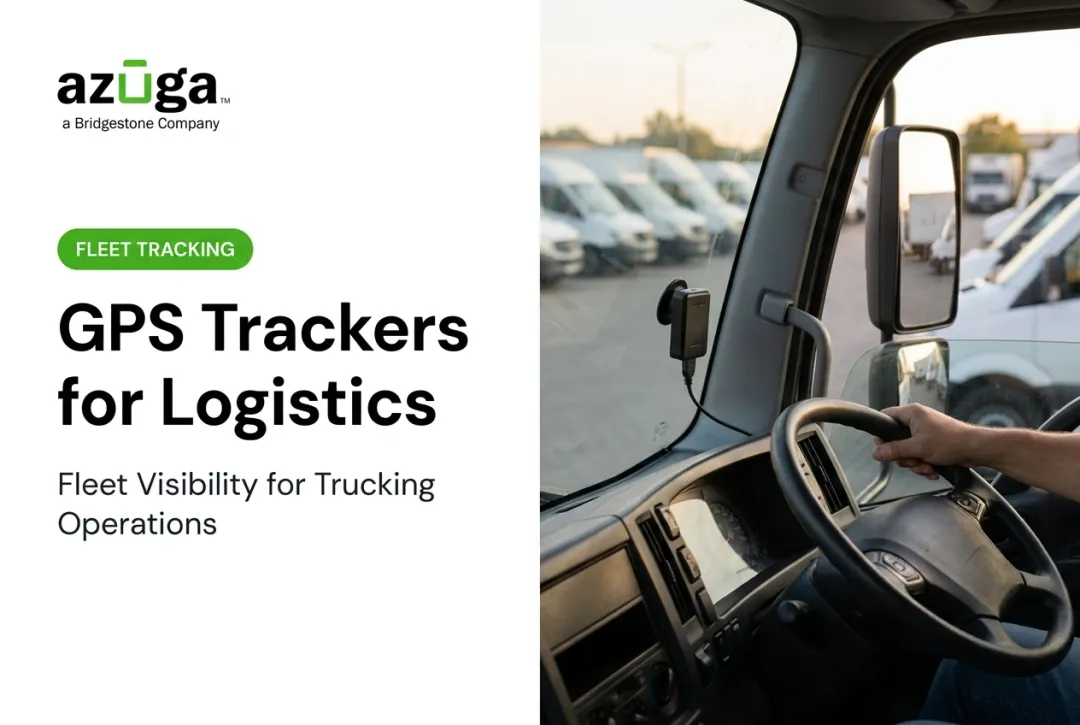
GPS tracking gives dispatchers real-time location visibility instead of relying on driver phone calls. Modern OBD-II devices plug into a vehicle's diagnostic port and start transmitting data almost immediately.
Azuga's plug-and-play tracker, for example, installs in about 20 seconds with no professional install required. It captures location, ignition status, and diagnostics from the moment it's connected.
Fuel & Cost Management
Fuel and idling waste add up fast. One Azuga safety dashboard example showed:
- 18.67 minutes of average idling per vehicle, per day
- 21.74% of vehicles flagged as high-risk for excessive idling
Cost-per-mile tracking turns these numbers into actionable targets rather than vague concerns.
Driver Safety & Behavior Monitoring
Dashcams and behavior alerts catch harsh braking, speeding, and distracted driving in real time. Managers can coach from actual events instead of secondhand reports. Programs such as Azuga Coach's customized video training turn that data into improvement, not just documentation.
Maintenance & Compliance
Preventive and predictive maintenance scheduling catches wear and faults before they cause roadside failures. On the compliance side, FMCSA rules are strict:
- Drivers get 11 hours of driving after 10 consecutive hours off duty
- No driving past the 14th consecutive hour on duty
- A 30-minute break required after 8 cumulative driving hours
- Hard caps at 60/70 hours over 7/8 consecutive days (FMCSA HOS Summary)

ELDs must automatically record
- Location, engine hours, and mileage
- An intermediate log when the vehicle moves for over an hour without a duty-status change
Carriers must retain those records for six months.
Azuga's ELD alerts fleets before drivers approach HOS limits, and its eDVIR tool is built to comply with FMCSA 396.11 and 396.13, turning inspection paperwork into automated alerts.
Logistics vs. Fleet management: Key Differences
Logistics covers the full movement of goods: warehousing, inventory, routing, and delivery windows. Fleet management focuses on the vehicles and drivers that execute that movement.
| Function | Logistics | Fleet Management |
|---|---|---|
| Core metric | On-time delivery, fulfillment rate | Vehicle uptime, fuel efficiency |
| Focus | Goods & routes | Vehicles & drivers |
| Owner | Logistics/ops manager | Fleet manager |
| Tools | TMS, WMS | Telematics, GPS, ELD |
Small businesses often have one person wearing both hats. Larger enterprises separate the roles and connect them through integrated software.
Reliable Fire & Safety shows how that handoff works in practice. Eight months after adopting Azuga, the team ran the platform on office TVs and staff computers so dispatchers could make real-time calls. Results included
- Improved dispatch accuracy
- Lower fuel costs
- Fewer accidents

Pairing telematics with dispatch tools like Elite EXTRA adds automated route optimization and proactive maintenance alerts. Dispatch teams get the full picture before they assign a job.
Benefits of Strong Fleet Management
Strong fleet management pays off in three measurable ways.
Lower operational costs: Azuga customers report an average 30% reduction in operational costs and $9,462 in annual savings, driven by optimized routing and reduced fuel waste.
Improved safety: Behavior monitoring and coaching produce real results
- 38% average reduction in accidents
- 57% average reduction in traffic citations
- 86% of users report improved driving safety

Better customer service: Route optimization tools with predictive ETAs let customers track order status live. Automated notifications for scheduled stops, geofence entry, and completion cut down on the "where's my delivery" calls that eat up dispatcher time.
Technology Powering Modern Fleet Management
Three pillars define modern fleet operations
- Telematics
- GPS tracking
- Fleet management software
Together, they turn raw vehicle data into decisions a dispatcher can act on in seconds.
The newer shift is toward AI. Dashcam-based collision reconstruction shows how that plays out in practice. Azuga's SafetyCam AI helps establish fault after an incident, which matters given that roughly 70% of accidents aren't the fault of the fleet driver involved. That data protects drivers from unfair liability and speeds up claims resolution.
Video telematics adoption is climbing industry-wide too. One 2026 industry report cites 46% adoption, up from prior years (Verizon Connect). That figure comes from a vendor-sponsored survey, not an independent government study.
What makes a platform like Azuga's useful across different fleet sizes is the bundling in one subscription
- GPS tracking and AI dashcams
- 75+ third-party integrations, including ServiceTitan and Procore
- Scaling from five vehicles to over 50,000
Common Challenges in Fleet & Logistics Management
Even with better tools available, plenty of fleets still struggle with
- Visibility gaps — fragmented, manual workflows slow down dispatch decisions
- Rising costs — repair and maintenance spending rose 8.6% year-over-year per recent trucking industry data (ATRI, 2026)
- Compliance risk — manually tracking driver hours and inspections invites errors that automated ELDs are built to catch
These gaps compound fast when dispatch, maintenance, and compliance still run on phone calls and spreadsheets. With live GPS and engine data on one platform, managers can find the nearest available technician in seconds instead of calling around, and maintenance records build automatically from the vehicle—cleaner logs, fewer surprises, lower risk.
Frequently Asked Questions
What is fleet management in logistics?
Fleet management uses technology and processes to oversee vehicles, drivers, and routes that move goods. It sits inside logistics but focuses on the equipment and people executing deliveries.
What is the difference between logistics and fleet management?
Logistics covers the full process of moving goods — warehousing, inventory, routing. Fleet management focuses narrowly on the vehicles and drivers carrying out that movement.
What is a fleet management system?
A fleet management system combines hardware (GPS trackers, dashcams) and software that collects and displays vehicle and driver data in real time. Managers use it to monitor safety, maintenance, and location.
How does fleet management reduce logistics costs?
It cuts costs through fuel savings, fewer accidents, and optimized routing. Azuga customers, for example, report average annual savings of $9,462 and a 30% drop in operational costs.
What technology is used in fleet management today?
GPS tracking, telematics, AI dashcams, and predictive maintenance alerts are the core tools. Many platforms now add collision reconstruction to help resolve disputes and protect drivers from unfair liability.