
Introduction
A technician arrives on-site, opens the van, and realizes the part he needs is sitting in a warehouse 40 miles away. The job stalls. The customer waits. The company eats the cost of a second trip.
This scenario plays out daily across retail, distribution, and service fleets. Stockouts and overstock remain persistent, expensive problems: one van has three of a part nobody needs, while another has none.
Real-time inventory management solves this by tracking stock the instant it moves, not at the end of a shift or week.
This guide covers how it works, the technology behind it, and its core benefits. It also looks at how these systems apply to businesses managing inventory across trucks and vans, not just warehouse shelves. If you run a fleet, this challenge probably sounds familiar.
Key Takeaways
- Real-time systems update stock counts the moment a transaction happens, unlike periodic counts that lag
- Barcode scanning, RFID, and IoT sensors are the primary technologies capturing inventory data instantly
- RFID reconciliation pushes order accuracy to 99.9%, versus just 31% with standard UPC data
- Field-service fleets face a unique challenge: inventory lives in trucks, not just warehouses
- Pairing GPS fleet visibility with parts data helps dispatchers send the right vehicle every time
What Is a Real-Time Inventory Management System?
A real-time inventory management system continuously updates stock counts across warehouses, stores, and sales channels the instant a transaction occurs. Sell an item at checkout, and the count drops immediately across every connected channel. Receive a shipment, and available stock rises before the truck driver finishes unloading.
This is what supply chain professionals call a perpetual inventory system, automated tracking with no waiting for a physical count.
Why Traditional Counting Falls Short
Periodic inventory methods only update records when someone physically counts stock, often weekly or monthly. Between counts, nobody actually knows what's on the shelf.
Manual spreadsheets make this worse. Common issues include
- Copy-and-paste errors that silently corrupt data
- Inconsistent manual updates across multiple team members
- Stale numbers that no longer reflect what's actually in stock
The result? Outdated information drives decisions, and the gap between "what the system says" and "what's actually there" keeps growing.
The Technology Behind Real-Time Tracking
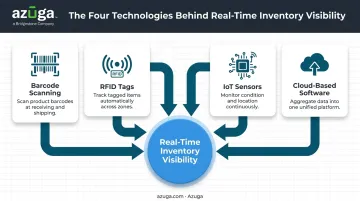
Four core technologies make real-time visibility possible
- Barcode scanning captures item movement at each touchpoint
- RFID tags transmit data without needing a direct scan
- IoT sensors monitor stock levels automatically
- Cloud-based software ties it all together into one live view
None of these work in isolation. The real power comes from how they connect.
How to Track Inventory in Real Time: Methods & Technologies
Tracking inventory in real time follows a simple pattern: capture data at the point of movement, sync it to a central cloud database, and push instant updates to every connected channel. The technology choices below determine how that capture happens.
Barcode and RFID Scanning
Barcode scanning requires direct line of sight: someone or something has to scan each item individually. This works well for lower-volume operations where scan labor isn't a bottleneck.
RFID skips that step entirely. Tags transmit data by radio signal, letting a reader capture hundreds of items at once without anyone pointing a scanner at each one. This matters for high-throughput environments like large distribution centers or retail chains counting thousands of SKUs daily.
Neither is universally "better." Barcode label costs are lower; RFID tags cost more but save enormous labor time at scale.
IoT Sensors and Smart Shelves
Smart shelves and connected sensors monitor stock levels automatically, no scanning required. Weight sensors detect when a bin runs low. Presence sensors flag when a shelf empties out. These systems then trigger reorder alerts without a single manual check.
Integration Across Systems
None of this works if data sits in silos. Real-time inventory depends on integration between
- ERP systems (enterprise resource planning)
- POS platforms (point of sale)
- Ecommerce channels
- Warehouse management systems (WMS)
When these systems talk to each other, a sale in one channel instantly reflects everywhere else.
Automated Reorder Alerts and Mobile Access
Most real-time systems let teams set a minimum stock threshold. Hit that number, and the system automatically alerts purchasing.
Example: A distributor sets a reorder point at 50 units for a fast-moving part. When stock hits 50, the system fires an alert before it hits zero, preventing a stockout. This also stops the team from over-ordering "just in case," which ties up cash in excess stock.
These alerts reach managers wherever they are. Mobile apps and dashboards let them view and adjust inventory levels from a phone, whether they're at another location or on the road.
The 4 Types of Inventory Management
Inventory isn't one-size-fits-all. The Association for Supply Chain Management recognizes four widely used categories, each with different tracking priorities.
| Inventory Type | What It Includes | Tracking Priority |
|---|---|---|
| Raw materials | Inputs used to build products | Supply timing, quality control |
| Work-in-progress | Items currently being assembled or serviced | Production stage visibility |
| Finished goods | Completed products ready for sale | Sales channel accuracy |
| MRO (maintenance, repair, operations) | Parts and supplies that keep equipment running | Availability at point of need |
MRO inventory deserves special attention for field-service and maintenance-heavy businesses. Unlike finished goods sitting in a warehouse, MRO parts often live scattered across job sites, storage rooms, and service vehicles — making them the hardest category to track accurately.
Regardless of type, the same principle applies: real-time visibility separates modern inventory control from outdated periodic counts.
A business tracking raw materials in real time catches shortages before production stalls. One tracking MRO parts catches a missing component before a technician is halfway through a repair.
Key Benefits of Real-Time Inventory Management
Improved Accuracy
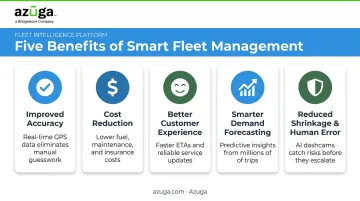
Manual counting introduces errors at every step. Automated data capture removes most of them. A GS1 US and Auburn University study found that RFID reconciliation between trading partners produced 99.9% order accuracy, compared to just 31% accuracy using standard UPC barcode data alone. That gap illustrates just how much manual data entry can distort inventory records.
Cost Reduction
Real-time tracking cuts costs in several concrete ways
- Reduced carrying costs from holding less "just in case" stock
- Less product obsolescence from excess inventory sitting unused
- Fewer labor hours spent on manual cycle counts
Better Customer Experience
Accurate, live stock data means fewer backorders and more reliable delivery estimates. Customers get told the truth about availability upfront, instead of finding out after checkout that an item is actually out of stock.
Smarter Demand Forecasting
Continuous data feeds give purchasing teams a live picture of what's selling and what's sitting. That translates into purchasing decisions based on actual patterns, not guesswork — reducing both stockouts and excess inventory at the same time.
Reduced Shrinkage and Human Error
Manual counting invites mistakes: miskeyed numbers, missed items, inconsistent processes between shift workers. Automated capture removes most of these points of failure. It also makes shrinkage (loss from theft, damage, or misplacement) far easier to spot quickly, rather than discovering it weeks later during a physical count.
Real-Time Inventory Management for Fleet-Based and Service Businesses
For HVAC, plumbing, electrical, pest control, construction, and utility businesses, "inventory" doesn't sit neatly in one warehouse. It's spread across every truck and van on the road.
This creates a specific headache: a technician runs out of a part mid-job and has to reschedule, while three other trucks are carrying duplicate stock nobody's using. Multiply that across a fleet of 20, 50, or 100 vehicles, and the waste adds up fast.
Why GPS Visibility Matters Alongside Inventory Data
Knowing what's on a truck only helps if you also know where that truck is. Pairing real-time GPS fleet tracking with inventory or parts data gives dispatchers a combined viewthat includes
- Which vehicle currently holds the part a job requires
- How close that vehicle is to the next job site
- Which technician can respond fastest without a wasted return trip
This is where Azuga's real-time GPS tracking fits in. Azuga updates vehicle location as frequently as every 30 seconds through its CompleteFleet plan, the platform's highest tracking frequency. For a dispatcher trying to locate the nearest van carrying the right part, that kind of frequent location data cuts down on wasted trips and guesswork.
Consider the parts problem alone. Aberdeen Group's field-service research found that the average first-time fix rate sits at 75%, and 51% of repeat visits happen because a technician had the wrong part or no part at all. Combine accurate van-stock knowledge with real-time location visibility, and dispatchers can make smarter, faster calls about which technician goes where.
The Accountability Angle
This same pairing strengthens accountability. When businesses correlate vehicle location and activity with stock movement, van stock shrinkage becomes easier to trace. If parts go missing, activity logs and location history give managers a starting point for investigation — something a paper checklist never provided.
Azuga's platform itself focuses on vehicle location, driver behavior, and asset tracking rather than functioning as a standalone parts-management system. That's exactly why it works well as a companion layer. Businesses running dedicated inventory or field-service software can pair it with Azuga's fleet visibility to close the loop between "what's on the truck" and "where the truck is right now."
Real-World Examples and Common Implementation Challenges
What Real-Time Inventory Looks Like in Practice
A few practical examples show how this plays out across industries
- Retail: Decathlon's RFID rollout tagged products at the item level, cutting inventory-count time from days to hours and improving checkout speed to under a minute per transaction
- Distribution: Warehouses use barcode scanners synced directly to a WMS, so every pick, pack, and ship updates stock counts instantly
- Service fleets: Technicians use mobile inventory apps that log parts used on a job, syncing with fleet GPS tracking to give dispatchers a live view of vehicle stock and location together
Implementation Challenges to Expect
Rolling out real-time inventory isn't plug-and-play. The most common obstacles include
- Upfront investment: hardware, software, and network costs add up before any benefit shows up
- Legacy system integration: older ERP or POS systems weren't built to sync in real time
- Staff adoption resistance: teams used to manual counts need training on new workflows, not just new scanners
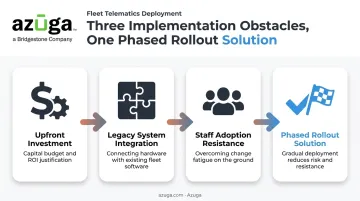
The solution is straightforward: roll out in phases. Pilot at one representative location, measure results against a baseline, then scale once the process is proven. Choosing a vendor with strong ongoing support also matters more than most businesses expect during the sales pitch.
What's Coming Next
AI-driven demand forecasting, wider IoT sensor adoption, and cloud-based platforms are the natural next step for businesses scaling their systems. McKinsey's research suggests AI-enabled demand forecasting has the modeled potential to reduce inventory levels by 20% to 30%, a meaningful number, though one that reflects potential rather than a guaranteed outcome for every business.
Frequently Asked Questions
How to track inventory in real time?
Businesses capture stock movement instantly using barcode scanning, RFID tags, or IoT sensors, syncing that data through cloud software connected to ERP and POS systems. This keeps stock counts accurate across every location and channel simultaneously.
What is a real-time inventory management system?
It's a system that continuously updates stock levels across every sales channel and location the moment a transaction occurs. Unlike periodic counts, there's no lag between what happens physically and what the system shows.
What is an example of an inventory management system in real life?
A retail chain using RFID-enabled point-of-sale systems is one example. A field-service fleet syncing a mobile parts app with GPS fleet tracking, like Azuga's platform, is another.
What are the 4 types of inventory management?
The four widely recognized types are raw materials, work-in-progress, finished goods, and MRO (maintenance, repair, and operations) inventory. Each requires slightly different tracking priorities.
What is the difference between real-time and traditional inventory management?
Traditional methods rely on periodic manual counts, leaving gaps between what's recorded and what's actually in stock. Real-time systems update automatically with every transaction, eliminating that lag entirely.
How does real-time inventory tracking benefit service fleets and delivery fleets?
Pairing inventory data with GPS fleet tracking, like Azuga's 30-second location updates, helps dispatchers find the right vehicle and parts instantly. That means fewer wasted trips, faster job assignment, and better first-time fix rates.