
Unplanned downtime doesn't just cost repair dollars. It means missed appointments, canceled jobs, and drivers stranded on the roadside instead of billing hours. It also creates real safety risk when brakes, tires, or steering components fail without warning.
This guide breaks down what preventive maintenance planning actually means, the different approaches fleets use, and how to build a plan step-by-step. We'll also cover how GPS fleet tracking technology takes the guesswork out of scheduling.
Key Takeaways
- Preventive maintenance planning schedules service before failures, cutting downtime and repair costs
- Reactive roadside repairs cost roughly 4x more than the same job done in-shop
- Four main approaches exist: time-based, usage-based, condition-based, and predictive maintenance
- A documented plan plus GPS/telematics data keeps schedules accurate without manual tracking
- Small fleets can start preventive maintenance affordably with plug-and-play OBD-II devices
What Is Preventive Maintenance Planning?
Preventive maintenance planning is a structured, scheduled approach to servicing vehicles and equipment before something breaks. Instead of waiting for a warning light or a stalled engine, you set intervals for inspections, fluid changes, and part replacements based on time, mileage, or usage.
Compare that to reactive (or corrective) maintenance, where repairs only happen after a failure occurs. Reactive repairs cost more, take longer, and almost always happen at the worst possible time.
Preventive vs. Reactive: The Cost Gap
The cost gap is substantial. According to a FleetOwner report on TMC and FleetNet America BenchMarkit data, repairing a truck at the roadside costs roughly 4 times more than performing the identical repair in a fleet's own shop.
Higher retail labor rates, technician travel fees, and the danger premium of roadside work all drive that number up.
Preventive vs. Predictive: Not the Same Thing
These terms get confused constantly. Here's the distinction
- Preventive maintenance runs on fixed schedules, whether that's a calendar date or an odometer reading, regardless of the vehicle's actual condition
- Predictive maintenance uses sensor data and analytics to forecast a failure before it happens, often through telematics or IoT devices
- Hybrid approach combines both: scheduled preventive tasks catch routine wear, while predictive alerts flag unexpected failures early
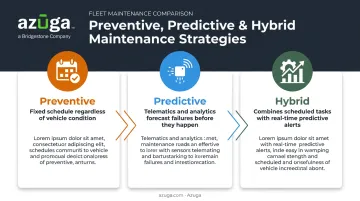
Preventive maintenance is proactive by schedule. Predictive maintenance is proactive by data.
Why This Matters More for Fleet-Based Businesses
If you run a landscaping crew, a towing company, or a plumbing outfit, a broken-down vehicle doesn't just cost repair money. It halts revenue generation entirely. No truck, no job, no invoice.
One quick clarification: a plan defines what maintenance is needed and why. A schedule (covered later in this guide) defines who does it and when. You need both.
Types of Preventive Maintenance
Most preventive maintenance programs fall into four approaches. Each fits different equipment and operating conditions, and many fleets combine more than one.
Time-Based Maintenance
Tasks happen at fixed calendar intervals, regardless of how much the vehicle has been used. A monthly fluid check or a quarterly brake inspection are typical examples. This works well for equipment that sits idle for stretches, since a vehicle that hasn't moved can still degrade from age. A seasonal truck parked over winter, for instance, still needs its battery and seals checked before spring.
Usage-Based (Mileage/Hour) Maintenance
Here, service is triggered by actual usage, meaning mileage, engine hours, or operating cycles. An oil change every 5,000 miles is the classic example. This approach fits vehicle fleets well since it ties maintenance directly to wear rather than the calendar. Fleet managers typically track these thresholds through odometer readings or maintenance software that flags a vehicle once it crosses the limit.
Condition-Based Maintenance
This relies on real-time sensor or diagnostic data to trigger service only when equipment shows actual signs of wear, such as a diagnostic trouble code or a pressure reading outside normal range. It avoids servicing parts that don't need it yet. Modern OBD-II devices, like Azuga's plug-and-play trackers, capture this data automatically and alert managers before a minor issue turns into a breakdown.
Predictive Maintenance
Predictive maintenance goes a step further, using historical and real-time data plus analytics to forecast failures before they happen. Telematics and IoT devices feed this process, flagging patterns that suggest a component is likely to fail soon, not just that it's currently out of spec. A gradual rise in engine temperature over several weeks, for example, can signal a failing thermostat long before a warning light appears.
How to Create a Preventive Maintenance Plan: Step-by-Step
Building an effective plan follows the same basic sequence whether you're managing five service vans or a 200-unit trucking fleet.
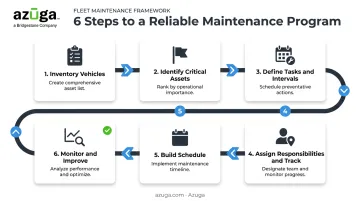
Inventory your vehicles and equipment: list every asset with make, model, VIN or serial number, current condition, and mileage/usage. This baseline is the foundation everything else builds on.
Identify critical assets and prioritize: rank vehicles and equipment by how much a breakdown would disrupt operations, cost to fix, or create safety risk. A tow truck with no backup deserves more attention than a rarely used trailer.
Define maintenance tasks and intervals: use OEM manuals and your own maintenance history to set task frequency, whether that's time-based, mileage-based, or condition-based.
Assign responsibilities and track with technology: designate which technician or vendor handles each task, then let GPS fleet tracking fill the gaps. Azuga's plug-and-play OBD-II device automatically captures mileage and reads diagnostic trouble codes, flagging maintenance needs without manual odometer logging.
Build a maintenance schedule and calendar: turn your tasks and intervals into a recurring schedule, whether fixed, floating, or usage-triggered, so nothing gets missed.
Monitor, measure, and continuously improve: track KPIs such as mean time between failures (MTBF) and maintenance compliance rate, then adjust intervals based on what the data actually shows.
Benefits of Preventive Maintenance Planning for Fleets
A documented plan pays off across several fronts, not just fewer breakdowns.
- Less unplanned downtime — vehicles stay on the road and jobs stay on schedule
- Longer asset lifespan through consistent, timely servicing instead of running components to failure
- Lower repair costs by catching small issues before they become expensive failures
- Improved safety by keeping brakes, tires, and critical systems in reliable working order
- Stronger DOT compliance with documented inspection and service records
- Higher resale value from complete maintenance history
The savings can be significant. When the State of Utah rolled out telematics-driven maintenance alerts across a 4,700-vehicle fleet, the agency reported a $90,000 annual reduction in maintenance costs within the first year. Most savings came from catching engine issues and low-battery conditions before they became breakdowns. Azuga customers save an average of $9,462 annually through more proactive fleet cost management. Results vary by fleet size, but the direction holds: proactive alerts cut costly surprises.
Common Preventive Maintenance Mistakes to Avoid
Even well-intentioned programs go sideways. Watch for these three traps
- Over-maintaining low-priority assets. Servicing every vehicle on the same aggressive schedule wastes labor and parts budget without improving reliability where it counts.
- Relying on spreadsheets or memory. Manual tracking works until someone forgets to update a row, and automated tracking catches what memory misses.
- Ignoring driver and technician feedback. Real usage data and firsthand reports keep intervals in sync with actual wear, and skipping that feedback lets schedules drift out of date.
How Azuga Helps Simplify Preventive Maintenance Planning
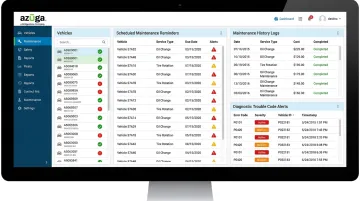
Azuga's plug-and-play OBD-II device installs in about 20 seconds with no wiring or mechanic required. Once plugged in, it reads diagnostic trouble codes directly from the vehicle's computer and tracks odometer mileage automatically, feeding that data into maintenance alerts in real time.
The platform centralizes this into one dashboard
- Scheduled Maintenance tools let managers set service reminders by mileage or engine run time
- Maintenance history tracking logs every past service event per vehicle
- Diagnostic reporting surfaces trouble codes before they become breakdowns
- API integration (on the CompleteFleet plan) connects Azuga data to other business systems
For construction, HVAC, plumbing, and similar trades running lean crews, this removes the manual guesswork. Azuga matches packages to fleet needs, which makes structured preventive maintenance planning accessible to small fleets without a big upfront technology investment.
Frequently Asked Questions
What are the four types of preventive maintenance?
The four common approaches are time-based (fixed calendar intervals), usage-based (mileage or engine hours), condition-based (triggered by sensor data), and predictive (data-driven failure forecasting).
What is the 80/20 rule in maintenance?
It's a general Pareto-style concept suggesting a large share of failures often trace back to a small share of assets. There's no universal industry benchmark for this, so it's best built from your own fleet's repair data.
What is the 10% rule of preventive maintenance?
Some fleet platforms, including Fleetio's compliance guidelines, define a service task as "on time" if completed before the reminder or no more than 10% past its interval. It's a tolerance guideline, not a federal regulation.
How often should preventive maintenance be performed on fleet vehicles?
Frequency depends on the manufacturer's recommendations, mileage, and vehicle type. Telematics data helps fine-tune those intervals based on how a vehicle is actually used, not just how old it is.
What's the difference between preventive and predictive maintenance?
Preventive maintenance follows fixed time or mileage schedules regardless of condition. Predictive maintenance uses real-time data and analytics to anticipate a specific failure before it happens.
How much can fleets save by switching to preventive maintenance?
Savings vary by fleet, but proactive maintenance consistently reduces repair costs and downtime compared to reactive repairs. The State of Utah's 4,700-vehicle fleet, for example, reported $90,000 in annual savings after adopting real-time maintenance alerts.