
Costs still vary widely based on device type, fleet size, features, and contract terms. This article breaks down cost factors, hidden fees, ROI expectations, and how to budget correctly before you sign anything.
TL;DR
- Typical cost: hardware plus subscription
- Price drivers: device type, update frequency, add-ons like AI dashcams, contract length
- Fleet size: Small fleets pay entry-level plug-and-play rates; larger fleets negotiate volume packages
- When to spend more: Safety, compliance, or AI dashcam exoneration features justify higher tiers
How Much Does Vehicle GPS Tracking Cost? (Plans Overview)
There's no single fixed rate for GPS tracking. Your total cost depends on hardware choice, subscription tier, and how many vehicles you're outfitting.
Common budgeting mistakes:
- Ignoring recurring subscription fees and focusing only on hardware cost
- Choosing a device unsuited to the vehicle type (OBD-II won't work on older trucks or trailers)
- Forgetting add-ons like video storage or extra user seats
Typical Cost Ranges
| Tier | Hardware | Subscription model |
|---|---|---|
| Entry-level | Often bundled or self-install | Basic tracking package |
| Mid-range | Often bundled or self-install | Safety and cost-management features |
| High-end | Hardware plus optional add-ons | Full safety, compliance, and AI features |

These ranges typically include: real-time tracking, alerts, and standard reporting. They exclude: professional installation, extra platform users, and video storage.
Price Range 1: Entry-Level
What's included: Basic GPS location, geofencing, mobile app access.
Best for: Small businesses running 1-10 vehicles that need visibility without bells and whistles.
Azuga's BasicFleet plan uses packages matched to fleet needs with 2-minute location updates, alerts, and geofencing - a clear snapshot of what entry-level tracking includes today.
Price Range 2: Mid-Range
What's included: Driver scorecards, maintenance alerts, fuel monitoring.
Best for: Growing fleets with 11-99 vehicles that need to manage driver behavior and costs more actively.
With packages matched to fleet needs, Azuga's SafeFleet tier adds driver scores, fuel card integration, and 1-minute updates. Those extras matter once you're managing more than a handful of drivers.
Price Range 3: High-End
What's included: AI dashcams, collision reconstruction, compliance tools, third-party integrations.
Best for: Enterprise fleets and safety-focused industries like construction, trucking, and utilities.
Azuga's CompleteFleet plan uses packages matched to fleet needs and includes 30-second tracking and AI-powered collision reconstruction. In high-risk industries, that feature set often pays for itself quickly.

Key Factors That Affect the Cost of Vehicle GPS Tracking
Total cost hinges on five things: hardware type, fleet size, feature set, contract structure, and support.
Device/Hardware Type
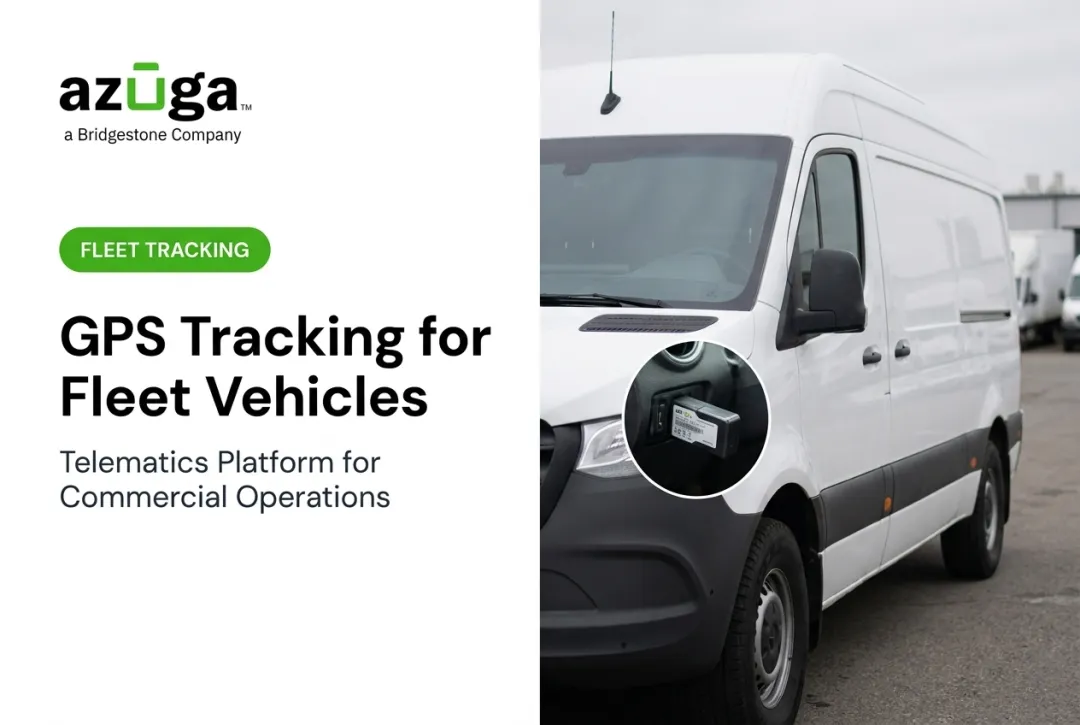
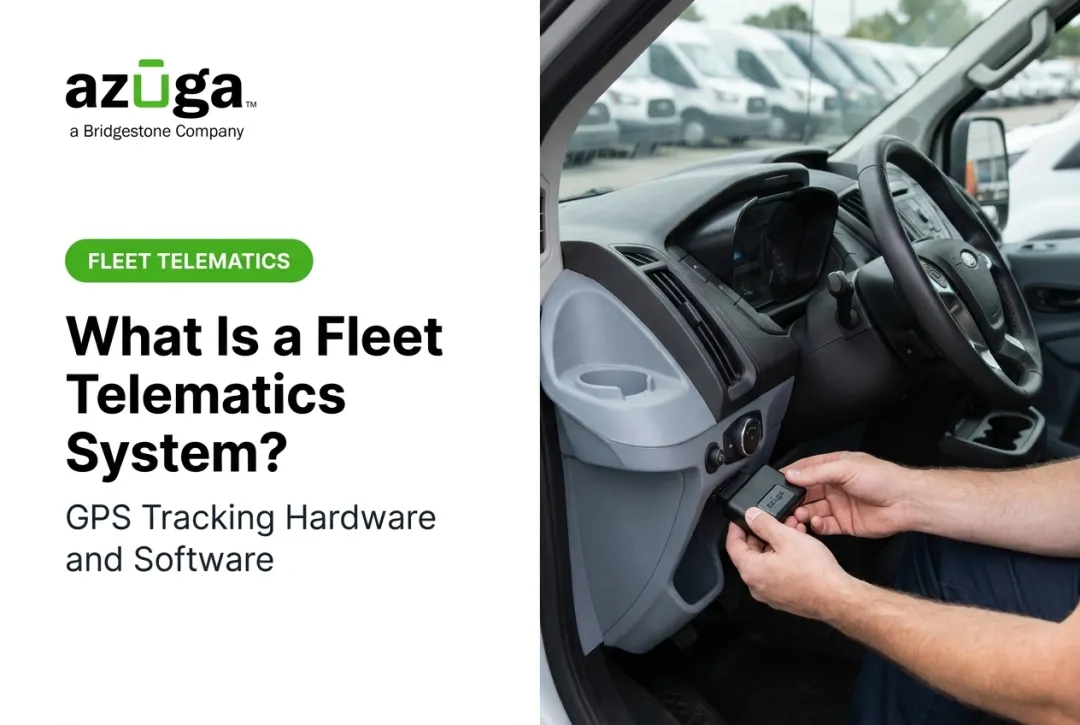
- Plug-in OBD-II: Cheapest, self-installable in about 20 seconds, no technician needed
- Hardwired: Better for assets or vehicles without an OBD port; usually needs pro install
- Battery-powered: Best for trailers, containers, or unpowered equipment
Self-installable OBD-II devices, like Azuga's tracker, cut out installation labor costs entirely. That savings adds up fast when you're outfitting dozens of vehicles at once.
Fleet Size and Scale
Small fleets typically use simple packages matched to fleet needs. Larger fleets can often negotiate volume packages. Azuga's platform scales from 5 to 50,000+ vehicles, with packages matched to fleet size and vehicle type.
If you're planning to grow, ask about coterminous contracts—these let you add vehicles without resetting your renewal date, so you're not juggling multiple contract anniversaries.
Feature Set and Customization
Base tracking covers the essentials. Add-ons expand the package
- Driver behavior scoring
- Fuel card integrations
- AI dashcams (a meaningful capability jump)
AI dashcam platforms are commonly offered as add-ons on top of base tracking, according to GPS Insight. Azuga's SafetyCam AI add-on matches packages to fleet size and features.
Contract Length and Terms
Month-to-month plans offer flexibility but sometimes cost more per month. Multi-year contracts often lower the monthly rate but come with early termination penalties - some providers charge per device early in a contract, with fees dropping later, based on standard industry contract language.
Support and Onboarding
24/7 phone and web support costs more to deliver than limited-hours email-only support, and that difference often shows up in the subscription price. Confirm what support is included before you treat two quotes as comparable.

Cost Breakdown of Vehicle GPS Tracking
Total cost of ownership goes beyond the listed rate. Here's what actually shows up on your bill
| Cost Component | One-Time or Recurring | What It Covers |
|---|---|---|
| Hardware/device | One-time (often bundled free) | The GPS unit itself; many providers waive this with a contract |
| Installation | One-time | DIY plug-in (free) vs. professional hardwiring |
| Monthly subscription | Recurring | Platform access, data plan, reporting |
| Add-ons (dashcams, sensors) | Recurring | Optional video storage and AI features |
| Hidden fees | One-time/periodic | Activation charges, early termination penalties |
A note on hidden fees: Early termination fees can run depending on how far into your contract you are. Some providers offer free cancellation within a short window (Azuga offers 60 days), so always ask before you sign.
Low-Cost vs High-Cost GPS Tracking — What's the Difference?
Budget consumer-grade trackers and premium fleet platforms solve different problems. The price gap reflects capability, support, and measurable outcomes—not just branding.
| Dimension | Lower-cost | Higher-cost |
|---|---|---|
| Features | Basic location and trip history | Driver scorecards, predictive maintenance alerts, video safety monitoring |
| Reliability | Infrequent updates, weaker cellular hardware | High-frequency tracking (down to 30-second intervals) and stronger connectivity |
| Support | Limited, email-only | 24/7 phone, email, and web support (Azuga includes unlimited support across plans) |
| Long-term value | Little measurable safety or cost impact | Documented cuts in accidents, citations, and operating spend |
Azuga customers have seen 38% fewer accidents and 57% fewer speeding citations on average, plus about $9,462 in annual savings from tighter fleet cost control. That kind of ROI makes the subscription a business decision, not just another line item.

How to Estimate the Right Budget and Maximize ROI
Don't shop on price alone. Fit matters more, and GPS tracking often pays for itself faster than people expect.
Factors to weigh:
- Fleet size and vehicle type (trucks, vans, trailers, equipment)
- Must-have features vs. nice-to-haves
- How much contract flexibility you need as you grow
- Expected savings on fuel, maintenance, and insurance
According to Verizon's 2025 Fleet Technology Trends Report, 47% of GPS-tracking users saw positive ROI in under one year, and a third saw returns in under six months.
Real customer results back this up
- Kitsap Garage Door Company, an Azuga customer seeing strong ROI, called the ROI "immediate" and "a no-brainer"
- Diamond Engineering secured a 10%+ insurance premium discount by sharing its telematics data with its insurer
Providers offering packages matched to fleet needs that scales with fleet size, rather than one-size-fits-all packages, help you avoid paying for features you don't need. Azuga's quote tool adjusts packages by vehicle type, fleet size, and the features you want (GPS, dashcams, asset tracking).
Frequently Asked Questions
How much does vehicle tracking cost?
Expect hardware costs (often bundled free with a contract) plus ongoing subscription fees. The exact amount depends on your feature needs and fleet size.
Is fleet tracking worth the expense?
Yes, for most fleets. ROI typically comes from fuel savings, fewer accidents, lower insurance premiums, and faster theft recovery, often within the first year.
What is the average monthly cost per vehicle for GPS tracking?
Most providers package basic tracking at the low end, with AI dashcams or advanced safety features at higher tiers.
Are there hidden fees I should watch for?
Watch for activation fees, early termination penalties, and data or video storage overage charges. Always review full contract terms before signing.
Does GPS tracking require a long-term contract?
Not always. Many providers now offer flexible month-to-month plans, though multi-year contracts often come with lower monthly rates in exchange for a longer commitment.
How quickly does GPS tracking pay for itself?
Many fleets break even within six to twelve months through fuel savings, fewer accidents, and lower insurance costs. Fleets with high fuel spend or frequent claims often reach payback on the shorter end of that range.