
Introduction
Winter roads don't forgive mistakes. In 2023 alone, snow and sleet were present during 320 fatal crashes and an estimated 22,293 injury crashes on U.S. roads, according to NHTSA's winter driving data.
For fleet-operating employers, those numbers translate directly into lost workdays, vehicle repair bills, higher insurance premiums, and liability exposure when an at-fault accident happens on the clock. A single collision can sideline a vehicle for weeks and trigger a claims process that drags on for months.
Most winter driving incidents, though, are preventable. Preparing vehicles properly, keeping drivers disciplined behind the wheel, and staying alert to changing road conditions stops small hazards from becoming costly accidents. This guide breaks down exactly what that looks like for your team.
Key Takeaways
- Battery, tire, fluid, and emergency-kit checks aren't optional before winter trips
- Slower speeds, longer following distances, and skid control prevent most weather crashes
- Black ice, poor visibility, and cold-weather strain raise risk even on familiar routes
- GPS tracking and AI dashcams help fleet managers coach drivers before issues become claims
Safety Guidelines for Winter Driving
Safe winter driving for employees comes down to three factors working together: the environment (weather and road conditions), driver discipline (behavior behind the wheel), and vehicle readiness (maintenance and equipment). Miss one, and the other two can't fully compensate.
Reduced traction, limited visibility, and cold-weather strain on batteries and tires all raise the stakes. That's why winter safety can't be a one-time seasonal checklist. Conditions shift after every storm, so re-checks, training refreshers, and policy reminders need to happen throughout the season, not just in November.
General Safety Precautions
Cold temperatures hit vehicle systems hard before a driver ever leaves the lot.
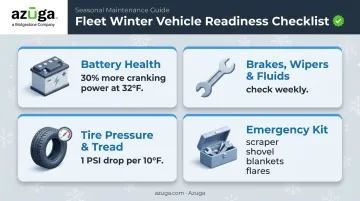
- Battery health: At 32°F, batteries need about 30% more cranking power and can lose half their capacity at 0°F, per AAA. Test batteries before winter starts.
- Brakes, wipers, and fluids: Check brake response, wiper blade condition, and washer fluid levels weekly during winter months.
- Tire pressure and tread: Cold air causes tire pressure to drop roughly 1 PSI for every 10°F decrease in temperature. Under-inflated tires increase blowout risk and reduce traction exactly when you need it most.
- Emergency kit: Stock an ice scraper, snow shovel, sand or kitty litter, tire chains, flares, blankets, food, and water in every vehicle.
Keep the gas tank at least half full. This prevents fuel line freeze and provides a heat reserve if a driver gets stranded. Employees should dress for the weather on every trip, even a five-minute run, in case a breakdown leaves them waiting for help.
Before pulling out, warm up the vehicle and clear snow and ice from cameras and sensors. Driver-assist features can't function correctly if a lens is caked in slush.
Safety Before You Drive: Trip Planning
Trip planning happens before the engine starts, not once a driver is already on the road. This matters even for short, familiar commutes, since local road crews may not have treated every route the same way.
- Check the forecast: Review weather and road condition reports before departure. Postpone non-essential trips during severe storms rather than pushing through.
- Plan and share the route: Employees should map their route in advance and share it with a supervisor or dispatcher. This creates accountability and speeds up emergency response if something goes wrong.
Safety While Driving in Winter Conditions
This is where most preventable accidents actually happen.
Slow down. Ice can be invisible even on roads that look clear and dry. Reduced speed gives drivers more reaction time and shorter stopping distances when traction disappears without warning.
Increase following distance. Commercial vehicle guidance from FMCSA recommends doubling normal following distance in adverse conditions like rain, snow, or ice. For a typical tractor-trailer, that means moving from 4-5 seconds up to 8-10 seconds of space. Passenger vehicles should follow the same logic: more space, always.
A few more non-negotiables
- Accelerate and brake gradually: Sudden inputs break traction fast, and for larger vehicles, this can trigger a jackknife.
- Skip cruise control: On slick roads, cruise control can cause unintended acceleration the moment a tire hits a slippery patch.
- Correct a skid properly: Ease off the accelerator and steer in the direction the rear of the vehicle is sliding. Hard braking mid-skid almost always makes things worse.
- Respect hills and plows: Avoid stopping on inclines when possible, and keep extra distance from snow plows, which have limited visibility and often throw debris.
Environmental and System Safety Considerations
Dropping temperatures don't just affect comfort. They affect the systems drivers rely on.
Cold weather lowers tire pressure, drains battery performance faster, and can interfere with ADAS features like lane-departure warnings. Snow and ice buildup on cameras and radar sensors degrades their reliability, so drivers should never assume these systems will catch what they miss.
Certain locations freeze before the rest of the road does. Intersections, on/off-ramps, and bridges lose heat faster than open pavement and ice over first, often with no visible warning. Treat these zones with extra caution, even when the rest of the drive feels manageable.
Common Safety Mistakes to Avoid
Even experienced drivers fall into predictable traps during winter months.
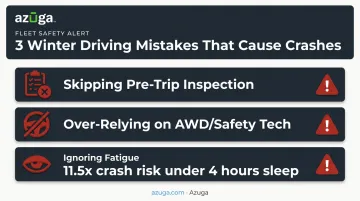
- Skipping the pre-trip inspection because the drive seems short. A quick five-minute check catches problems before they become roadside breakdowns or accidents miles from help.
- Over-relying on all-wheel drive or safety tech. AWD boosts acceleration traction, not stopping distance or cornering grip on ice. Treating it as a safety net often ends in lost control.
- Ignoring fatigue during shorter winter days and longer shifts. Drivers sleeping 5-6 hours face 1.9 times the crash rate of well-rested drivers, and those under 4 hours face 11.5 times the risk, per the AAA Foundation for Traffic Safety.
Fatigue doesn't announce itself before it takes over.
Leveraging Fleet Technology for Winter Driving Safety
Using Fleet Technology for Winter Driving Safety
Vehicle prep and driver discipline matter most, but technology gives fleet managers the visibility to catch problems before they become claims.
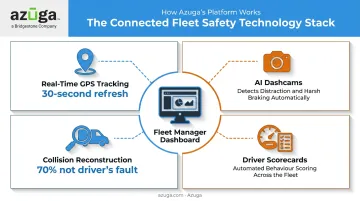
Real-time GPS tracking lets dispatchers see where every vehicle is during a storm. Azuga's CompleteFleet plan refreshes location data every 30 seconds, compared to two-minute intervals on the entry-level plan.
That level of detail lets a dispatcher reroute a driver away from a road that's icing over, or recall a truck entirely, before conditions get worse instead of reacting after the fact.
AI-powered dashcams, like Azuga SafetyCam AI, add another layer.
The system detects
- Distraction events
- Harsh braking
- Sudden acceleration
- Speeding relative to posted limits
It flags these behaviors to managers through automatic alerts and an incident dashboard. Winter is exactly when they spike, since drivers overcorrect on slick roads or brake too hard reacting to a skid.
When accidents do happen, collision reconstruction technology helps sort out fault. Azuga's data shows that 70% of accidents involving fleet drivers aren't the driver's fault — a critical distinction during weather-related incidents where another vehicle loses control and causes the collision. Objective video and telematics data speeds up claims and protects drivers from unfair blame.
Driver scorecards pull all of this together. Hard braking, speeding duration, and rapid acceleration events feed into an overall score, giving fleet managers an early warning system for risky winter habits before they turn into incidents. Coaching a driver whose braking score is slipping in December is a lot cheaper than paying for a claim in January.
None of this requires a major installation project. Azuga's OBD-II devices are plug-and-play, installing in minutes without a technician, which means a fleet can equip its full vehicle roster with tracking and safety features before the first storm hits.
Conclusion
Winter driving safety for employees means vehicle preparation, cautious driving behavior, and ongoing oversight working together, all season long. A single training session in November won't cut it when road conditions keep changing through March.
Treat winter safety as a continuous program: clear policy paired with regular training refreshers. Layer in technology that gives real-time visibility into what's happening on the road, such as Azuga's GPS tracking and AI dashcams that flag risky habits early. That combination is what turns a risky season into a manageable one.
Frequently Asked Questions
What is the best safety countermeasure for winter weather driving?
Reducing speed and increasing following distance is the single most effective countermeasure. It gives drivers more time to react and shorter stopping distances when traction disappears without warning.
What are the 5 C's of safe driving?
The 5 C's are Care, Caution, Consideration, Courtesy, and Common sense. In winter, they translate into slower speeds, more space between vehicles, and patience with drivers and plows around you.
What are the 4 P's of winter safety?
The 4 P's framework includes Prepare, Plan, Prevent, and Protect. It covers vehicle readiness, trip planning, cautious driving habits, and knowing what to do if you're stranded.
What is the 7-7 rule for winter tires?
There's no verified industry-wide "7-7 rule." Winter tires stay flexible below roughly 45°F (7°C), and most manufacturers recommend replacement once tread wears down to about 4/32 inch.
How often should companies train employees on winter driving safety?
Ongoing, year-round refreshers work better than a single annual session. Fleets that provide regular fatigue-awareness and defensive driving training see measurably lower collision rates than those that train once and stop.
What should be included in a winter driving safety policy for employees?
A solid policy covers vehicle maintenance requirements, pre-trip inspection protocols, safe driving expectations (speed, following distance, cell phone use), and clear emergency procedures for breakdowns or accidents.