
Introduction
Heavy equipment is often the single largest line item on a contractor's balance sheet. Yet machines sitting idle or breaking down unexpectedly can drain profit margins that are already razor-thin.
The numbers back this up. The Association of Equipment Manufacturers found that nonproductive idling accounts for 10% to 30% of the fuel construction equipment burns, with one large-fleet example showing potential savings of $650,000 a year just from cutting wasted idle time.
Most contractors don't have a fuel problem, though. They have a visibility problem
- Maintenance logs live on clipboards or scattered spreadsheets
- Heavy machinery, trucks, and tools get tracked in different systems (or not at all)
- Nobody has a clear answer on which assets are actually earning their keep
This guide breaks down what construction equipment management looks like in 2026, from the role of an equipment manager to the best practices, technology, and challenges shaping the industry today.
Key Takeaways
- Equipment management tracks, maintains, and optimizes machinery, tools, and vehicles across job sites
- Strong management practices cut downtime, stretch asset lifespan, and protect project margins
- GPS tracking and telematics now form the backbone of modern fleet visibility
- The right software prioritizes mixed-asset support and deep integrations, backed by responsive implementation support
What Is Construction Equipment Management?
Construction equipment management is the planning, selection, deployment, maintenance, and lifecycle tracking of the machinery, tools, and vehicles used on a jobsite, covering the full asset journey
- Acquisition — deciding what to buy, lease, or rent
- Deployment — assigning equipment to the right jobsite at the right time
- Maintenance — keeping machines running safely and efficiently
- Utilization tracking — measuring how hard each asset actually works
- Retirement — knowing when to sell, trade, or scrap
Many contractors use the terms "equipment management," "fleet management," and "asset management" interchangeably. There's overlap, but each has a slightly different center of gravity.
What Does a Construction Equipment Manager Do?
An equipment manager's day rarely looks the same twice, though core responsibilities generally include
- Scheduling machines and vehicles across multiple active job sites
- Coordinating with mechanics on preventive and reactive repairs
- Tracking utilization and cost data to support accurate job bids
- Enforcing safety inspections and compliance documentation
In 2026, this role looks less like paperwork and more like data analysis. Telematics dashboards, digital maintenance software, and mobile alerts have largely replaced the clipboard-and-spreadsheet approach. Managers now spend more time interpreting utilization trends and less time chasing down where a skid steer went last Tuesday.
Equipment Management vs. Fleet management vs. Asset Management
The Association of Equipment Management Professionals treats "equipment manager" as the broader title because the role spans on-highway vehicles, off-highway machinery, tools, and other capital assets. Here's how the terms typically break down
| Term | Typical Focus |
|---|---|
| Fleet management | On-road vehicles: trucks, vans, pickups |
| Equipment management | Heavy/off-road machinery plus mixed assets |
| Asset management | Organization-wide value realization across all asset types |
In practice, most modern platforms don't force a hard split, combining tracking for trucks, excavators, and even hand tools into one system because contractors need one answer, not three.
Best Practices for Construction Equipment Management in 2026
Here's what separates well-run fleets from the ones constantly firefighting breakdowns.
Centralize Tracking With a Single Platform
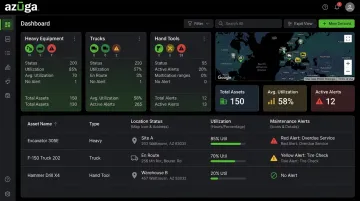
Disconnected spreadsheets and standalone tools create blind spots. When location, usage, and maintenance status for every asset live in one dashboard, managers stop guessing and start making decisions based on real data.
Platforms that also integrate with job-costing and scheduling tools already in use, such as Procore or Fleetio, cut the double data entry that causes most tracking gaps in the first place.
Build a Preventive Maintenance Schedule
Scheduling service based on hours or usage, rather than waiting for a breakdown, keeps small issues from becoming expensive ones. NIST's industrial machinery research found reactive maintenance costs roughly $18 per horsepower per year, compared to $13 for preventive maintenance — a meaningful gap that compounds across a large fleet.
Monitor Utilization to Maximize ROI
Utilization data answers a simple question: is this machine earning its cost? Tracking usage hours against available hours helps managers
- Spot underused assets before renewal or replacement decisions
- Set more accurate bid rates based on real ownership costs
- Cut unnecessary rentals when existing equipment sits idle
Fleets that track utilization closely often uncover enough underused equipment to cut rental spend by double digits within the first year.
Train Operators and Standardize Safety Protocols
Well-trained operators cause fewer accidents and less equipment damage. Certification programs covering safe operation and basic troubleshooting pay for themselves in reduced repair bills alone.
That discipline should extend to compliance. Routine inspections, documented safety checks, and clear audit trails aren't just regulatory boxes to check. They're the paper trail that protects a company when OSHA or an insurer starts asking questions, and pairing certification records with inspection logs keeps that trail in one place.
Use Data to Guide Buy-Rent-Retire Decisions
Utilization history and maintenance cost trends turn capital decisions from guesswork into math. A machine with rising repair costs and falling utilization is a strong candidate for retirement, not a rebuild.
Leveraging GPS Tracking & Telematics for Smarter Equipment Management
GPS Tracking & Telematics for Smarter Equipment Management
Telematics has moved from "nice to have" to foundational infrastructure for equipment management. Real-time GPS tracking and geofencing give managers constant visibility into where every asset sits and moves, which also happens to be one of the best theft deterrents available.
Most contractors run a mixed fleet, pairing heavy equipment with trucks and pickups. On the vehicle side of that mix, video telematics adds another layer of protection.
Azuga's SafetyCam AI with Collision Reconstruction is built around a specific fact: 70% of accidents involving commercial vehicles and passenger cars are not the fault of the commercial driver, according to NHTSA data. That evidence matters when a claim comes down to he-said-she-said.
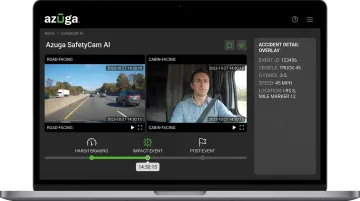
Why Azuga Fits the Vehicle Side of a Mixed Fleet
Heavy equipment often runs on OEM telematics systems built for excavators and loaders. Trucks and pickups need something else, and that's where Azuga fits
- Mounted asset trackers and beacons — hardwired or battery-powered hardware for trucks and heavy equipment, ready to transmit data quickly with no complex professional install
- High-frequency tracking on the CompleteFleet plan, with location updates roughly every 30 seconds versus every two minutes on entry-level plans
- Geofencing and alerts that flag unauthorized movement outside a jobsite boundary or after hours
Telematics adoption also moves the needle on idle time. When managers can see exactly which units sit idle and for how long, cutting nonproductive engine hours becomes a matter of enforcement rather than guesswork.
None of this data matters if it stays siloed. Connecting GPS and telematics feeds with maintenance software and accounting/ERP systems is what turns field data into office decisions, closing the gap between what happens on the jobsite and what shows up in the budget.
Common Equipment Management Challenges in 2026
Even well-intentioned equipment programs run into the same roadblocks.
Fragmented data. Heavy equipment, trucks, and hand tools frequently live in separate systems that don't talk to each other. That creates blind spots in job costing and makes it nearly impossible to get a true fleet-wide utilization picture.
Jobsite theft and security. Combined equipment and material theft costs the construction industry as much as $1 billion annually, according to Insurance Journal. Scattered, unsecured job sites remain an easy target, and holiday weekends see some of the highest theft activity of the year.
The skilled labor shortage. Finding qualified mechanics and operators has become one of the toughest staffing challenges in the industry.
A 2025 AGC and NCCER survey found 79% of firms struggle to fill mechanic positions and 77% struggle to fill equipment operator roles, with 45% reporting project delays tied to worker shortages. Fewer mechanics means longer waits for repairs, which means more downtime nobody budgeted.
How to Choose the Right Equipment Management Solution for 2026
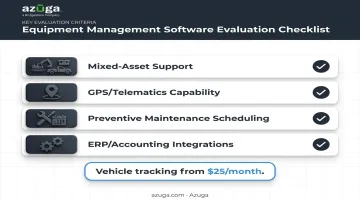
Not every platform fits every fleet. Before signing a contract, evaluate solutions against these criteria
- Mixed-asset support: Can it track heavy equipment, vehicles, and tools without forcing you into separate systems?
- GPS/telematics capability: Does it offer real-time location data and geofencing, not just periodic check-ins?
- Preventive maintenance scheduling: Can it trigger service based on hours or usage automatically?
- ERP/accounting integrations: Will the data actually flow into your existing job costing and billing systems?
Total cost of ownership matters as much as the listed rate. Full mixed-fleet platforms often carry custom packaging, but there are more affordable entry points for the vehicle side specifically. Azuga's GPS fleet tracking uses packages matched to fleet needs with a self-installable device, which means no heavy upfront hardware investment or scheduled installer visits just to get trucks online.
Support quality deserves just as much scrutiny as features. Look for
- 24/7 phone, email, and web support (not just business-hours help)
- A mobile app that keeps field crews, mechanics, and office staff on the same page
- A straightforward onboarding process that doesn't require a six-week rollout just to see value
Frequently Asked Questions
What is equipment management in construction?
It's the systematic tracking, maintenance, and optimization of machinery, tools, and vehicles used on a project. The goal is maximizing productivity while minimizing downtime and unnecessary costs.
What does a construction equipment manager do?
They schedule equipment across job sites, coordinate maintenance with mechanics, track utilization and costs for bidding, and ensure safety and compliance standards are consistently met.
How much does construction equipment management software cost?
Vehicle-focused GPS tracking can match packages to fleet needs, while full mixed-fleet platforms typically require a conversation for plan details.
What's the difference between equipment management and fleet management?
Fleet management traditionally covers on-road vehicles, while equipment management includes heavy, off-road machinery. Many modern platforms now combine both under one system.
How does GPS tracking improve construction equipment security?
Real-time location monitoring, geofence alerts, and unauthorized-movement notifications help managers catch theft or misuse early, often before equipment leaves the jobsite for good.
What KPIs should I track to measure equipment utilization?
Key metrics include usage hours versus available hours, idle time percentage, maintenance cost per hour, and cost allocated per project. Together, these show whether an asset is earning it