
This scenario plays out more often than it should. Without a formal checklist, defects slip through, DOT citations pile up, and passenger safety incidents become a matter of when, not if.
This guide breaks down what a bus maintenance checklist actually is, what belongs on it, how often each task needs attention, and why preventive checklist-driven maintenance beats reactive repairs every time. We'll also cover how to build a program your team will actually follow.
Key Takeaways
- A bus maintenance checklist standardizes inspections across daily, weekly, monthly, and annual intervals.
- Core coverage spans engine systems, brakes, tires, safety equipment, and documentation.
- Pre-trip and post-trip checks are mandatory for every bus, with no exceptions.
- Preventive maintenance driven by checklists cuts downtime and long-term repair costs compared to reactive fixes.
- Digital tracking tools simplify enforcement, audits, and proof of compliance.
What Is a Bus Maintenance Checklist?
A bus maintenance checklist is a structured list of inspection and service tasks performed on a bus at set intervals to catch problems before they cause breakdowns or safety incidents. It's a system, not a single document.
Here's where confusion often creeps in: a checklist isn't the same thing as an inspection form. The checklist is the umbrella system covering multiple frequencies, daily, weekly, monthly, annual, while an inspection form is just one instance of that system being carried out on a given day.
A checklist serves two purposes at once: operational, keeping buses running reliably and avoiding unplanned downtime, and regulatory, supporting the documentation carriers need during audits.
The Regulatory Backbone
Federal rules give checklists their teeth. Under 49 CFR 396.17, every commercial motor vehicle, buses included, must pass a periodic inspection at least once every 12 months, covering every component listed in Appendix A to Part 396. Carriers must keep that inspection report, or equivalent proof, for 14 months.
That annual inspection sets only the minimum bar; ongoing upkeep is what actually keeps a fleet road-ready. Separately, 49 CFR 396.3 requires carriers to systematically inspect, repair, and maintain vehicles on an ongoing basis, which is exactly what a good checklist program is built to do.
The safety stakes are real. FMCSA's own bus crash causation research has flagged brake defects, lighting failures, and general repair issues as recurring reasons buses get pulled out of service during roadside inspections. A checklist catches those problems in a shop, well before they turn into roadside failures.
There's a financial angle too. A checklist shifts maintenance spending from unpredictable, break-fix chaos to planned, budgeted line items, which matters when you're managing a fleet of 20 buses or 200.
What Should Be on a Bus Maintenance Checklist?
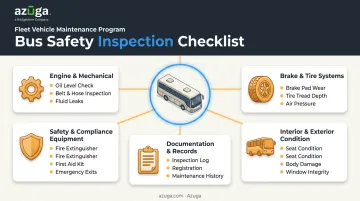
A complete checklist is organized by vehicle system, not thrown together as a random task list. Here's how the major categories break down.
Engine and Mechanical Components
These checks catch mechanical problems before they cause breakdowns or roadside failures.
- Oil levels, coolant, and transmission fluid checks
- Belt and hose condition, exhaust system integrity
- Battery terminals and electrical wiring inspection
- Fuel system leak checks and line inspection
Brake and Tire Systems
Brakes deserve special attention on any passenger vehicle. Inspections should cover the air brake system, brake pad or shoe thickness, and emergency brake function.
Tires matter just as much, and federal rules are specific here. Under 49 CFR 393.75
- Front (steer) tires need at least 4/32 inch of tread depth in a major groove
- All other tires need at least 2/32 inch
- Exposed body ply, sidewall separation, and audible leaks are automatic out-of-service violations
Safety and Compliance Equipment
This category is where regulatory scrutiny runs highest for passenger carriers
- Stop arms, exterior warning lights, and crossing-gate function
- Emergency exits, pushout windows, and roof hatches (federal rules require testing these at least every 90 days)
- Wheelchair lift controls, interlocks, and roll-off protection where applicable
- Fire extinguisher charge status, first aid kit stock, and seat belt condition
Interior and Exterior Condition
These items affect rider comfort and safety, and inspectors often check them first.
- Headlights, brake lights, and interior/step lighting
- Mirror alignment and windshield condition, including cracks or wiper wear
- Seat covers, flooring, and general cleanliness
- Body damage that could affect structural integrity or visibility
Documentation and Records
None of this matters if it isn't written down. A checklist program needs
- Daily driver inspection logs with clear defect reporting
- Technician sign-off records showing repairs were completed
- Historical service history for compliance audits, warranty claims, and resale value
Fleet maintenance software like Azuga's automates this tracking, flagging overdue inspections and centralizing records for your whole team.
How Often Should a Bus Maintenance Checklist Be Completed?
There's no single universal schedule here. Frequency depends on vehicle type, whether school, transit, or charter, and how hard that bus works day to day.
| Frequency | Typical Tasks |
|---|---|
| Daily | Pre-trip and post-trip checks: brakes, tires, lights, fluid levels, safety equipment |
| Weekly | Battery condition, belts, coolant system, transmission fluid, wheelchair lift function |
| Monthly/Seasonal | Brake system depth measurement, suspension check, HVAC service, safety equipment recheck |
| Annual | Full DOT/FMCSA-compliant inspection and documentation review |
Daily pre-trip and post-trip inspections aren't optional for any operator. Passenger-carrying vehicles fall under a written end-of-day inspection requirement, covering brakes, steering, tires, mirrors, and emergency equipment, with records kept for at least three months.
Why Usage Type Changes the Math
High-mileage transit buses rack up wear faster and need shorter intervals on brakes, tires, and fluids. A transit agency like NYC Transit, running thousands of buses daily, reviews maintenance intervals continuously using road call and defect data, not a static calendar. Fleet maintenance software from providers like Azuga brings that same data-driven approach to smaller operators, flagging service intervals based on actual mileage and engine hours instead of guesswork.
Charter buses face a different problem: long idle periods. Extended downtime between trips accelerates battery drain and fluid degradation even without mileage racking up, so idle-heavy fleets need extra attention on those specific systems.
Regardless of use case, the 12-month federal inspection under 49 CFR 396.17 remains the compliance floor. Manufacturer-recommended mileage and engine-hour intervals should layer on top of that, not replace it.
Preventive vs. Reactive Maintenance: Why the Checklist Matters
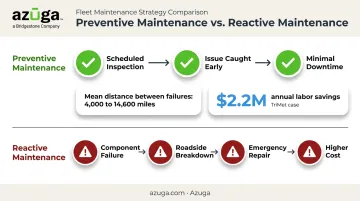
Preventive, checklist-driven maintenance means catching issues on a schedule. Reactive maintenance means fixing things only after they break, usually at the worst possible time.
The gap between the two isn't small.
| Approach | Trigger | Typical Outcome |
|---|---|---|
| Preventive | Scheduled inspection | Issue caught early, minimal downtime |
| Reactive | Component failure | Roadside breakdown, emergency repair, higher cost |
TriMet's transit fleet offers one of the clearest examples: after revising its preventive maintenance program, the agency raised its mean distance between failures from 4,000 to 14,600 miles.
The change also delivered $2.2 million in annual labor savings. That's not a universal guarantee, but it shows what's possible when inspections happen on schedule instead of after something fails.
Small issues compound fast when checklists get skipped
- A minor fluid leak becomes an engine failure mid-route
- Slightly worn tires become a blowout during peak traffic
- A flickering interior light becomes a full electrical fault at the worst time
Reactive repairs also cost more than the parts and labor. A bus stuck on the shoulder means a missed route, a scrambled substitute vehicle, and, depending on the fleet, a parent or passenger complaint that lands on someone's desk. Preventive checklists don't eliminate every breakdown, but they shrink the odds dramatically.
Building an Effective Bus Maintenance Checklist Program
A checklist only works if someone owns it and follows through consistently. Here's how to structure that.
Assign Clear Ownership
- Drivers handle daily visual and pre-trip checks: fluids, lights, tires, safety equipment
- Technicians own scheduled mechanical work: brake system testing, suspension checks, engine diagnostics
Blurring these lines is where checklist programs usually break down. Everyone needs to know exactly what's theirs.
Set Intervals Using Real Data, Not Guesswork
Mileage, engine hours, and calendar time all matter, particularly for idle-heavy routes like school bus runs where engine hours can outpace mileage. This is where telematics platforms earn their keep.
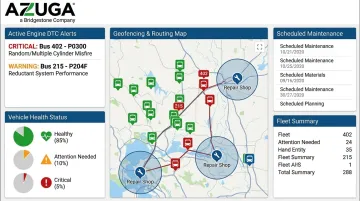
GPS fleet management tools like Azuga support this directly. The platform's OBD-II device pulls real-time engine data and diagnostic trouble codes (DTCs) straight from the vehicle's onboard computer. That information then surfaces through daily alerts and a maintenance dashboard. Fleet managers can
- Set service reminders tied to mileage or engine run time
- Get automated alerts before small issues become expensive repairs
- Use geofencing to route a flagged vehicle straight to the shop
One commercial driver training fleet using Azuga follows this exact workflow. Their fleet director monitors DTC alerts on vehicles subjected to heavier-than-average wear. When an issue appears, geofencing around the repair shop helps coordinate timely drop-offs with on-duty mechanics, catching problems before they become downtime.
Common Mistakes That Undermine Checklist Programs
- Inconsistent documentation — verbal confirmations instead of written logs
- Ignoring OEM-recommended intervals in favor of a generic schedule
- Delaying minor repairs until they escalate into major failures
A checklist that's followed inconsistently is barely better than no checklist at all.
A well-structured, consistently followed checklist protects passengers, controls repair costs, and keeps buses on the road longer. Skipping it doesn't save time, it just moves the cost to a worse moment.
Frequently Asked Questions
What should be on a bus maintenance checklist?
A complete checklist covers engine and mechanical systems, brakes and tires, safety and compliance equipment, interior/exterior condition, and documentation like daily inspection logs and service records.
How often should a bus maintenance checklist be completed?
Daily pre-trip and post-trip checks are essential for every bus. Weekly, monthly, and annual tasks layer on top based on usage intensity and the federal 12-month inspection requirement.
Who is responsible for completing bus maintenance checklists?
Drivers typically handle daily visual and pre-trip checks, while trained technicians manage scheduled mechanical work like brake testing and engine diagnostics.
What's the difference between a bus maintenance checklist and a daily inspection?
A checklist is the overarching system spanning multiple frequencies—daily, weekly, monthly, and annual. A daily inspection is just one specific execution of that system on a given day.
What happens if bus maintenance checklists are skipped or ignored?
Skipped checklists lead to missed defects, roadside breakdowns, DOT citations, and higher long-term repair costs. Passenger safety incidents become far more likely without regular inspections.
Can bus maintenance checklists be managed digitally?
Yes. Platforms like Azuga's fleet maintenance software improve consistency, create audit-ready records, and send automated alerts, capabilities that paper logs struggle to match.