
Businesses managing commercial vehicles face real pressure points
- Rising fuel and maintenance costs eating into margins
- Accident liability and unpredictable insurance premiums
- DOT/FMCSA compliance risk and paperwork overload
- Inefficient routes wasting driver hours and fuel
U.S. commercial fleet vehicle sales hit 351,826 units through May 2026, up 7% from the same period in 2025 — a signal that fleets keep growing, and so does the complexity of running them (Automotive Fleet). This guide breaks down what commercial fleet management actually involves, its core pieces, the benefits of doing it well, and how GPS telematics software solves the everyday headaches.
Key Takeaways
- Full-lifecycle fleet management covers acquisition, maintenance, compliance, safety, and driver oversight
- DOT/FMCSA rules kick in above 10,001 lbs GVWR, or when hauling passengers or hazmat
- GPS telematics lowers accident risk, fuel waste, and day-to-day admin load
- Commercial fleet vehicle sales grew 7% year-over-year through May 2026
What Is Commercial Fleet Management?
Commercial fleet management is the ongoing process of overseeing every vehicle a business owns or leases, from the day it's purchased to the day it's sold. That includes maintenance schedules, driver behavior, fuel spend, insurance, and regulatory paperwork.
Not every fleet vehicle is a "commercial motor vehicle" in the legal sense. FMCSA draws a hard line. A vehicle qualifies as a CMV when it:
- Weighs 10,001 pounds or more GVWR or GCWR
- Operates in a combination at 26,001 pounds or more
- Carries more than 8 passengers for compensation, or more than 15 without compensation
- Transports hazardous materials requiring placards, regardless of size
A business can run a fleet of 30 vans and never touch a single FMCSA-classified commercial vehicle. But cross that weight or passenger threshold, and hours-of-service logs, DVIRs, and IFTA reporting become mandatory overnight.
Who Manages Commercial Fleets?
Staffing usually scales with fleet size
- A few vehicles: Owner or office manager tracks maintenance in a spreadsheet
- 26–50 vehicles: A dedicated fleet manager becomes the norm
- 50+ vehicles: Full fleet teams or an outsourced fleet management company
The real trigger isn't a headcount. It's when compliance tracking and maintenance scheduling start eating hours that should go toward running the business.
Core Components of Commercial Fleet Management
Vehicle Acquisition & Lifecycle
Buy or lease? It depends on utilization and cash flow. Open-end leases with fixed or floating terms give businesses flexibility on mileage and remarketing, while ownership builds equity but ties up capital. Either way, right-sizing matters: a landscaping crew doesn't need the same vehicle as an HVAC service tech.
Either way, right-sizing matters: a landscaping crew doesn't need the same vehicle as an HVAC service tech. Match each unit to the job with a few clear checks
- Duty cycle and annual mileage
- Payload, upfit, and tool-storage needs
- Fuel or EV infrastructure at your yards
- Expected hold period and resale value
Compliance & Regulatory Management
This is where fleets get tripped up. Key pieces include
- DVIRs — drivers document vehicle condition before and after each shift; defects must be repaired or certified safe before dispatch
- ELD/HOS tracking — drivers get 11 hours of driving after 10 off-duty, within a 14-hour window
- IFTA reporting — quarterly fuel tax filings based on jurisdictional miles
- CSA/SMS scores — FMCSA's safety scoring system that ranks carriers against peers

Fines aren't small. Hours-of-service violations can run up to $16,000, and hazmat violations can hit $75,000.
Maintenance Programs
Preventative maintenance beats emergency repairs every time. Brake problems alone cause 27% of truck-versus-passenger-vehicle accidents, and staying ahead of service intervals improves fuel economy by as much as 40%. Even proper tire pressure adds up to 3% back in gas mileage.
Even proper tire pressure adds up to 3% back in gas mileage. Those same habits feed directly into your largest controllable line item: fuel.
Fuel & Cost Management
Fuel is typically a fleet's largest controllable expense. ATRI puts 2025 trucking operating costs at $2.336 per mile, up 3.4% year-over-year (ATRI's 2025 operational costs report). Idling, speeding, and off-route driving all inflate that number — and all are fixable with visibility into where vehicles go and how drivers behave.
Driver Safety & Training
A strong safety culture rests on clear policies, ongoing coaching, and consistent accountability — not a one-time onboarding checklist. Build the program around
- Distracted and impaired driving rules with signed acknowledgments
- Telematics- and camera-based coaching on speeding, harsh braking, and following distance
- Incident review with root-cause follow-up, not blame-only write-ups
- Refresher training tied to CSA trends and seasonal risk
Insurance
Commercial fleet insurance differs from personal auto coverage in a few important ways
- Personal policies — usually exclude vehicles used for work
- Business auto — higher liability limits than personal coverage
- Extended use — rented, non-owned, and employee-driven vehicles
- Pricing drivers — fleet size, vehicle class, and driver risk profiles
Benefits of Effective Fleet Management
Effective fleet management pays off in safety, cost control, and day-to-day operations
- Fewer accidents and lower liability when GPS tracking and dashcams support visibility and coaching
- Operational cost reductions of up to 30% from proactive fuel and maintenance management
- Stronger compliance via automated DVIRs, IFTA mileage logs, and HOS tracking that cut manual errors and missed deadlines
- Real-time visibility into location, speed, and idle time so dispatch can adjust on the fly
- Driver exoneration through collision reconstruction and dashcam footage that helps prove fault and reduce litigation costs
Triton Air saw an estimated 20% reduction in fuel expenses and less wear on tires and brakes after adopting fleet telematics. Smith & Solomon saved up to 8 hours a month on IFTA mileage calculations from automated reporting alone.

Dashcam evidence carries real weight in claims. Industry polling found that 50% of fleets used dashcam footage to exonerate a driver within a year, with average claim savings between $5,000 and $25,000 (FleetOwner).
How Fleet Management Software and Telematics Solve These Challenges
Real-Time Tracking and AI Dashcams
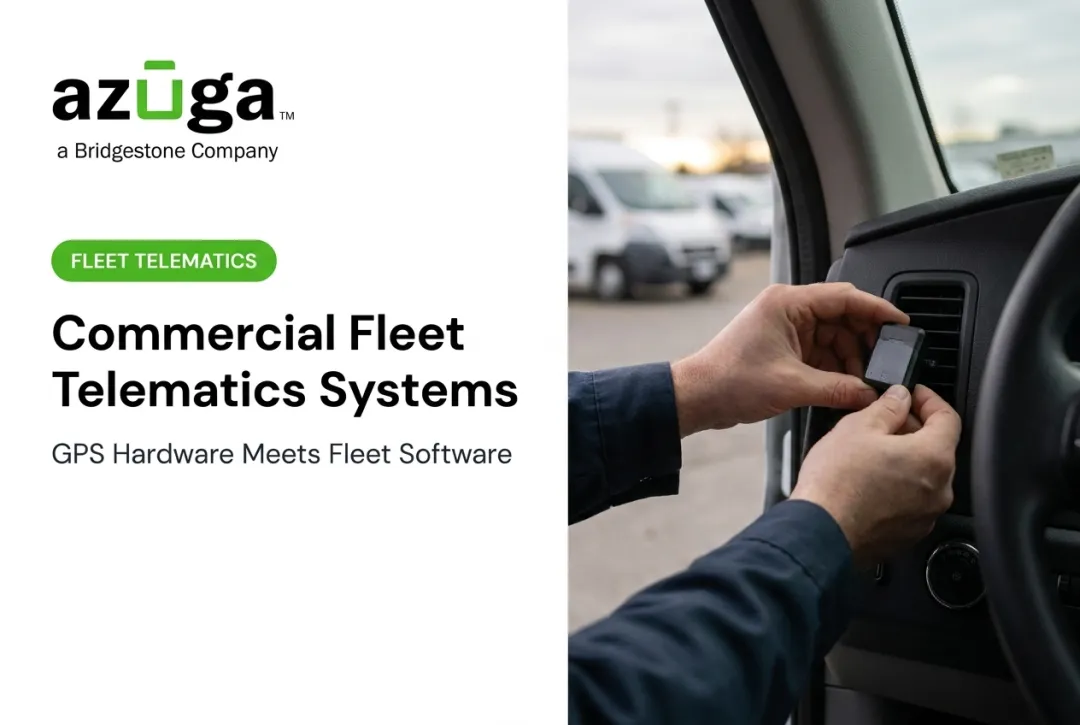
GPS telematics devices (typically plug-and-play OBD-II hardware) install in under a minute and report vehicle location, speed, and behavior at frequent intervals. Some systems track as often as every 30 seconds, giving dispatchers a near-live map instead of a stale one.
AI-powered dashcams add another layer. A neural learning network reviews driver-facing video, flags distraction events, and tags what caused them (phone use, drowsiness, or hard braking). That data feeds directly into coaching conversations instead of getting buried in raw footage nobody watches.
One Dashboard for Everything
Modern software centralizes what used to be scattered across spreadsheets, filing cabinets, and separate vendor logins
- Maintenance alerts for oil changes, engine hours, and mileage thresholds
- Compliance documentation, including eDVIRs and ELD logs
- Fuel card integration that matches spend to routes and driver behavior
- Route optimization using historical traffic and weather data
Where Azuga Fits
Azuga's GPS fleet management platform, backed by Bridgestone, puts tracking, safety video, and compliance in one place. The self-install OBD-II tracker plugs in and reports within 20 seconds, with no technician required.
Customers using Azuga's platform have reported
- 38% average decrease in accidents
- 57% reduction in speeding citations
- $9,462 in average annual savings

The platform meets FMCSA 395.15 requirements for HOS and eDVIR compliance, so fleets stay audit-ready without a second system.
It scales from small operations of 5 vehicles to enterprise fleets exceeding 50,000, with support across construction, HVAC, plumbing, landscaping, and trucking.
Industries That Rely on Commercial Fleet Management
Fleet management challenges show up everywhere vehicles are business assets, not perks. Common industries include
- Construction and heavy equipment
- Plumbing and electrical
- Landscaping
- Pest control
- Utilities
- Trucking and logistics
Each industry has its own priorities. Construction fleets focus on payload and jobsite downtime. HVAC companies need arrival-time accuracy and equipment tracking. Trucking fleets live and die by HOS compliance.
The underlying pressures still look similar across all of them: fuel cost, driver safety, and regulatory paperwork. Predictive maintenance tools help service fleets cut unexpected breakdowns and keep more vehicles on the road.
Frequently Asked Questions
What are fleet operators?
Fleet operators are businesses or individuals responsible for managing a group of commercial vehicles, including maintenance, compliance, and driver oversight. They can be in-house teams or outsourced fleet management companies.
What is the difference between a fleet vehicle and a commercial vehicle?
A fleet vehicle is any vehicle a business owns or leases for operations. A commercial vehicle is a specific DOT/FMCSA classification based on weight (10,001+ lbs GVWR), passenger count, or hazmat transport.
How many vehicles qualify as a fleet?
There's no strict legal minimum, but most definitions start at two or more company-owned or leased vehicles used for business purposes.
Do I need fleet management software for a small fleet?
Yes. Even fleets with just a handful of vehicles benefit from cost savings, compliance tracking, and safety monitoring.
How does GPS tracking improve fleet safety?
GPS tracking gives real-time visibility into vehicle location, speed, and driver behavior like hard braking or speeding. Combined with dashcams, fleets have reported accident reductions averaging 38%.
What is the biggest cost in commercial fleet management?
Fuel and maintenance top the list for most fleets. Telematics helps control both by flagging idling, off-route driving, and maintenance needs before they become expensive problems.