
Introduction
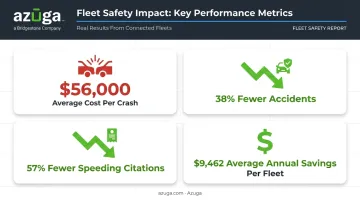
One missed intersection or a skipped brake check can turn a routine delivery into a six-figure liability. A single on-the-job motor vehicle crash costs employers nearly $56,000 on average, according to a 2026 report from the Network of Employers for Traffic Safety.
That figure covers repairs, medical bills, legal fees, and the productivity lost while a truck sits in the shop instead of on the road.
For decades, fleets managed this risk with paper logs and quarterly safety meetings, hoping for the best. That reactive approach is fading. Fleets now rely on fleet safety management systems: platforms that pull real-time data from GPS, dashcams, and vehicle diagnostics to catch risky behavior before it becomes a claim.
This guide covers what these systems do, why they matter, their core components, how to build a program around one, and what to look for when choosing a platform.
Key Takeaways
- A fleet safety management system unites telematics, driver monitoring, and compliance tools to prevent accidents, not just document them
- Structured safety technology like Azuga cuts accidents by 38% and speeding citations by 57% on average
- The strongest programs pair technology (GPS, dashcams, safety scoring) with policy (screening, training, enforcement)
- Choosing the right system comes down to installation ease, integration depth, scalability, and support availability
What Is a Fleet Safety Management System?
A fleet safety management system is a technology platform that monitors driver behavior, vehicle condition, and compliance data to flag road risks before they turn into incidents. Instead of reviewing what went wrong after a crash, it's built to catch warning signs while there's still time to act.
This differs from general fleet management software, which focuses on logistics, fuel spend, and asset location. Safety management systems focus specifically on risk reduction, though the strongest platforms fold both functions into a single dashboard.
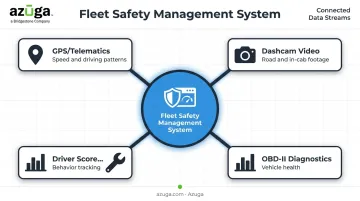
These systems typically pull data from four sources
- GPS and telematics for location, speed, and driving patterns
- Dashcam video for road and in-cab footage
- OBD-II diagnostics for vehicle health
- Driver scorecards that track behavior over time
Older systems generated reports after something already happened. Modern platforms use AI to flag problems as they develop — sending a coaching alert the moment a driver brakes hard or shows signs of distraction, not three weeks later in a monthly summary.
Fleet Safety Management System vs. Traditional Fleet Safety Program
Think of a "program" as the rulebook and a "system" as the engine that runs it. A safety program covers written policies: driver screening standards, training requirements, disciplinary steps. A safety management system is the technology that automates and enforces those policies at scale.
You need both. A policy without enforcement is just a document nobody reads. Technology without policy is data with no consequences attached. Fleets with the strongest safety outcomes build a solid policy foundation first, then use automated technology to make sure it's followed every day, on every route.
Why Fleet Safety Management Matters: Benefits and ROI
Poor fleet safety doesn't just cost the price of a fender-bender. It compounds: higher insurance premiums, legal fees, lost productivity, and a dented reputation with customers who notice when your trucks show up dented too.
The math is worse than most managers assume. Motor vehicle accident claims cost employers over 80% more than the average workers' compensation claim across all injury types, according to a National Council on Compensation Insurance analysis covering claims from 2000 to 2018. A slip in the warehouse and a highway collision aren't in the same cost category.
Catching Problems Before They Become Claims
Real-time driver behavior monitoring changes the timeline. Instead of learning about a habit of harsh braking or rolling stops during a post-accident review, managers get the alert the same day, while coaching still works.
Fleets running Azuga's platform have seen this play out directly: accidents dropped by an average of 38%, and speeding citations fell 57%. Those are outcomes from customers who moved from reactive paperwork to active monitoring, not hypothetical projections.
Compliance and Litigation Protection
Automated tracking of driver hours, inspections, and certifications keeps fleets audit-ready without a dedicated clerk chasing paper logs. That matters when an FMCSA audit or a nosy insurance adjuster comes calling.
Video evidence adds another layer of protection. In serious two-vehicle crashes involving a large truck and a passenger vehicle, the passenger vehicle was assigned the critical pre-crash reason in 56% of cases, according to FMCSA's Large Truck Crash Causation Study. Without footage, that context is easy to lose in a dispute.
Azuga's SafetyCam AI with Collision Reconstruction is built around this exact problem: the company reports that 70% of flagged accidents involving its customers aren't the fault of the fleet driver, and having recorded proof changes the outcome of a claim or lawsuit.
The Ripple Effect on Operating Costs
Safer driving habits burn less fuel and put less wear on brakes, tires, and transmissions. Azuga customers report average annual savings of $9,462 from more effective fleet cost management — a number that adds up fast across a fleet of 50 or 100 vehicles.
Core Components and Features of an Effective Fleet Safety Management System
Comprehensive systems don't operate as a pile of disconnected tools. The strongest platforms integrate several functional layers — driver monitoring, video safety, maintenance alerts, and compliance tracking — into one place, so a manager isn't logging into four different apps to get a full picture of risk.
GPS Tracking and Driver Behavior Telematics
GPS-based telematics tracks speed, harsh braking, rapid acceleration, and idling, then rolls that data into a driver safety score. Scores turn abstract driving habits into something a manager can actually coach against.
Update frequency matters more than most buyers realize. A device that pings every few minutes misses the moment a driver swerves or brakes hard. High-frequency tracking, updating every 30 seconds, gives dispatch real-time visibility into exactly where a vehicle is and how it's being driven, not where it was ten minutes ago.
AI-Powered Dashcams and Video Safety
Beyond location data, dual-facing dashcams record the road and the cab simultaneously. AI analyzes the in-cab feed for distraction, drowsiness, and near-miss events, flagging risky moments without a human reviewing every hour of footage.
Azuga's SafetyCam AI with Collision Reconstruction is a direct example of this in action. When an incident happens, the footage and reconstructed data help establish what occurred. The company reports that 70% of flagged accidents turn out not to be the fleet driver's fault.
Predictive Maintenance and Vehicle Health Alerts
Beyond driver behavior, plug-and-play OBD-II devices don't just track location. They flag mechanical issues, like a check engine alert or a failing battery, before those problems turn into a breakdown on the shoulder of the highway.
Self-install hardware matters here too. A device a manager can install in minutes, without scheduling a mechanic or taking a truck out of service, removes the biggest barrier small and mid-size fleets face when adopting new safety technology.
Compliance and Reporting Dashboards
With drivers and vehicles both covered, centralized dashboards automate documentation for driver hours, inspections, and certifications. That means less time chasing paper logs and more confidence walking into an audit.
For fleets managing hours-of-service rules, this automation is essential. Manual tracking across dozens of drivers invites errors, and errors invite fines.
Building a Fleet Safety Program: Key Steps
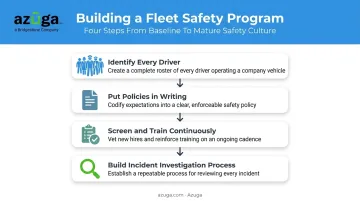
Technology only works as well as the program behind it. Before shopping for a platform, get these fundamentals in place.
- Identify every driver operating on your behalf. Include employees using personal vehicles or rentals for company business, not just those in branded trucks. You can't manage risk you haven't mapped.
- Put your safety policies in writing. Cover seatbelt use, distracted driving, and speed limits explicitly, then enforce them the same way for every driver, every time.
- Screen and train drivers continuously, not just at hiring. Pull driving records periodically and run defensive driving instruction as an ongoing program, not a one-time onboarding checkbox.
- Build a clear incident investigation process. Every accident and near-miss should get analyzed for root cause, not just filed away. That's how one bad incident becomes a lesson that prevents the next five.
Skipping any of these steps leaves a gap that technology alone can't close. A dashcam won't stop a driver from taking a company vehicle home on weekends if there's no written policy against it.
How to Choose the Right Fleet Safety Management System
Not every platform fits every fleet. Here's what actually separates a good fit from a frustrating one.
- Ease of installation and use: Look for self-installable OBD-II devices instead of solutions requiring a professional install and vehicle downtime.
- Integration capability: Your safety system shouldn't create a new data silo. Check whether it connects with the fuel cards, maintenance software, and dispatch tools you already use.
- Pricing and scalability: A five-vehicle crew and a 500-truck fleet have different needs. Azuga uses packages matched to fleet needs that scales as you grow.
- Customer support availability: Safety issues don't wait for business hours. Round-the-clock phone, email, and web support matters when a driver needs help mid-route at 2 a.m.
| Factor | Why It Matters |
|---|---|
| Self-install hardware | Avoids downtime and professional install costs |
| Open integrations | Prevents duplicate data entry across systems |
| Tiered pricing | Scales from small fleets to enterprise operations |
| 24/7 support | Resolves safety issues as they happen |
Before committing, ask any vendor for a live demo using your own vehicle data rather than a canned sales presentation. That's the fastest way to see whether the platform fits how your drivers actually work.
Frequently Asked Questions
What is a fleet safety system?
A fleet safety system is a technology platform combining GPS tracking, driver behavior monitoring, and video safety tools to proactively identify and reduce road risks. It shifts fleets from reacting to accidents to preventing them.
What are the key components of a fleet safety management system?
The four core pillars are telematics/GPS tracking, AI-powered dashcams, predictive maintenance alerts, and compliance reporting. Together they give managers a complete view of driver and vehicle risk.
How much does fleet safety management software cost?
Packaging typically depends on fleet size and feature set. Entry-level solutions use packages matched to fleet needs, scaling up as fleets add video safety and compliance features.
How is a fleet safety management system different from a fleet management system?
Fleet management covers broader logistics functions like fuel, routing, and asset tracking. Safety management systems focus specifically on reducing risk through driver behavior monitoring and video evidence.
What does a fleet safety manager do?
A fleet safety manager develops safety policies, monitors driver compliance, investigates incidents, and analyzes driving data to spot risk trends. They're the bridge between written policy and day-to-day enforcement.
How can fleet safety management software reduce accidents and insurance costs?
Real-time coaching and video evidence reduce risky driving behaviors like speeding and harsh braking before they cause a crash. Fleets using these tools have seen accidents drop by an average of 38% and speeding citations fall 57%, translating directly into lower claims and better insurance rates.