
Without a fuel management system, that spend hides in plain sight. Unauthorized fills, mystery cost-per-vehicle numbers, and the occasional siphoned tank all chip away at margins that were already thin. Most fleet managers don't find out about theft or waste until the monthly fuel bill lands, and by then the damage is done.
This guide breaks down the top fleet fuel management tools for 2026, what separates a good one from a mediocre one, and how to pick the right fit based on your fleet's size and fuel spend patterns.
Key Takeaways
- Fleet fuel management systems combine telematics, fuel cards, and reporting software to catch waste early
- Fuel represents roughly 20% of commercial fleet operating costs, making efficiency gains valuable
- Azuga, Geotab, Samsara, Verizon Connect, and Motive lead the market, each suited to different fleets
- Match your pick to fuel card compatibility, installation complexity, and total cost, not features
What Is a Fleet Fuel Management System?
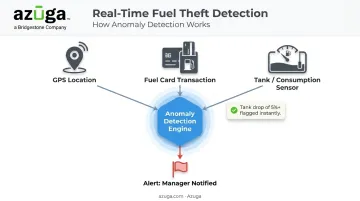
A fleet fuel management system combines three pieces: telematics hardware, fuel card data, and software that reconciles the two. The device tracks where a vehicle actually goes and how much fuel it burns. The card captures every purchase, and the software cross-checks both, flagging anything that doesn't add up.
That gap between "what was purchased" and "what was actually used" is exactly where theft and waste live.
Fuel's share of the bill is bigger than most people assume. According to ATRI's 2026 update on trucking operating costs, fuel accounted for roughly 20.6% of total operating cost per mile for commercial trucking fleets in 2025. That's a benchmark specific to trucking, not every service fleet, but it illustrates the scale of the line item.
From Fuel Cards to AI-Driven Platforms
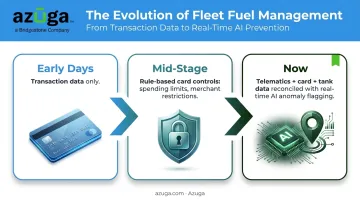
With that much money riding on fuel spend, the tools built to manage it have changed shape fast:
- Early days: A plastic fuel card that captured transaction data and little else
- Mid-stage: Rule-based card controls (spending limits, restricted merchant categories)
- Now: Telematics reconciled against card swipes, tank levels, and GPS location, with AI flagging anomalies as they happen
Today's better platforms don't just alert you after money's gone. Some can auto-decline a suspicious transaction before it clears. That shift, from reactive reporting to active prevention, is the biggest change in this space over the last few years.
Top Fleet Fuel Management Tools for Efficiency
We ranked these five platforms on six factors: fuel card integration depth, real-time visibility, theft and fraud prevention, ease of installation, scalability across fleet sizes, and total cost of ownership.
Azuga
Azuga, now backed by Bridgestone, built its reputation on being the fleet platform that doesn't require an IT department to set up. It serves fleets of every size across construction, HVAC, plumbing, and trucking, with packages matched to fleet size and features.
What sets it apart
- Self-install OBD-II device that plugs into the vehicle's port and starts transmitting in about 20 seconds, no technician required
- Fuel card integration built into higher-tier plans, letting managers track fuel spend automatically instead of reconciling receipts by hand
- SafetyCam AI with collision reconstruction, which helps exonerate drivers and can reduce insurance-related costs
- 30-second tracking intervals, giving far more granular data on speeding, idling, and hard braking than platforms that update every few minutes
That granularity matters for fuel specifically. According to fuel economy research, aggressive driving can cut fuel efficiency by 10 to 40% in stop-and-go traffic, and speeding past 60 mph adds roughly $0.15 to $0.30 per gallon in wasted fuel. Azuga customers report a 57% average reduction in speeding citations, which correlates directly with less fuel burned per mile.
| Category | Details |
|---|---|
| Pricing | packages matched to fleet needs, no long-term contract required |
| Key Features | GPS tracking, fuel card integration, driver safety scoring, dashcams, real-time alerts |
| Best For | Small to enterprise fleets across service industries wanting an all-in-one platform without a steep learning curve |
Geotab
Geotab built its platform as an open ecosystem rather than a closed box. Its Marketplace hosts hundreds of Add-Ins, and its fuel card compatibility list is one of the broadest in the industry, natively supporting WEX, EFS, Comdata, Fuelman, and U.S. Bank Voyager.
Why it stands out
- Deep engine diagnostics that surface fault codes and predictive maintenance alerts alongside fuel data
- Fuel transaction matching by asset ID or cardholder name, flagging mismatches in location, fuel type, or fuel-tank capacity
- Unified dashboard linking fuel consumption directly to maintenance status, so a fuel-efficiency drop can be traced back to a mechanical cause
Geotab packages GO Core and GO both bundle hardware into the subscription with no upfront device or install fee, but the depth of fuel monitoring and IFTA functionality differs between them.
| Category | Details |
|---|---|
| Pricing | Contact for details; packaging varies by configuration |
| Key Features | Engine diagnostics, five native fuel card integrations, IFTA reporting, open API/Marketplace |
| Best For | Enterprise fleets needing deep customization and global fuel card support |
Samsara
Samsara built a connected operations platform that puts GPS, ELD compliance, and fuel tracking behind a single login. It's a favorite among mid-size and large fleets that want to stop juggling three separate vendor logins.
Standout capabilities
- AI-powered driving alerts, with 45+ detection types feeding into dashcams and in-cab coaching
- Configurable fuel-drop alerts, flagging sudden tank drops of 5% or more, a common siphoning signature
- Purchase verification using vehicle proximity, fuel-level rise, and card transaction matching
- Automated IFTA mileage tracking, with partner integrations like Vusion offering full-service fuel-tax filing
According to Samsara's own fleet fuel management documentation, these fuel-drop thresholds run in real time, meaning managers see the anomaly the moment it happens rather than in a weekly report.
One caveat worth flagging: Samsara's small-business program (fewer than 11 vehicles) requires an upfront payment covering a full 3-year software license. That's a very different commitment than a month-to-month deal, so read the fine print before signing.
| Category | Details |
|---|---|
| Pricing | Contact for details; small-business tier requires a 3-year upfront license payment |
| Key Features | Fuel usage reporting, fuel card integrations, real-time idle/speeding alerts, IFTA automation |
| Best For | Mid-size to large fleets wanting a fully integrated telematics and compliance solution |
Verizon Connect
Verizon Connect runs on Verizon's own network infrastructure, which appeals to midsize fleets that want reliability without building their own cellular relationships. Its Reveal platform is built around turning raw telematics data into dollar figures managers can act on.
What it does well
- Wasted Fuel dashboard, which converts idle time directly into a money-based metric instead of just minutes
- Customizable fuel cost reporting, letting managers segment by vehicle, route, or driver
- AEMP 2.0 integration, useful for construction and agriculture fleets running mixed equipment types alongside standard vehicles
- Marketplace apps, including fuel card integrations like the Christensen Fleet Card that align purchases with vehicle location
Verizon reports a 15.9% median reduction in idling time among U.S. Reveal users after implementing its idle-tracking tools. That's Verizon's own user analysis rather than an independent study, but it lines up with what idle-reduction generally does to a fuel bill.
Another point to consider: Verizon Connect publishes separate hardware-service fees, and an early-termination charge can apply if you exit or downsize mid-contract.
| Category | Details |
|---|---|
| Pricing | Contact for details; watch for separate hardware fees and early-termination charges |
| Key Features | Wasted fuel dashboards, fuel efficiency reporting, AEMP 2.0 integration, marketplace apps |
| Best For | Midsize fleets wanting robust reporting alongside compliance management |
Motive
Motive grew out of the ELD compliance world, and that heritage shows in how tightly it couples its fuel card with driver behavior and hours-of-service data.
Notable features
- AI-powered fuel efficiency coaching, using ambient temperature and trip context to target avoidable idling rather than just ranking longest idle events
- Motive Card fraud controls, including location-mismatch detection, tank-capacity checks, and AI-driven auto-declines on suspicious purchases
- Automated IFTA reporting, pulling Motive Card purchases directly into mileage-based tax calculations
- AI dashcams tied into the same driver behavior scoring used for fuel coaching
Motive's idling-coaching update claims it can save fleet managers 1.5 to 3 hours a week previously spent manually reviewing idle reports. Motive doesn't publish named plan tiers; quotes vary by fleet size and features.
| Category | Details |
|---|---|
| Pricing | No published tiers; packages matched to fleet needs |
| Key Features | Integrated fuel card, AI coaching, automated IFTA reporting, driver behavior monitoring |
| Best For | Long-haul trucking fleets managing fuel spend across many drivers |
How We Chose the Best Fleet Fuel Management Systems
The most common mistake fleets make is picking a system based on brand recognition or a long feature checklist, then discovering it doesn't match their fuel spend patterns or fleet size at all. A 300-truck long-haul operation and a 12-van HVAC company need very different tools, even if both are technically "fleet fuel management systems."
We weighed each platform on
- Fuel card integration breadth - how many card providers connect natively, without a third-party workaround
- Real-time visibility - whether alerts fire the moment an anomaly occurs, not in a batch report hours later
- Theft and fraud detection accuracy - whether the system just flags an issue or can actively decline a fraudulent purchase
- IFTA and compliance automation - how much manual mileage and fuel-tax work gets eliminated
- Installation complexity - self-install OBD-II versus professional hard-wire installs
- Total cost, including hidden fees - contract length, hardware charges, and early-termination penalties
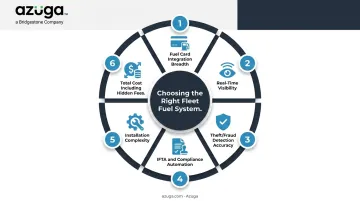
Each factor ties back to a business outcome. Real-time visibility, for example, shortens the gap between a fuel anomaly happening and a manager actually doing something about it.
A weekly report showing a tank dropped 15% overnight is interesting, but a real-time alert that fires the moment it happens lets you call the driver, check the GPS location, and stop the bleeding before it repeats.
Conclusion
Choose a fleet fuel management system based on fit, not feature lists. Look for a system that matches your fleet's size, your industry's fuel patterns, and the fuel card relationships you already have.
Before signing anything, evaluate ongoing performance, not just the sales pitch. Ask about scalability as your fleet grows, and get the total cost of ownership in writing, including hardware, installation, and what happens if you need to exit the contract early.
If you're just starting to build fuel visibility into your operation, Azuga's plug-and-play GPS platform is worth a look. It's built for fleets that want fuel and driver data flowing on day one, without a multi-week installation project standing in the way.
Frequently Asked Questions
What are the best fleet fuel management systems?
Top options include Azuga, Geotab, Samsara, Verizon Connect, and Motive. The best choice depends on your fleet size, existing fuel card relationships, and budget.
What is fleet fuel management?
It's the combined use of telematics, fuel cards, and software to track fuel purchases, monitor consumption against actual vehicle use, and flag unauthorized or fraudulent activity.
How much does a fleet fuel management system cost?
Always factor in hardware, installation, and any hidden or early-termination fees.
What is the difference between a fuel card and a fuel management system?
A fuel card is simply a payment method that captures transaction data. A fuel management system is the analytical layer that combines that transaction data with telematics to flag issues and generate reports.
Do I need to install hardware on every vehicle for fuel tracking?
Most telematics-based systems use a simple OBD-II plug-in device with no wiring required. Fuel-card-only solutions need no installation at all, but they also can't verify GPS location or actual consumption.
How do fleet fuel management systems help prevent fuel theft?
They cross-reference GPS location, fuel card transactions, and expected consumption baselines. A mismatch, like a fill-up 40 miles from the vehicle's actual location, gets flagged as an anomaly for a manager to investigate.