
The tool itself isn't the hard part. Choosing the right metrics, avoiding driver pushback, and turning raw telematics data into actual coaching conversations — that's where most programs stall out.
Globally, roughly a third of fleet operators have viewed telematics monitoring as too intrusive when it's rolled out without explanation, according to a PTOLEMUS commercial fleet telematics study. That resistance is preventable. This guide walks through exactly how to set up, launch, run, and follow through on a driver scorecard program — not just what one is.
TL;DR
- Use scorecards continuously, not as a one-time reaction to an accident
- Prerequisites: telematics or dashcam hardware, weighted metrics, and a written driver communication plan
- Core steps: set metrics, run a baseline, launch, review, monitor, and coach drivers
- Best practice: pair data with recognition and adjust for weather, traffic, and route type
- Payoff: consistent use lowers risky events and cuts insurance and fuel costs over time
When Should You Use Driver Scorecards?
Scorecards work best as an ongoing monitoring habit, not something pulled out only after a complaint or a fender-bender. Pulling up scores reactively turns the tool into a blame exercise instead of a coaching one.
Appropriate uses include:
- Ongoing coaching conversations tied to specific behaviors
- Recognizing and rewarding your safest drivers
- Spotting early risk patterns before they become incidents
Common misuse looks like:
- Reviewing scores only after something goes wrong
- Using a single low score to justify termination without context
- Checking scores irregularly, so drivers never know what's expected
These habits hold true no matter how many vehicles you run — what actually shifts is fleet risk profile, not whether scorecards belong in the routine. A five-truck HVAC company and a 200-vehicle delivery fleet can both benefit — the difference is in review frequency and metric weighting, not whether to use the tool at all.
How weighting typically shifts by industry:
- Construction and utility fleets tend to weight harsh driving events and idling heavier, since vehicle weight and job-site conditions change braking dynamics
- Trucking and delivery fleets usually prioritize speeding and hours-of-service compliance
- service fleets often add productivity metrics like windshield time alongside safety scores
What You Need Before Using a Driver Scorecard
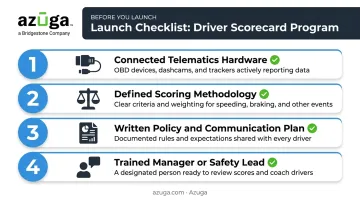
Before you turn scoring on, get four things in place. Skipping any one of these tends to show up later as driver distrust or inconsistent data.
Connected telematics hardware. You need an objective data source, such as a plug-and-play OBD-II device or dash cam system, to capture driving events accurately. Azuga's OBD-II device plugs into a vehicle's OBD port and starts transmitting data in about 20 seconds, with no mechanic visit or downtime required, removing a common barrier for smaller fleets that can't take trucks out of service for installation.
A defined scoring methodology. Decide which metrics matter most, such as safety, productivity, and compliance, then weight them to match your fleet's actual goals before scoring goes live.
A written policy and communication plan. Drivers should know exactly what's being measured and why before their first score appears. This single step does more to prevent pushback than anything else on this list.
A trained manager or safety lead. Someone needs to translate scores into specific coaching conversations. A number on a dashboard doesn't change behavior; a conversation referencing an actual event does.
How to Use a Driver Scorecard (Step-by-Step)
Correct usage follows a sequence. Skip the baseline period, or skip transparency at launch, and you'll end up with a program drivers resent instead of one they trust.
Setup and Preparation
Select and weight your metrics before flipping the switch. Common inputs include speeding, harsh braking, rapid acceleration, idling, hours-of-service violations, and seatbelt use.
The most common setup mistake: over-weighting a single metric, or scoring on raw event counts instead of a normalized rate. A driver logging 50,000 miles a month will rack up more raw events than one logging 5,000, even if they're equally safe. Score per 100 miles or per hour driven, not by total count.
Initiating Use (Launch and Baseline)
Start with a baseline collection period, commonly 30 days, though some enterprise fleet safety teams use a full three-month window to understand natural driving patterns before activating any alerts. Longer baselines produce more reliable starting points, especially for fleets with seasonal route changes.
During this window
- Collect data without attaching penalties
- Communicate the rollout openly, ideally through a driver-facing app or printed report
- Confirm every vehicle is transmitting consistent data before moving to active scoring
You'll know initiation went well when data flows consistently across the fleet and drivers can independently pull up and describe their own scores. Azuga's driver app, for instance, gives drivers the same score view fleet managers see, updated daily, which removes the "secret grading" feeling that fuels resistance.
Operating the Scorecard Correctly
Review scorecards on a fixed cadence rather than sporadically. Higher-risk fleets (think urban delivery or older Class 8 trucks) typically warrant weekly reviews. Lower-risk fleets can often run monthly.
One regional freight fleet distributed scorecards every two weeks and paired that cadence with immediate coaching whenever a driver hit a high-risk classification. This mirrors Network of Employers for Traffic Safety's guidance, which recommends that high-risk drivers get supervisor attention right away rather than waiting for the next scheduled review.
A simple band structure to interpret scores:
| Band | Typical Action |
|---|---|
| Excellent | Public recognition, reward eligibility |
| Good | Routine check-in, no intervention needed |
| Moderate risk | Scheduled coaching conversation |
| High risk | Immediate coaching, follow-up review within days |
Consistent cadence is what turns a scorecard from a report into an accountability system.
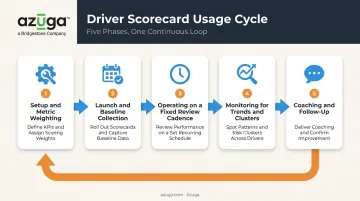
Monitoring During Use
Between formal reviews, watch for
- Trend shifts: a driver sliding from good to moderate over several weeks
- Repeat offenders in the same category (same driver, same behavior, week after week)
- Clusters tied to a specific route, shift, or time of day
Watch also for signs the program itself is breaking down: drivers disengaging from feedback, gaming the system by driving differently only when they think they're watched, or scores that don't account for weather and traffic. A driver braking hard in a snowstorm isn't the same risk as one braking hard on a dry highway. Normalize for conditions, or you'll coach the wrong behavior.
Completing the Cycle: Coaching and Follow-Up
Close every review with specific, data-backed coaching. Reference the actual event, such as "hard braking on Route 9 at 4:15 pm, three times this week," rather than just citing a number. A peer-reviewed study of commercial driver monitoring found that supervisory coaching paired with event video produced a 37% reduction in risky driving events compared to feedback without that specificity, according to research published in PMC.
Set a follow-up review interval before ending the conversation. Skipping this step is the single fastest way to let behavior regress, and it tells drivers the program isn't serious.
Best Practices for Using Driver Scorecards Effectively
Be transparent from day one. Explain what's measured, why it matters, and how the data gets used, before scores exist. This one habit prevents most of the resistance fleets encounter.
Lead with recognition, not just flags. Rewards, leaderboards, and public shout-outs drive better adoption than a program built solely around catching mistakes. At Air Engineers, a fleet manager began presenting monthly driver scores and rewarding the top three performers with gift cards. The awkward exercise became something the team looked forward to, and scores improved steadily.
Normalize for conditions. A scorecard that doesn't adjust for weather, traffic, or route type will misjudge drivers stuck with the toughest routes.
Coach with events, not just scores. "Your score dropped" doesn't tell a driver what to fix. "You had four hard-brake events near the Elm Street intersection" does.
Revisit weighting periodically. Fleet goals shift, new regulations show up, routes change. A scoring model set a year ago may no longer reflect current priorities.
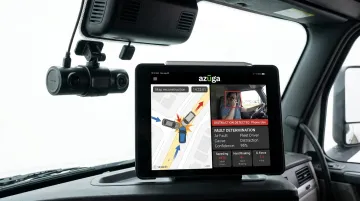
Add fairness with collision data. Scorecards flag risky patterns, but they can't always explain a single incident. Azuga's SafetyCam AI with Collision Reconstruction pairs dash cam footage with AI-driven distraction detection to help pinpoint fault after a crash. Azuga's product data shows roughly 70% of accidents aren't the fleet driver's fault, protecting good drivers from being penalized for incidents they didn't cause.
Conclusion
Using a driver scorecard well comes down to discipline, not analytics software. The fundamentals stay simple
- Set clear, measurable metrics
- Run a real baseline before comparing drivers
- Launch the program transparently
- Review scores on a fixed schedule
- Follow every coaching conversation with a specific check-in plan
Fleets that treat scorecards as an ongoing safety and cost-control habit, rather than a report glanced at occasionally, see the steadiest gains in reduced risky events and lower claims costs.
Azuga's fleet management platform brings scoring, driver-facing transparency, gamified rewards, and AI dash cam evidence together in one place, so the discipline part is easier to sustain week after week.
Frequently Asked Questions
What is a driver scorecard?
A driver scorecard is a data-driven performance report that scores individual drivers on measurable behaviors like speeding, harsh braking, and compliance. It turns raw telematics data into a single, trackable rating.
What is the driver grading system?
Most fleets use a banded system (such as excellent, good, moderate risk, and high risk) to translate raw event data into an actionable rating. There's no single industry-standard scale; fleets typically set their own bands based on risk tolerance.
What is a good driver score on a driver scorecard?
Many fleets treat 80 or above on a 0-100 scale as a good benchmark, but this threshold should flex based on your fleet type and risk profile. A construction fleet and a long-haul trucking fleet may set different bars.
How often should fleet managers review driver scorecards?
Weekly reviews suit higher-risk fleets, while monthly works for lower-risk operations. Any driver flagged as high risk should get immediate coaching, not wait for the next scheduled review.
How do you get driver buy-in for a scorecard program?
Be transparent about what's measured and why before scoring starts, and give drivers visibility into their own scores through a driver-facing app. Pairing feedback with recognition, not just penalties, improves acceptance of the program.
What metrics should be included in a driver scorecard?
Core metrics typically include speeding, harsh braking or acceleration, idling, seatbelt use, and hours-of-service compliance. Which ones carry the most weight should reflect your specific fleet goals and industry.