
That's why GPS vehicle tracking has moved from "nice-to-have" to standard operating equipment across construction, HVAC, plumbing, and trucking. In fact, telematics adoption reaches 54% among large trucking fleets, 51% among medium fleets, and 37% among small fleets, according to a Commercial Carrier Journal analysis of Penske's 2022 fleet survey.
This guide covers how GPS tracking works, the real business benefits, the legal landscape, which industries benefit most, and how to pick a solution that fits your fleet.
Key Takeaways
- GPS tracking delivers real-time visibility into vehicle location, driver behavior, and engine health
- Fleets recover ROI through fewer accidents, lower fuel costs, and fewer speeding citations
- Tracking company-owned vehicles for business purposes is legal across the US
- Choose systems that stay affordable, scale with your fleet, and install without a technician
- Azuga pairs GPS tracking with safety tools and cost controls, with customers cutting accidents by 38% on average
What Is GPS Vehicle Tracking and How Does It Work?
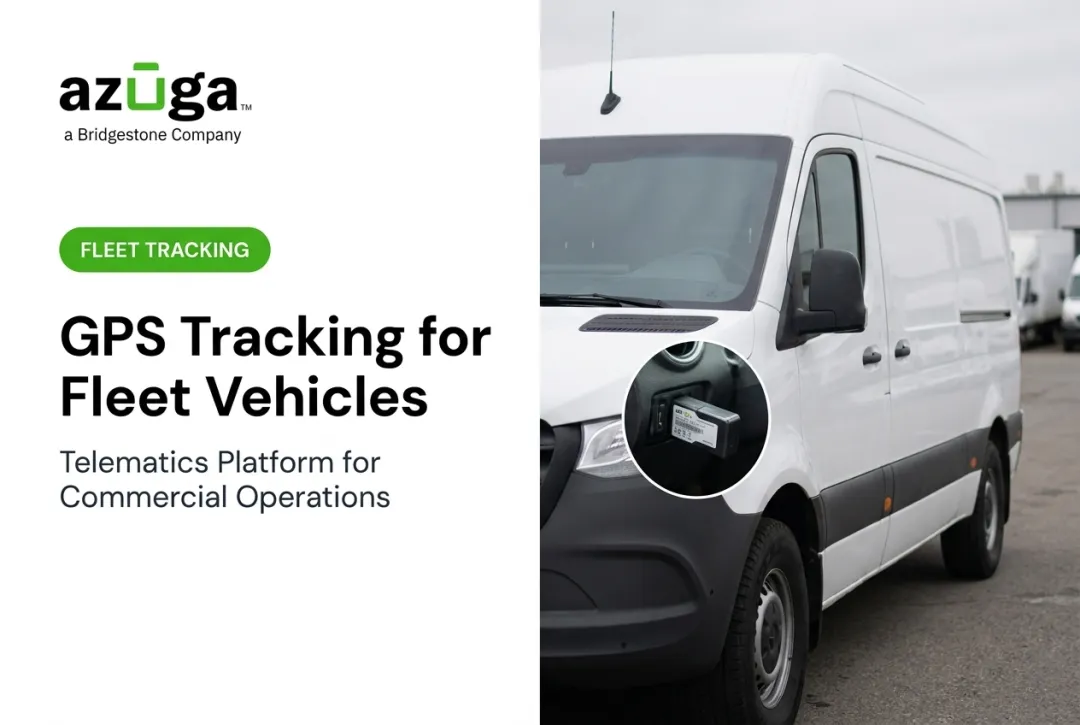
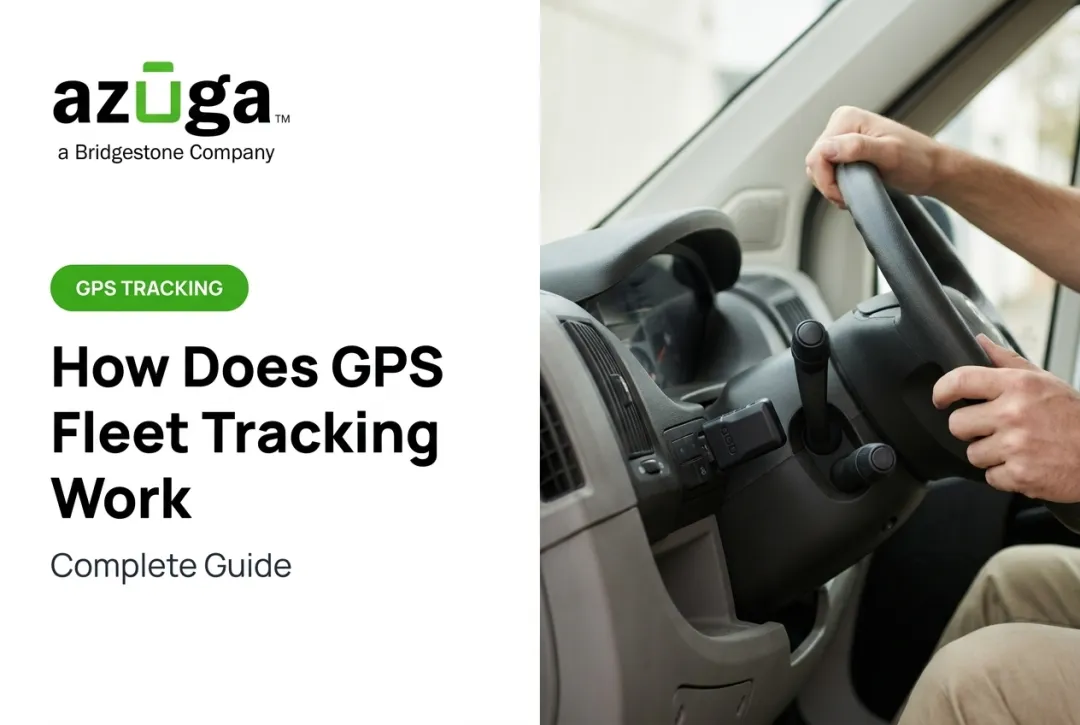
GPS vehicle tracking uses a small hardware device, usually a plug-and-play OBD-II tracker, installed in each vehicle. It reads engine and location data, then sends it over a cellular network to a cloud dashboard your team can access from anywhere. Three components make this work
- Hardware: The tracker itself, often installed by plugging into the vehicle's OBD-II port in under a minute
- Connectivity: A built-in cellular modem (typically 4G LTE) transmits data; GPS satellites provide timing and position signals the receiver converts into coordinates
- Software layer: The dashboard where raw pings become maps, reports, and alerts Update frequency matters more than most buyers realize. Basic systems might ping every few minutes. Better systems update every 30 seconds or less, so dispatchers see where a vehicle is right now, not five minutes ago. Azuga's OBD-II devices read engine data every second and transmit location every 30 seconds. That interval is tighter than the "5-30 second" range many vendor guides call high-frequency tracking. Modern platforms have moved well past dot-on-a-map tracking. Expect driver behavior scoring, dashcam integration, and predictive maintenance alerts that flag problems before they become breakdowns.

Types of Vehicle Tracking Technology
- GPS trackers — standard for over-the-road location and route tracking
- BLE (Bluetooth Low Energy) beacons — track equipment and assets inside a vehicle or job site, not the vehicle itself
- Satellite tracking — covers fleets in remote areas or dead zones where cellular coverage drops out
Top Business Benefits of GPS Vehicle Tracking
Improved Driver Safety and Fewer Accidents
Real-time behavior monitoring catches speeding, hard braking, and harsh acceleration as they happen—not days later in a report. Fleets using this data see fewer crashes and cleaner driver records
- Azuga customers report 38% fewer accidents on average and 57% fewer speeding citations
- In a survey of 1,000+ fleets, 92% said telematics had a positive fleet impact
- Accident costs dropped an average of 21.1% across those fleets

Lower Fuel and Operational Costs
GPS tracking trims fuel spend by exposing idle time, inefficient routes, and unauthorized trips.
- Davenport Energy (51 vehicles) cut idling by 64% in the first month after tracking and coaching drivers
- Azuga Fleet customers typically save up to 15% on fuel
- Unauthorized vehicle use drops about 12%
Reduced Insurance Costs and Liability Protection
Safer driving records can lower your premiums. Diamond Engineering secured a 10%+ insurance discount by sharing asset-location and driver-behavior data with its insurers. Video telematics strengthens that case when a claim is disputed. Azuga's SafetyCam AI with Collision Reconstruction provides footage and data that can show a driver wasn't at fault—important when 34% of fleets believe they've been hit by fraudulent claims.
Increased Productivity and Better Customer Service
Accurate ETAs and tighter routing keep jobs on schedule and customers informed.
- HVAC contractor Hurley and David cut employee overtime 10% after installing telematics
- All-Lift uses Azuga ignition on/off timestamps to confirm technician arrival and bill more accurately
Simplified Fleet Management and Compliance
Automated reporting, geofencing, and digital trip logs replace much of the manual paperwork. Azuga's platform supports hours-of-service, DVIR, and OSHA compliance tracking, along with mileage capture and digital timecards. Those operational gains show up in cost savings. Azuga customers save an average of $9,462 annually through better fleet-cost management. Kitsap Garage Door Company saw strong ROI after switching to Azuga's G2 tracker.

Is GPS Tracking Legal for Business Vehicles?
Yes. Tracking company-owned vehicles for legitimate business purposes, like safety monitoring, route efficiency, and theft prevention, is legal across the United States.
The key distinction is ownership
- Business-owned vehicles: Employers generally have wide latitude to track vehicles they own or lease
- Personal vehicles: Tracking someone else's personal car without consent can trigger state criminal statutes
State law follows that ownership line. California's Penal Code 637.7 prohibits tracking without consent but exempts owners who track their own fleet. Texas Penal Code 16.06 targets devices installed on vehicles owned by another person, not company-owned assets.
Even where notification isn't strictly required, put the policy in writing. Document tracking in the employee handbook and cover it during onboarding to head off most disputes before they start.
Which Industries and Business Types Benefit Most?
Service fleets and vehicle-heavy operations see the fastest returns
- Construction & heavy equipment — asset visibility across job sites and prevention of unauthorized equipment use
- HVAC and electrical — route efficiency and overtime reduction, as seen with Hurley and David's 10% overtime cut
- Plumbing — dispatching the closest available tech and sending customers real-time ETAs
- Pest control — Azuga customers average 29% less idling, 31% fewer speeding events, and 36% fewer hard-braking incidents
- Landscaping — route optimization and visibility across crews and job sites
- Towing, waste management, and trucking — route efficiency plus theft and unauthorized-use prevention
Fleet size is not a barrier. Azuga supports operations from 5 vehicles to 50,000, with plan tiers built for both small businesses and enterprise fleets.

service teams also use tracking to verify time-on-site, confirm job completion, and settle billing disputes without a phone call.
How to Choose the Right GPS Tracking Solution
Compare vendors on the four criteria below before you lock in a contract.
1. Ease of installation Look for plug-and-play OBD-II devices you can install yourself—no shop visit and no vehicle downtime. Azuga’s device installs in about 20 seconds without professional help.
2. Pricing and scalability Avoid rigid, one-size-fits-all plans. Compare per-vehicle monthly rates and whether pricing flexes as the fleet grows. Azuga's tiers run from BasicFleet to SafeFleet to CompleteFleet, with packages matched to fleet needs by fleet size.
3. Feature depth Confirm the platform covers the workflows you actually run
- AI dashcams and driver safety scoring
- Predictive maintenance alerts
- Integrations with fuel cards, ERP, or service fleets platforms (Azuga connects with 75+ tools, including ServiceTitan and Procore)
4. Support quality 24/7 phone, email, and web support beats a limited-hours help desk when a vehicle issue hits at 9 p.m. on a Friday. Verify channels and after-hours coverage before you sign.
Score each option on install effort, price flexibility, safety and maintenance tools, integrations, and after-hours support. Azuga pairs self-install hardware, AI-powered SafetyCam, and 30-second update intervals on a Bridgestone-backed platform.
Frequently Asked Questions
Is it illegal to put a tracker on my car?
Tracking a company-owned vehicle for business purposes is legal in the US. Tracking someone else's personal vehicle without consent can violate state law. Document your policy clearly with employees to stay protected.
What is the best vehicle tracking software for company vehicles?
Look for easy installation, high-frequency real-time tracking, dashcam safety features, and pricing that scales with fleet size. Azuga is built around those capabilities for fleets of all sizes.
How much does GPS fleet tracking cost for a small business?
packages matched to fleet needs models let small fleets start affordably and scale as they grow.
How quickly can a business see ROI from GPS tracking?
Many businesses see returns within months through fuel savings, fewer accidents, and lower insurance premiums. One customer saw immediate strong ROI.
Can GPS tracking help with insurance claims and disputes?
Yes. Historical location data and collision reconstruction footage can exonerate drivers and prevent costly false claims or litigation.
Do employees need to be notified about vehicle tracking?
It's not always legally required for employer-owned vehicles, but transparent communication and a written policy build trust and help you avoid disputes down the line.