
For fleet managers, the pain points pile up fast: fuel prices that never seem to go down, engines wearing out faster than expected, drivers who need heat or AC during breaks, and a patchwork of state and city idling laws that change at every county line. Add rising fines and community complaints about diesel noise, and idling stops being a minor annoyance. It becomes a real line item.
This guide breaks down what idle reduction technologies (IRTs) actually are, why idling costs more than most fleet owners realize, the main hardware categories available today, and practical strategies — including telematics-based coaching — to cut idle time across your entire fleet.
Key Takeaways
- Fleets waste over 6 billion gallons of fuel annually on unnecessary idling nationwide
- Long-haul trucks idle roughly 1,800 hours per year, burning about 1,500 gallons of fuel
- Four EPA SmartWay categories cover most IRT hardware: APU/GS, FOH, BAC/TSS, and TSE/EPS
- Combining hardware with telematics-based driver coaching produces the deepest, most consistent idle-time cuts
- Anti-idling fines range from a few hundred dollars to $18,000, depending on jurisdiction
What Are Idle Reduction Technologies (IRTs)?
The EPA defines an IRT using three criteria. The technology must:
- Be installed on a vehicle, piece of equipment, or at a fixed location
- Reduce unnecessary main-engine idling
- Provide heat, air conditioning, or electrical power without running the main engine
Fleets generally approach idle reduction two ways. Behavioral strategies rely on driver training and incentive programs to change habits. Technology-based IRTs are physical devices or software systems that reduce idling automatically, regardless of driver behavior. Most successful fleets use both.
SmartWay Verification and DERA Funding
Not every idle-reduction product carries the same weight with regulators or grant programs. The EPA's SmartWay Verified Technology program tests specific devices against technology-specific criteria before adding them to an official verified list. A verified APU or heater has documented fuel savings and emissions data behind it — an unverified one hasn't been tested to the same standard.
This matters for funding. The Diesel Emissions Reduction Act (DERA) program offers grants and rebates for projects that cut diesel emissions, and eligible idle-reduction projects typically must use EPA- or CARB-verified technology. Recent state grant cycles allowed up to 25% funding for a standalone verified idle-reduction device, rising to 100% when paired with a new exhaust retrofit.
IRTs aren't one-size-fits-all across vehicle classes, either
- Light-duty vehicles (cars, service trucks) idle mostly for driver comfort
- Medium-duty trucks idle for power take-off needs: lift buckets, pumps, lighting
- Heavy-duty long-haul trucks idle largely because of mandatory rest periods under FMCSA rules
The True Cost of Idling: Why It Matters for Your Fleet
Idling doesn't just burn fuel sitting still. It steadily drains money through several channels most fleet managers never fully tally up.
Fuel is the obvious cost. A long-haul sleeper-cab truck idles an average of 1,800 hours annually, consuming around 1,500 gallons of diesel in the process, without moving a single load of freight. Main-engine idling burns between 0.6 and 1.5 gallons per hour, averaging 0.8 gallons per hour across the industry.
Maintenance costs climb too. Idling adds engine hours without adding mileage, which means
- More frequent oil and filter changes triggered by run-time thresholds
- Faster oil dilution from incomplete combustion at low RPM
- Accelerated wear on engine components designed for driving conditions, not stationary running
These maintenance costs are only part of the picture. Idling also carries environmental and regulatory exposure that can hit your fleet's bottom line even harder.
Emissions and Compliance Exposure
Long-duration idling (defined by the EPA as running the main engine more than 15 consecutive minutes while parked) carries real environmental weight. Nationwide, truck idling produces:
- 1 billion gallons of wasted fuel annually
- 11 million tons of CO2 emissions
- 180,000 tons of NOx emissions
- 5,000 tons of particulate matter
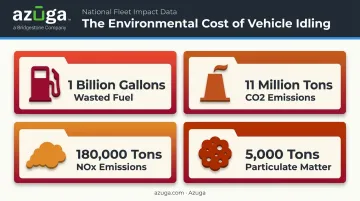
These figures come from EPA data on idling reduction technologies.
Regulators aren't shy about enforcing anti-idling rules, either. New York's Attorney General fined Hendrickson Bus Corp $10,000 after documenting just seven illegal idling instances at school facilities, a clear reminder that enforcement can be swift and costly.
Beyond fines, excess idling generates noise complaints near residential areas and schools, invites community pushback, and complicates ESG reporting for fleets trying to demonstrate genuine sustainability progress.
Types of Idle Reduction Technologies
IRT hardware ranges from small onboard add-ons to infrastructure installed at truck stops. The right choice depends on your fleet's routes, budget, and why your vehicles idle in the first place.
Auxiliary Power Units and Generator Sets (APU/GS)
APU and GS units run a small, EPA-certified secondary engine that supplies heat, cooling, and electrical power without touching the main engine. Common in long-haul sleeper cabs and police cruisers, these units typically cost $8,000 to $12,000 installed but burn only 0.2 to 0.5 gallons per hour — a fraction of main-engine idling.
Fuel-Operated Heaters (FOH/Direct-Fired Heaters)
FOHs pull fuel from the main tank to provide heat only, often paired with a separate cooling system. They're lightweight, cheap to install (,500), and burn as little as 0.04 to 0.08 gallons per hour. Trucks and school buses use them heavily for cold-weather comfort without full-engine idling.
Battery Air Conditioning and Thermal Storage Systems (BAC/TSS)
BAC systems run cooling off battery power, usually paired with an FOH to cover heating needs. TSS units take a different approach: they store heat energy collected while the vehicle is driving, then release it later to power cabin climate control. Installed costs for storage cooling systems run $8,500 to $8,800.
Truck Stop and Off-Site Electrification (TSE/EPS)
TSE lets trucks plug into shore power at truck stops instead of running the engine. Costs to drivers range from roughly $0.99 per hour for power-only service up to $1.85 per hour for full climate control. On the infrastructure side, each electrified parking space can save an estimated $3,240 in annual fuel costs, based on EPA's technical bulletin assumptions.
Automatic Stop-Start and Telematics-Based Idle Management
Automatic engine stop-start systems shut the engine down after a preset idle threshold while preserving critical systems like hazard lights. For fleets that can't retrofit every vehicle with hardware, GPS-based platforms fill the gap.
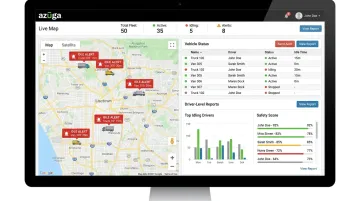
Azuga's fleet tracking software, for example, tracks vehicle activity at high-frequency intervals and flags excessive idling in real time. It generates driver-level idle reports fleet managers can act on immediately, with no new hardware installation required. This makes it a practical complement to physical IRTs, especially across mixed fleets where retrofitting every truck isn't realistic.
Idle Reduction Strategies by Vehicle Class
Idling looks different depending on the vehicle type and why the engine's running.
Light-duty vehicles (cars, vans, light service trucks) mostly idle out of habit or comfort. Simple rules go a long way
- Shut off the engine when parked more than 10 seconds
- Skip remote starters for routine warm-ups
- Watch for posted no-idle zones near schools and municipal buildings
Medium-duty vehicles face a harder problem: power take-off (PTO) needs. Lift buckets, hydraulic pumps, and work lights often require the engine running, blurring the line between necessary and wasteful idling.
Telematics coaching alerts, like those built into Azuga's platform, help separate productive PTO time from habit-driven idling by flagging engine time that doesn't correspond to active equipment use.
Heavy-duty long-haul trucks deal with a structural driver: FMCSA hours-of-service rules require a 10-hour off-duty period, often spent in the sleeper berth. That's exactly why APUs and TSE dominate this segment — drivers need heat, cooling, and power for hours at a time, and neither behavioral coaching nor stop-start technology solves for mandatory rest.
Behavioral Strategies and Driver Coaching
Hardware only solves part of the idling problem. Plenty of unnecessary idling comes down to habit — drivers who don't connect a few minutes of idle time to real fuel cost or engine wear.
Driver training closes that gap by making the connection explicit: showing drivers exactly how idle minutes translate to gallons burned and dollars spent. Financial incentive programs build on this by rewarding drivers who keep idle time below company or national benchmarks, turning fuel savings into a shared win rather than a top-down mandate.
Software makes this coaching scalable. Azuga's platform tracks vehicle activity at 30-second intervals, automatically flags excessive idling, and generates driver scorecards that rank performance across the fleet. That visibility lets managers
- Spot high-idling drivers before fuel costs spiral
- Coach proactively instead of reacting to a bad fuel report weeks later
- Recognize and reward drivers who consistently minimize idle time
Combining hardware IRTs with software-based monitoring typically produces the largest fleet-wide reduction in idle time. Neither approach alone catches everything: hardware handles the physics, while software addresses the behavior.
State and Local Idling Laws and Regulations
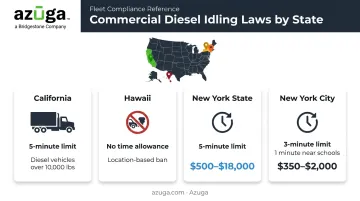
Most U.S. states enforce some form of anti-idling regulation, and limits vary widely by jurisdiction, commonly landing at 3, 5, or 10 minutes, though the rules don't fit a single universal range. Some states use time-based limits; others, like Hawaii, prohibit idling in specific locations without any minute allowance at all.
A few examples show the spread
| Jurisdiction | Idling Limit | Notes |
|---|---|---|
| California | 5 minutes | Applies to diesel vehicles over 10,000 lbs GVWR |
| Hawaii | No time allowance | Location-based prohibition at loading zones, parking areas |
| New York State | 5 minutes | Fines range from $500 to $18,000 |
| New York City | 3 minutes (1 minute near schools/parks) | Fines range from $350 to $2,000 |
California and Hawaii consistently rank among the strictest states, while others allow longer windows before enforcement kicks in.
There's a financial upside for equipped fleets, too. Federal law lets states grant a weight exemption of up to 550 pounds for vehicles carrying qualified idle-reduction equipment — Colorado and Maryland both offer this exemption. Qualified onboard IRTs are also exempt from the federal heavy-highway-vehicle excise tax, trimming the cost of adoption further. Telematics platforms like Azuga automatically log idle time, helping fleets confirm compliance and document eligibility for these exemptions.
Frequently Asked Questions
In what states is it illegal to idle a vehicle?
Most U.S. states have some anti-idling regulation, with time limits generally ranging from 1 to 10 minutes. California and Hawaii enforce some of the strictest rules, while local ordinances like New York City's can be even tighter.
What is the best strategy for reducing idling time?
Combining driver education, financial incentives, and telematics-based idle alerts and reporting typically produces the most consistent, fleet-wide reduction. No single tactic works as well alone.
Is idling for 20 minutes bad?
Yes. Twenty minutes of idling burns measurable fuel, adds unnecessary engine wear, and exceeds the legal idling limit in most jurisdictions — making it both a cost problem and a compliance risk.
How much can idle reduction technology actually save my fleet?
Savings depend on fleet size, vehicle class, and current idling habits, covering both fuel and maintenance costs. Telematics-based tracking often cuts operational costs by up to 30%, and an idle reduction savings calculator can help estimate figures specific to your operation.
Are there tax incentives or grants available for installing IRTs?
Yes. The EPA's DERA program funds verified idle-reduction technology through grants and rebates, and several states offer weight exemptions for qualified equipment that help offset installation costs.
Does idling actually damage a vehicle's engine?
Yes. Idling causes incomplete fuel combustion, which leads to fuel residue buildup, faster oil degradation, and more frequent maintenance needs compared to normal driving conditions.