
Add in driver safety risks and the hours lost to manual mileage logs and paper maintenance records, and it's easy to see why growth stalls. Many fleet operators struggle with exactly this: too much guesswork, not enough visibility.
A fleet management system fixes that gap. This guide covers what it is, how it works, what it costs, and how to pick one that fits your business.
Construction crews, HVAC technicians, trucking companies, and service teams are adopting these systems fast — not because it's trendy, but because the businesses without them are falling behind on cost control and safety compliance.
Key Takeaways
- Fleet management systems combine GPS, telematics, and software for real-time vehicle, driver, and cost monitoring
- Fleets cut fuel waste, prevent accidents, simplify compliance, and extend vehicle lifespan
- Plug-and-play OBD-II devices, AI dashcams, and cloud dashboards install in minutes
- Pricing scales with fleet size, hardware choices, and the features you need
What Is a Fleet Management System?
A fleet management system is a technology platform that pairs hardware (GPS trackers, OBD-II devices, dashcams) with cloud software. Together, they give you visibility into where your vehicles are, how your drivers behave, and what condition your vehicles are in.
According to NAFA Fleet Management Association, fleet management as a discipline covers vehicle selection, acquisition, maintenance, fueling, safety, and remarketing. The system is the technology that makes those responsibilities measurable.
Core components include:
- Telematics devices (OBD-II trackers, asset beacons)
- GPS tracking for real-time location data
- A cloud-based software dashboard
- Driver-facing tools like mobile apps
Azuga Fleet, for example, is built on three parts: a plug-and-play OBD-II GPS tracker, a web-based dashboard, and the Azuga Fleet Mobile app drivers use to check safety scores and log trips.

Industries that rely most on this technology include construction, HVAC, plumbing, trucking, utilities, waste management, and other field-service businesses where vehicles are the business.
Fleet Management vs. Fleet management Software
Fleet management is the ongoing process of running a fleet efficiently and safely. Fleet management software is the platform that automates the tracking, reporting, and alerts behind that work.
How Does a Fleet Management System Work?
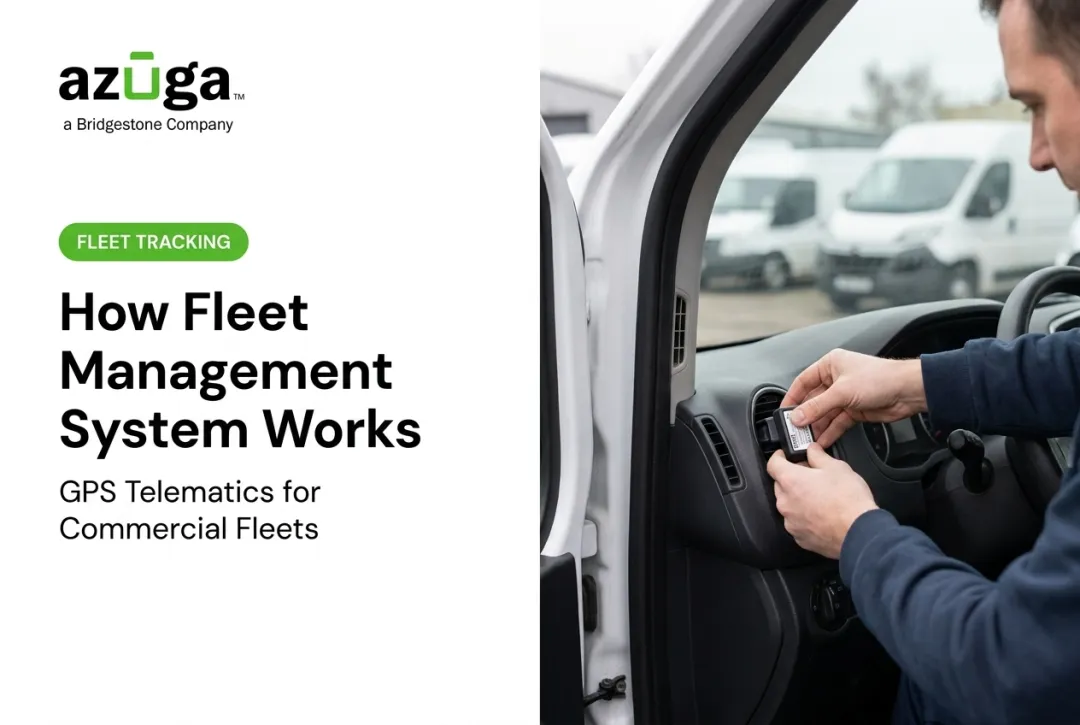
Most systems start with a small OBD-II device that plugs into your vehicle's diagnostic port. No technician, no downtime. Azuga's tracker installs in about 20 seconds and begins collecting data immediately.
Once installed, the device tracks:
- GPS location and speed
- Idling time
- Harsh braking and acceleration
- Fuel consumption
- Diagnostic trouble codes
That data travels wirelessly over a cellular network to a cloud dashboard, where it's viewable in near real time. The Department of Energy describes this exact architecture: GPS and OBD data moving through cellular networks into a secure platform.
Dashcams and AI Add a Safety Layer
Dual-facing dashcams capture both the road and the driver. AI analyzes the in-cab footage for signs of distraction or drowsiness. That video record protects fleets in claims: Azuga's SafetyCam AI with Collision Reconstruction has helped prove that 70% of accidents aren't the driver's fault, evidence that carries real weight when disputes and litigation are on the line.
Systems also generate automated alerts for maintenance reminders, speeding notifications, and compliance documentation. High-frequency tracking checks in every 30 seconds rather than every few minutes, giving dispatchers a clearer real-time picture than older systems ever could.

Key Features to Look For
Not every platform needs every bell and whistle. Focus on what actually improves your operation.
- GPS tracking and real-time visibility — route optimization and accurate dispatching that guides drivers around traffic, construction, and hazards
- Driver safety tools — dashcams, AI-based coaching, and collision reconstruction that protect drivers from false blame
- Maintenance scheduling — diagnostic alerts that catch problems before they become breakdowns
- Fuel management — integration with fuel card providers (Azuga connects with WEX, among others) to catch fraud and control spend
- Compliance tools — electronic logging and inspection reporting for regulated fleets
FMCSA notes that an ELD synchronizes with the vehicle's engine to automatically record driving time. It doesn't change hours-of-service rules, but it does make records far easier to manage and defend during audits.
What Are the Benefits of Using a Fleet Management System?
A fleet management system pays off across fuel, safety, compliance, and customer service—not just tracking. Here is what fleets typically gain once the platform is in daily use.
Lower Fuel and Operating Costs
Route optimization and reduced idling directly cut fuel spend. A 2014 FMCSA field study found telematics-supported driving programs improved fuel economy by 5.4% for sleeper-cab drivers and 9.3% for day-cab drivers, based on research published by the Bureau of Transportation Statistics.
Azuga customers have saved an average of $9,462 annually through better fleet cost management. Pest control fleets using the platform also saw a 29% drop in idling duration.
Fewer Accidents, Fewer Citations
Real-time coaching creates accountability behind the wheel. Azuga customers see an average 38% decrease in accidents and a 57% reduction in speeding citations.
Tools like Azuga Coach reinforce better habits with targeted training videos after risky events.
Less Administrative Burden
Automated reporting and predictive maintenance alerts take manual logging off your plate. Pest control fleets using Azuga saw 50% fewer vehicle breakdowns after adopting predictive alerts instead of reactive repairs.

Simplified Compliance
Automated logging reduces the scramble during audits and inspections. ELD-ready systems keep hours-of-service records accurate so DOT checks and IFTA reporting take minutes instead of hours of paperwork.
Protection From False Liability
Video evidence and AI-powered collision reconstruction resolve disputes fast. When 70% of accidents aren't the driver's fault, having proof matters — both for insurance claims and for keeping good drivers on the road.
Better Customer Experience
Accurate ETAs and faster dispatch decisions mean fewer missed windows. Live traffic and vehicle visibility help office staff reassign the closest tech, cut wait times, and keep more jobs on schedule.
How Much Does a Fleet Management System Cost?
Most providers price on a subscription, per-vehicle basis that scales with your fleet size, hardware, and feature selection.
What typically drives the price:
- Number of vehicles in your fleet
- Hardware choice — GPS-only tracking versus dashcam bundles
- Add-ons like fuel card integration or advanced safety features
Azuga structures its plans in three tiers - BasicFleet, SafeFleet, and CompleteFleet - with packages matched to fleet needs. Quotes cover fleets from a handful of vehicles to over 100.

Request a quote and compare it with your expected ROI in fuel savings and fewer accidents. Many fleets cut operational costs by up to 30% once tracking and safety tools are in place.
Choosing the Right Fleet Management System for Your Business
A few practical filters help narrow the field
- Installation and ease of use — small businesses without dedicated IT staff need self-install hardware, not a truck roll and a technician appointment.
- Support availability — look for 24/7 phone, email, and web support, plus integrations with tools you already use like fuel cards or dispatch software.
- Scalability — the system should grow with you, whether you're running 5 vehicles or 5,000.
Azuga fits this brief for construction, HVAC, trucking, utilities, and other service fleets
- Self-install hardware you can set up without a technician visit
- Coterminous contracts, so adding vehicles doesn't reset your renewal date
- A dedicated customer success rep from day one
Frequently Asked Questions
How much does fleet management cost?
Request a quote based on your fleet size and feature needs.
What are the benefits of using a fleet management system?
You get lower fuel costs, fewer accidents, simplified compliance, and less administrative work. Most fleets also see faster dispatch and more accurate customer ETAs.
What is the difference between fleet management and fleet management software?
Fleet management is the overall process of running vehicles, drivers, and costs efficiently. Fleet management software is the technology tool that automates and executes that process.
How long does it take to install a fleet management system?
Modern plug-and-play OBD-II devices install in minutes without professional help. Azuga's tracker, for instance, connects in about 20 seconds.
Can a fleet management system help with driver safety?
Yes. Dashcams, AI coaching, and collision reconstruction help cut accidents and speeding citations. They also give drivers evidence when they weren’t at fault.
Is a fleet management system worth it for small businesses?
For most small fleets, yes. Affordable plans usually pay back within the first year through fuel savings, fewer accidents, and less admin time.